Iran hardens stance in US talks after midterm results, report says
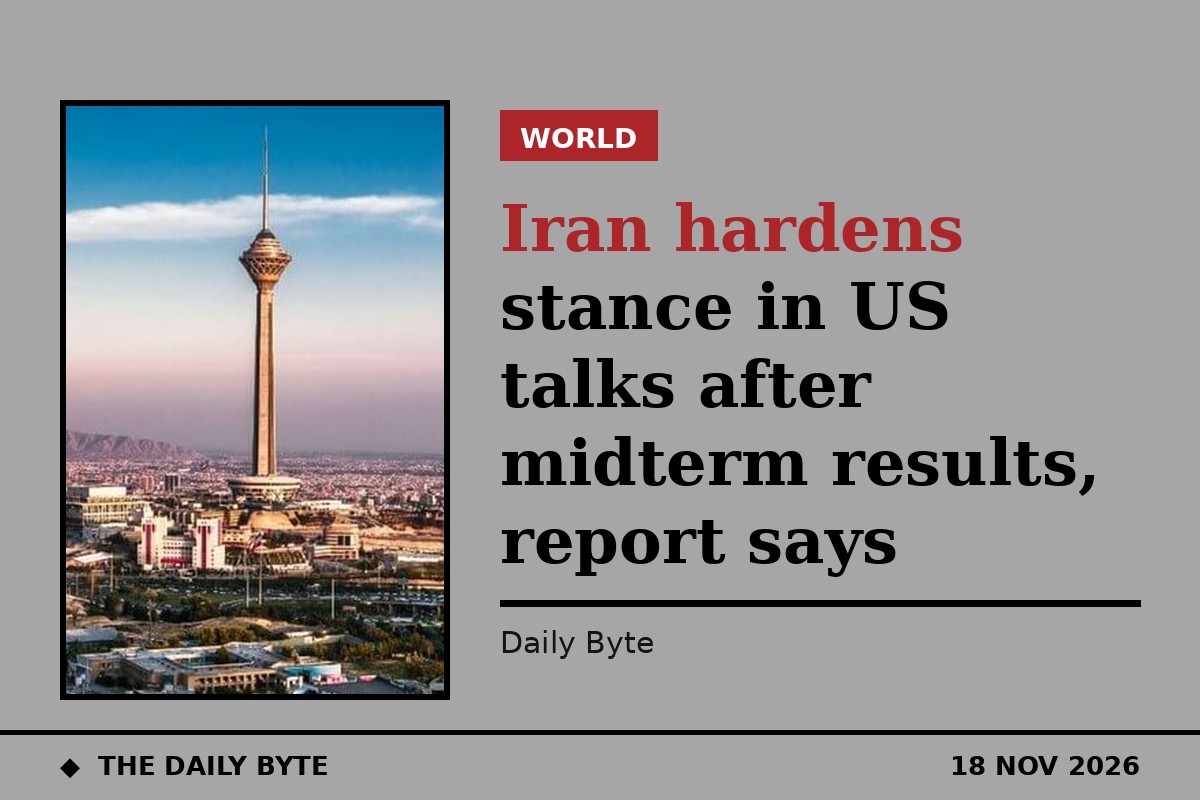
Iran has hardened its position in negotiations with the United States since the American midterm elections, according to a New York Times report published on Tuesday and relayed by Israeli media. Tehran is said to read the widespread Republican defeat as a vote of no confidence in the way President Donald Trump is managing the war, and to believe the result has strengthened its hand at the negotiating table.
According to the report, which cites American, European and Iranian officials, Tehran has drawn up plans to escalate the conflict in order to push Washington back to the table on more favourable terms. Among the options under consideration is stepping up attacks on tankers in the Strait of Hormuz that refuse to pay Iranian transit fees.
Iranian officials who spoke to the newspaper on condition of anonymity said their strategy of inflicting economic pain on American voters by disrupting shipping through the strait had paid off. They described the election results as an Iranian victory over Washington and said they were now inclined to be more defiant and to offer fewer concessions.
Tehran reads the midterms as leverage
“Iran thinks Trump is under pressure from his voters and his party to end the war with Iran,” Peyman Salehi, a Tehran-based commentator described as close to the Iranian government, told the Times. “Therefore, they do not intend to back down. They have grown stronger and now feel very confident.”
Democratic Congressman Jim Himes, who is expected to chair the House Intelligence Committee next year, said the Iranian leadership understands American politics well. “The message of the elections will not be lost on the regime,” he said. “They feel they have greater strategic leverage over the Trump administration than they have had in a long time.”
Himes also cautioned that military pressure and sanctions had greatly reduced imports to Iran and caused it “very severe economic pain”. He compared the regime to a cornered animal, saying it might try to negotiate but was also likely to react “in some pretty wild ways”.
Iran’s supreme leader, Mojtaba Khamenei, warned after the elections against even the slightest willingness to submit to American pressure, according to a second account of the report.
The sequencing dispute at the heart of the talks
One of the central disagreements concerns the order of steps in any agreement. According to current and former US officials, Iran is demanding sanctions relief and payments from Arab states before it allows ships to pass freely through the Strait of Hormuz. Washington insists that Iran first halt attacks on vessels, and only then will funds be released or sanctions lifted.
The report says this dispute has already derailed previous rounds of talks and could derail the current attempt as well. A separate Reuters report on Tuesday described the conflict as a prolonged stalemate in which both governments believe time is working in their favour.
The Times also reported that the United States and Israel have gathered intelligence indicating that Iranian officials discussed the possibility of using chemical weapons or carrying out other unconventional attacks, although several US officials expressed scepticism about the information.
Divisions in Washington, diplomacy continuing
Concern is growing in Washington about President Trump’s next move. According to the newspaper, after Vice President JD Vance said the war had contributed to the Republicans’ defeat, Trump removed him from the negotiating team and asked him to focus on domestic issues. Iranian officials interpreted Vance’s remarks as a sign of deep divisions in the White House.
The report says Trump faces several options: another attempt to reach an agreement, resuming strikes, or withdrawing from the conflict and reducing the large US military force deployed in the region. However, unilateral Israeli action or an Iranian attack on American interests or a partner country could force him to respond.
Some US officials believe another round of strikes, particularly against energy infrastructure, could bring Iran’s economy closer to collapse. Others noted that previous predictions of economic collapse have not materialised. Meanwhile, indirect contacts mediated by regional countries are continuing: Iranian Foreign Minister Abbas Araghchi travelled to Pakistan on Sunday and to Oman on Monday as regional governments kept trying to facilitate negotiations.
Officials in the US and Europe are divided over how serious Iran is about reaching a deal. American and European intelligence agencies assess that, despite Tehran’s growing confidence, the regime remains open to an agreement if Washington grants it access to billions of dollars in frozen assets.
Frequently asked questions
What has Iran reportedly changed since the midterms?
According to the New York Times report, Tehran has stiffened its negotiating positions, is offering fewer concessions, and has drawn up plans to escalate the war, including more attacks on tankers in the Strait of Hormuz.
What is the main obstacle to a deal?
The order of steps: Iran wants sanctions relief and payments from Arab states before reopening the strait, while the US wants attacks on shipping to stop before any funds are released or sanctions lifted.
Has either government confirmed the report?
No. The account rests on unnamed American, European and Iranian officials cited by the Times, and no official response from Washington or Tehran was included in the reporting.


