Iran Moves to Restart Oil Exports Despite Blockade
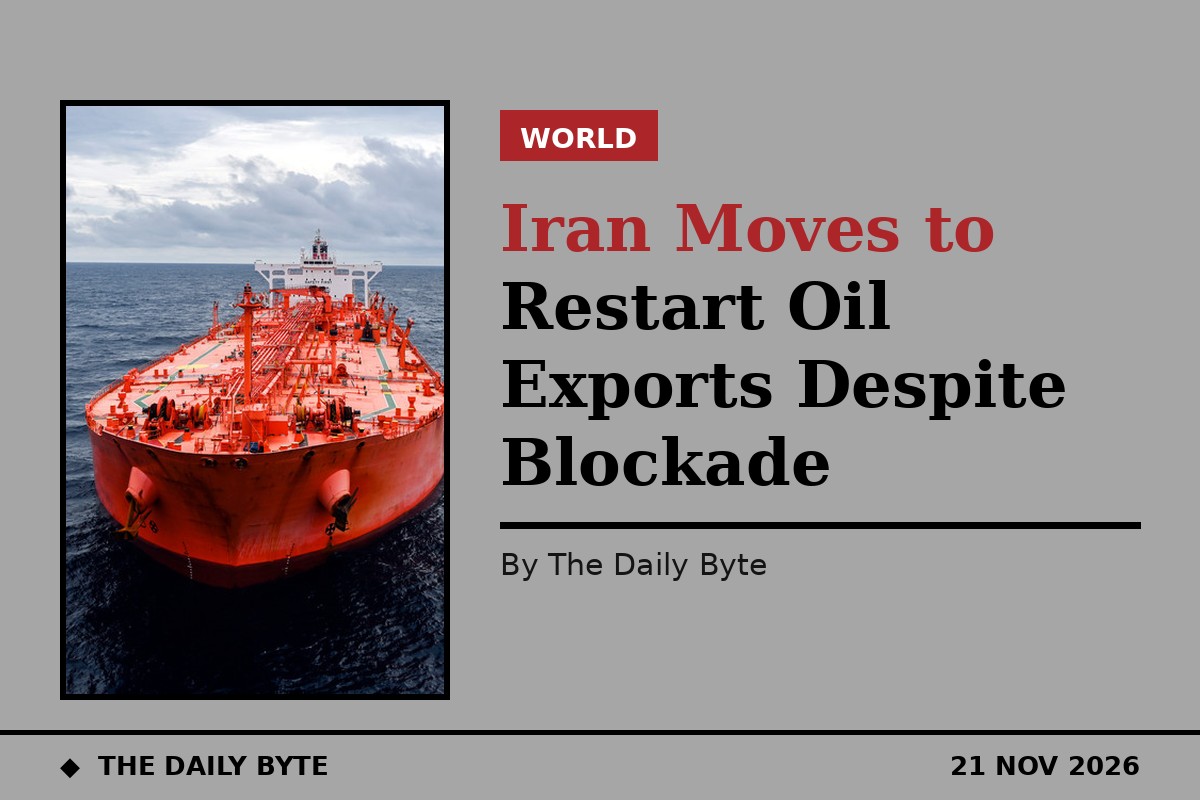
Iran has moved crude oil between tankers at sea for the first time since the United States reimposed its naval blockade in mid-July, in what analysts say may be a test of ways to restart exports despite the blockade.
A United States-sanctioned Suezmax tanker called Olym transferred oil to a medium-range tanker called Hao Fan on Tuesday, according to the non-profit group United Against Nuclear Iran (UANI) and the data analytics platform Kpler. The transfer took place just south of Kharg Island, Iran's main oil export terminal, deep in the Persian Gulf.
Both tankers turned off their transponders during the operation, UANI said, based on satellite images and ship-tracking data. Hao Fan is not blacklisted by Washington, but UANI said the vessel was spoofing its location near Shinas in Oman. Iran's Ministry of Foreign Affairs did not immediately respond to a request for comment.
First transfer since July
The transfer is the first observed ship-to-ship movement of Iranian crude since the United States reinstated its blockade of Iranian ports in mid-July, said Charlie Brown, an adviser to UANI. The American operation has brought Iranian oil exports to a halt, forcing production curbs and cutting off a key source of revenue for Tehran.
The vessel took about 200,000 barrels in the transfer, Brown said, too little to make an export voyage economic. That suggests the operation may have had another purpose. "Iran could be trialing the logistics of such transfers, or Olym may be experiencing some issues and needed to offload oil," Brown said.
He added that the timing, a day before the United States widened its blockade rules, was probably coincidence. "Things have been consistent so far with regard to the blockade," Brown said. But, he added, the Iranians are expected to try "all kinds of ways to get things out."
Washington widens the blockade
On Wednesday, the United States military issued a notice widening the scope of its blockade to target ships receiving cargoes at sea. Under the new guidance, any vessel that receives a cargo via ship-to-ship transfer from an Iranian-linked vessel may be treated as attempting to evade the blockade, even if it never enters Iranian ports.
Such vessels can be "stopped, boarded, diverted, captured, or directed to proceed to the Iranian port where the cargo originated," according to the guidance. The update closes a gap in enforcement: cargo can change vessels at sea without the receiving ship ever calling at an Iranian port, making the origin of the oil harder to trace.
The blockade was first imposed on 13 April 2026. It was lifted in June after Washington reached a draft understanding with Tehran, then reimposed on 14 July after the agreement collapsed.
A convoy plan, without confirmation
Separately, Iranian media affiliated with the Islamic Revolutionary Guard Corps have floated the idea of sending a convoy of tankers loaded with crude to China in defiance of the blockade. The reasoning behind the idea is that the possibility of Iranian retaliation against targets in its Gulf neighbours could stop the United States from enforcing its blockade rules.
No Iranian government official has confirmed a departure date or any convoy, and the proposal remains an idea in IRGC-linked media rather than an announced plan.
The stakes are high for Tehran. In March, despite the war, Iran was exporting about 2 million barrels of oil and condensates per day, with almost all of that going to China. Since July, that trade has dried up completely, and production has been reduced to 1.8 million barrels a day, or about half of pre-war levels, according to Kpler.
Some small shipments of Iranian liquefied petroleum gas have left the Gulf since the blockade was reinstated, but the crude loaded onto Hao Fan is unlikely to reach global markets, Brown said. Whether the transfer was a one-off offload or the start of a systematic attempt to move oil at sea will become clear only if further transfers are observed.


