Pezeshkian: Iran Faces Silent Economic War
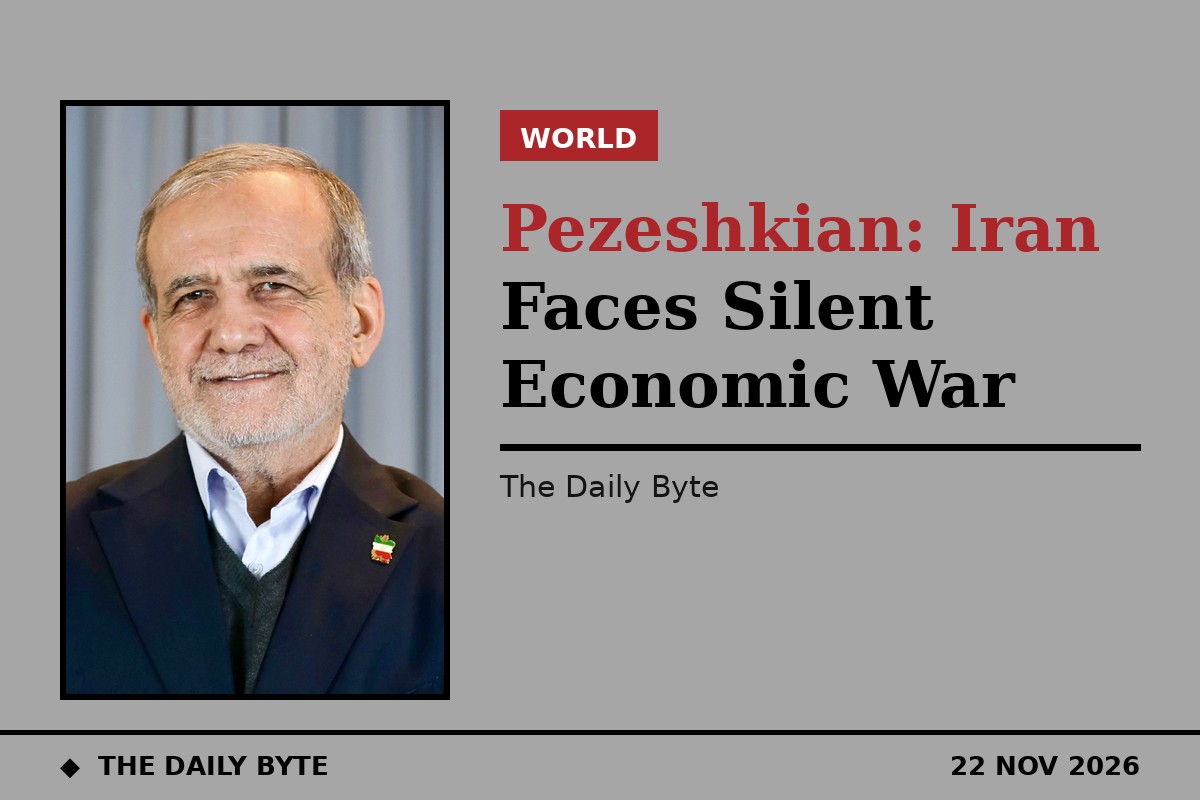
Iran’s president has said his country is fighting a “silent” economic war that is harder than a war fought with missiles, in an unusually frank admission of the strain caused by the United States’ naval blockade and sanctions. The remarks came as reports said President Donald Trump favours tightening the economic pressure further rather than launching renewed major strikes.
President Masoud Pezeshkian told a capital markets conference in Tehran on Saturday: “We are engaged in a silent war that is far more difficult than one in which missiles are launched and destruction is caused.” Xinhua reported his remarks, citing Iran’s official news agency IRNA. “It is an economic war, one that you, as economic actors, are dealing with, and it is no easy battle,” he added.
Pezeshkian said Iran’s opponents had expected to cause famine and shortages of goods in the domestic market but had failed to achieve those objectives, and that Iran’s “wheels of production continue to turn”. At the same time, he acknowledged that conditions in the country were difficult, saying: “Honestly, things aren’t that great,” and urged officials to recognise the problems rather than pretend everything was fine.
Energy shortages threaten factories
The president warned that worsening natural gas and electricity shortages threaten factory production and jobs as Iran approaches winter. He said factories had been the first to lose electricity during past shortages because the authorities wanted to avoid household outages that could provoke public anger, and he urged officials to keep factories running rather than cut industrial power to spare government offices.
Damage to gas-processing infrastructure has compounded Iran’s longstanding energy problems, with officials projecting a domestic gas shortfall of roughly 430 million cubic metres, compared with about 300 million previously, according to reports. Pezeshkian also blamed mismanagement at state-run companies for part of the government’s budget deficit.
The warnings follow a recent Reuters report that Iranian officials fear renewed unrest as worsening energy shortages collide with soaring inflation, declining living standards and the pressure of US sanctions and the naval blockade.
Trump reported to favour economic pressure
In Washington, Trump reportedly favours intensifying the economic campaign against Iran over renewed major military strikes, according to a Saturday report by Israel Hayom citing three diplomatic sources familiar with the deliberations. Breitbart reported that the strategy would include pressing Gulf governments to help shut down Iranian oil-smuggling routes through Iraq, while maintaining the naval blockade and protecting commercial shipping from Iranian attacks.
The report said Trump’s advisers presented four options: negotiating an agreement with Tehran, launching another major offensive, conducting limited strikes against Iranian nuclear and military facilities, or intensifying the economic campaign. The economic option is said to have the support of Secretary of State Marco Rubio, Treasury Secretary Scott Bessent and Commerce Secretary Howard Lutnick.
US Central Command said on Saturday that the naval blockade of Iran had reached 130 consecutive days, and it has previously estimated that the blockade has prevented more than $25 billion in Iranian crude exports. Iran’s Deputy Foreign Minister Kazem Gharibabadi described the blockade on Saturday as an “act of war” and said Iran would take every necessary measure to break it.
For Tehran, the danger now extends beyond lost production and rising prices to the prospect that mounting hardship could reignite demonstrations against the Islamic Republic — the outcome Washington’s economic campaign appears designed to encourage, and the one Pezeshkian’s unusually candid speech seemed aimed at heading off.


