Iran rejects moving 60% uranium to another country
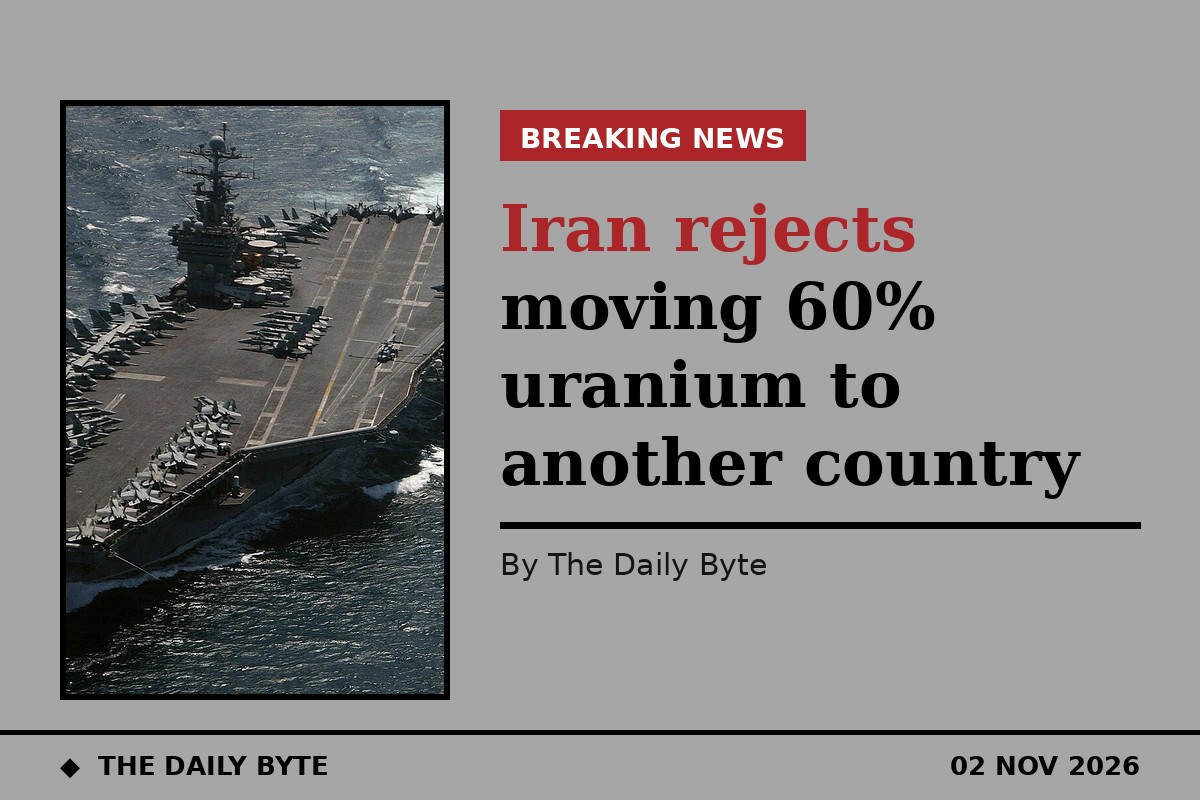
Iran ruled out on Monday, 2 November 2026, transferring its 60%-enriched uranium to a third country as part of an agreement to end its war with the United States and Israel. The rejection was short, direct and delivered in public in Tehran.
Foreign Ministry spokesperson Esmail Baghaei was asked by a reporter whether Iran would consider such a transfer to reach a deal. His answer, as reported by AFP in the Pakistan TV live blog at 13:28 GMT, was a single word: “No.”
Why the question matters
The fate of enriched uranium is one of the most sensitive issues in any negotiation with Iran. A transfer to another country has been floated in past nuclear discussions as a way to reduce stockpiles while keeping diplomacy alive. By rejecting it outright, Tehran closed off that particular route, at least in public, even as other channels remained open.
The same briefing underlined that the wider dialogue had not stopped. Baghaei said contacts between Iran and the United States were continuing through mediators, and that the basis of discussion remained the seven-step proposal Iran submitted in September. Reuters reporting summarised on Monday likewise described the talks as continuing, with messages exchanged via mediators.
What remains unclear
The AFP report did not give further detail on whether the uranium-transfer idea had been raised formally in the Doha talks, or what alternative arrangements, if any, Tehran would accept. That gap matters: a public “no” to one option does not by itself settle how the nuclear question would be handled in any final agreement.
For now, the message from Tehran is twofold — diplomacy continues, but not on the terms of handing enriched material to a third country.
Sources: Pakistan TV / AFP; Just Security / Reuters.