Iran Rejects Unrestricted IAEA Nuclear Checks
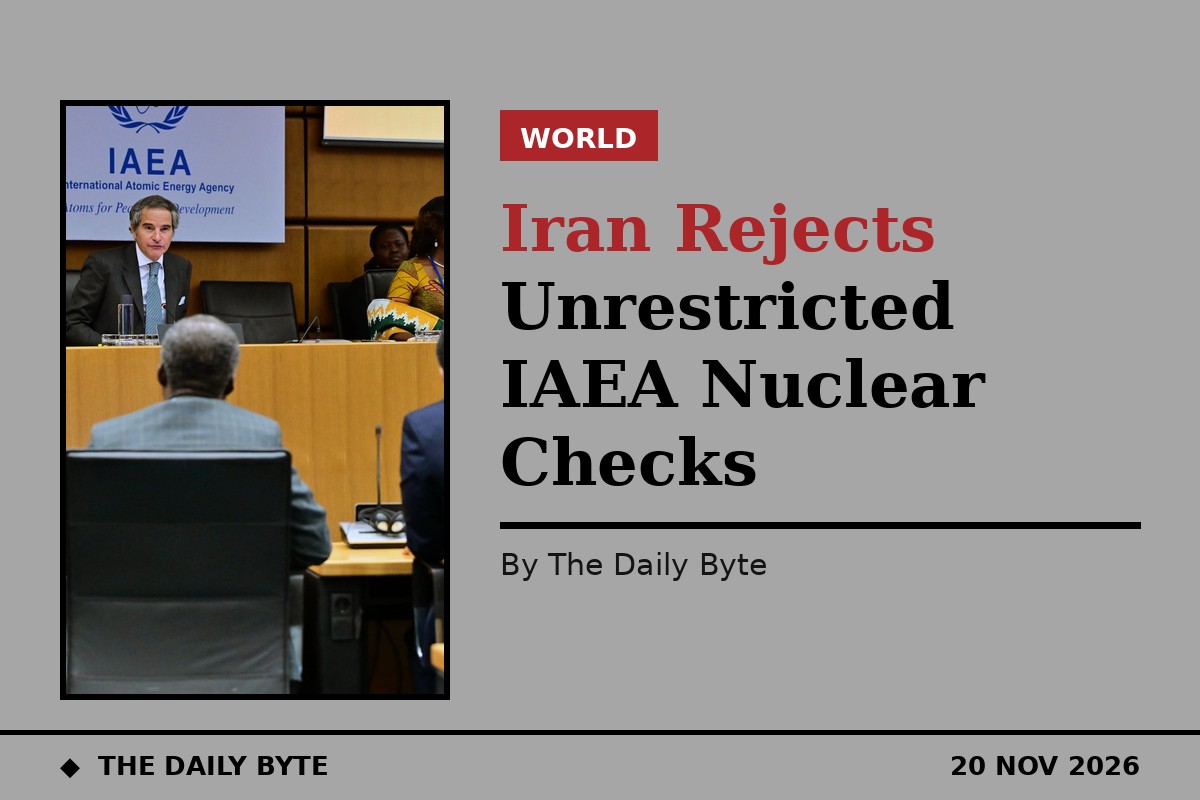
Iran has told the United Nations nuclear watchdog that it will not hand over sensitive nuclear data or grant unrestricted access to its nuclear sites while threats of further United States and Israeli strikes continue. The message was delivered on Friday, 20 November, by Reza Najafi, Iran's ambassador to international organisations in Vienna, to the International Atomic Energy Agency's (IAEA) Board of Governors.
"We will not accept being bombed on the one hand while being asked in a tone of entitlement, on the other, to provide detailed information about our materials and sites and grant unrestricted access to them," Najafi told the Board, according to Iran's Mehr news agency.
What the IAEA chief reported
Earlier this week, IAEA Director General Rafael Grossi told the Board that "the Agency has neither received information from Iran regarding the status of its declared nuclear material and facilities nor had access to any of those facilities to conduct in-field verification activities."
Najafi said the IAEA's 18 months of lost continuity of knowledge about Iran's nuclear programme had a cause: the June 2025 attacks on Iranian sites by the US and Israel. "This loss of continuity has a cause, namely the massive unlawful military attacks on our safeguarded nuclear facilities by the US and the Israeli regime," he said.
The gap matters because the agency cannot verify the whereabouts of Iran's stockpile of uranium enriched to 60 percent, close to weapons grade. Before the June 2025 strikes the IAEA had estimated that stockpile at 440.9 kilograms. Inspectors have visited only the Bushehr nuclear power plant in recent months, and the agency said last week that Iran continues to divert its attempts to access and verify the stockpile and rules out engagement with its inspectors.
A position set out in writing
Tehran first set out this position in writing earlier in November, in a report to the IAEA circulated among diplomats, arguing that it is not obliged to allow monitoring and verification while it faces the threat of US attacks. Iran's mission in Vienna said the agency cannot resume safeguards inspections until the threat of further military strikes on its nuclear facilities has been permanently removed.
Foreign Ministry spokesman Esmaeil Baqaei said Tehran's cooperation with the watchdog would not improve under current conditions, and accused Grossi of double standards for failing to condemn the strikes on safeguarded sites while condemning violent action around Ukraine's Zaporizhzhia plant. Najafi also warned that Tehran would reassess the conditions under which inspectors could access its facilities. Iran has barred IAEA inspectors under legislation passed by parliament, although it has not formally withdrawn from the Non-Proliferation Treaty.
What happens next
The Board of Governors meeting continues in Vienna, with Iran's nuclear programme once again among the main items on the agenda. Nothing in Friday's statements suggests access will resume soon: Tehran is conditioning any return to normal inspections on an end to the threat of attack, while the agency says it cannot do its job without access. Until one side moves, the location and status of Iran's enriched uranium will remain unverified — the central unanswered question of the standoff.
Frequently asked questions
What is the IAEA Board of Governors? The agency's main policymaking body, made up of 35 member states, which meets in Vienna to consider reports from the Director General, including on Iran's safeguards agreement.
Has Iran left the nuclear Non-Proliferation Treaty? No. Tehran has not formally withdrawn from the treaty, but it has barred inspectors from its bombed enrichment sites under domestic legislation.


