Iran Truckers Strike Hits Day Four as Rial Slumps
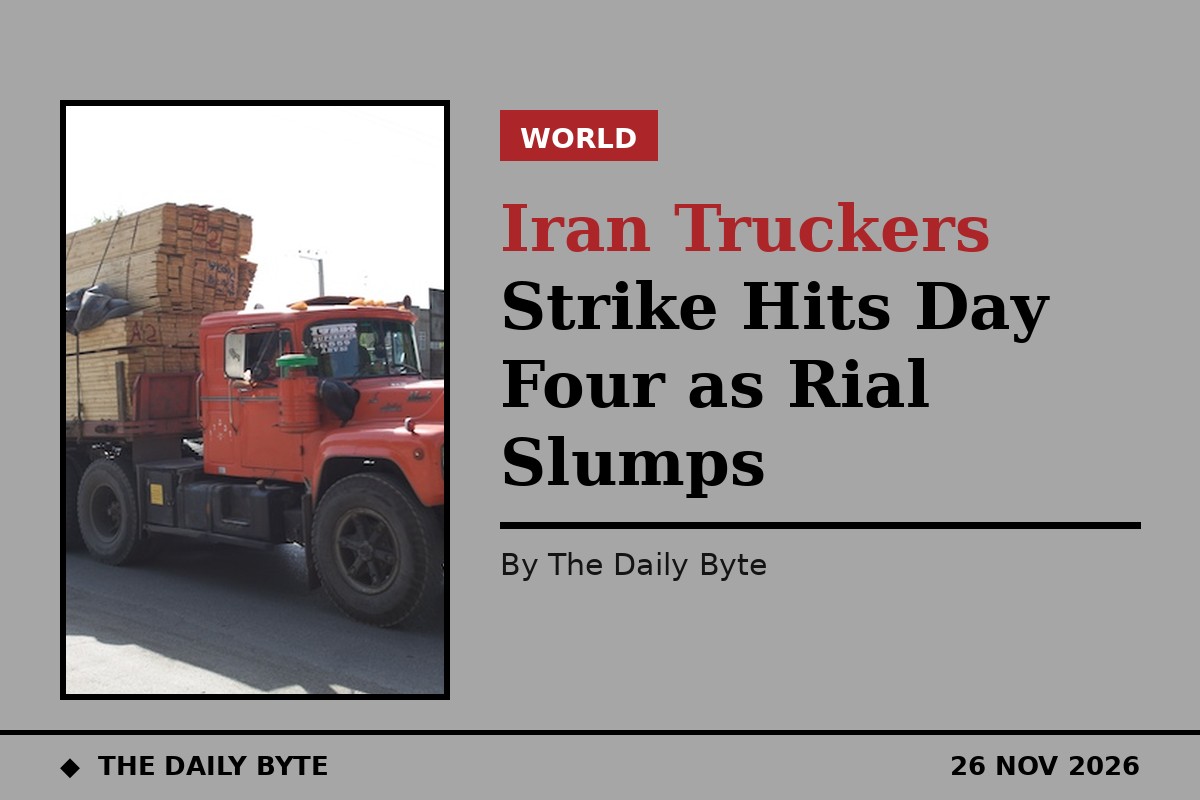
Iran's nationwide truck drivers' strike has entered its fourth day, spreading to 16 cities as the country's currency hit a fresh record low and President Masoud Pezeshkian warned that internal divisions could threaten the ruling establishment.
Drivers continued their stoppage on Wednesday, with Kazerun the latest city reported to join, according to reports circulated by labour and opposition networks. The cities named include Tehran, Shiraz, Isfahan, Bandar Abbas, Ahvaz, Kermanshah, Qazvin, Chabahar and Sirjan. The drivers' union Telegram channel listed the same stoppage in Dezful, Bam, Jiroft, Gachsaran, Divandarreh and Zabol, and said drivers would not step back from their demands despite fatigue and economic pressure.
The strike began on Sunday 22 November, a day after the Union of Truck Drivers and Trucking Associations Across Iran called for a nationwide stoppage. The drivers are protesting freight rates they say have not kept pace with costs, fuel shortages and sharply rising prices for tyres, spare parts and vehicle maintenance. Freight terminals in Bandar Abbas and Dezful have been left empty, according to reports from the strike, while pickup drivers at wholesale produce markets in Dezful have also stopped work.
The figures behind the protest are stark. Drivers say a single tyre now costs about 3.5 billion rials, roughly $1,300, and some spare parts have risen as much as fourfold. One driver said an oil change alone now costs about 17 million tomans, while he still works at last year's freight rate. A 22 per cent increase in freight rates, the drivers say, is nowhere near enough. They also complain of a monthly diesel quota of 600 litres, which they say does not cover their work, and of unsubsidised diesel costing up to 80,000 tomans a litre in some areas, including Kerman.
Iran's road transport agency has denied that a strike has taken shape, while announcing a working group to examine the drivers' demands. The scale of the stoppage cannot be independently verified: the reports come from the drivers' union channels and opposition networks, and there has been no official confirmation of how many drivers have stopped work.
The strike comes as the rial slides to new lows. The dollar reached about 290,500 tomans in unofficial trading on Wednesday afternoon, up nearly 18,000 tomans in two days, according to market figures. Iran International reported the rial had fallen past 2.9 million to the dollar on the open market, a record low. The latest fall coincided with new US sanctions on 29 individuals and entities, including institutions involved in Iran's foreign-exchange operations. The state-affiliated Fars news agency claimed a large shipment of dollar banknotes had entered Iran from a neighbouring country.
Speaking at a gathering attended by senior security figures, including Basij commander Hossein Taeb, Pezeshkian warned that no foreign power could overthrow the establishment unless its own conduct undermined it, and urged officials to stop attacking and labelling one another. He has repeatedly warned in public about winter energy problems and blocked oil sales, even as hardliners press for confrontation rather than concessions over the US naval blockade.
The truckers are not alone. Retirees from Iran Air demonstrated outside the Roads Ministry in Tehran, welfare workers protested in Karaj, and electricity-sector workers gathered outside the Energy Ministry over employment grievances. Authorities have imposed bread purchase restrictions on about 280,000 national identification numbers across seven provinces, a move one newspaper warned would further undermine the livelihoods of poor workers. The backdrop is a shrinking economy: industrial and mining output contracted by an estimated 10 per cent over the summer, listed industrial production fell 12.5 per cent year on year in September, and the economy is estimated to have contracted 5.2 per cent, with the oil sector down 31.7 per cent.
Why are the drivers striking?
They say freight rates have stayed flat while fuel, tyres, spare parts, insurance and tolls have all risen sharply, and that diesel quotas and shortages make it impossible to cover their costs.
How bad is the currency fall?
The dollar passed 290,000 tomans in unofficial trading on Wednesday, a record low, having risen nearly 18,000 tomans in two days. The fall raises the cost of imported goods and eats into household purchasing power.


