Iran Truckers Strike Enters Sixth Day in 20 Cities
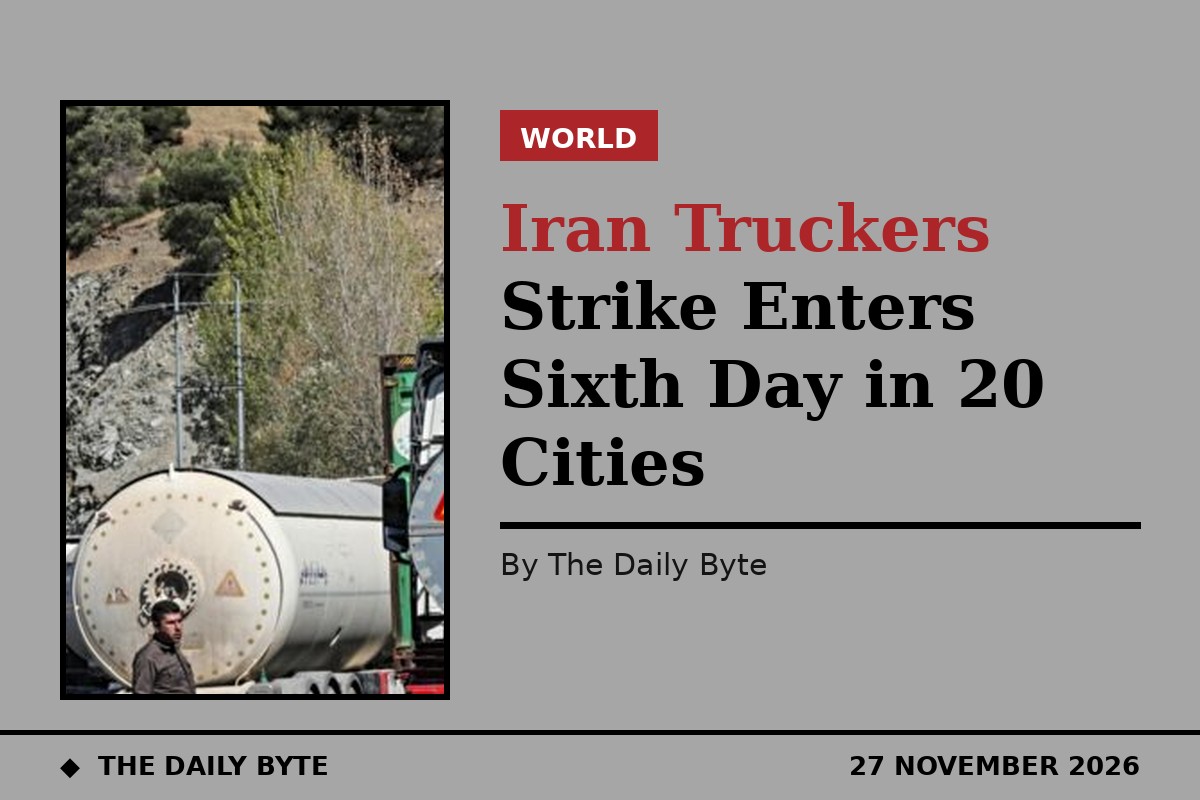
Iran's truck drivers entered the sixth day of a nationwide strike on Friday 27 November, with their union saying the stoppage had spread to 20 cities and warning that drivers would keep refusing loads until their demands are met.
The Union of Truck Drivers and Trucking Associations Across Iran, which called the strike, said in a message on Telegram on Friday: "Six days have passed, we are now in 20 cities, and our voice has reached every corner of Iran." The union added: "We will secure our rights through solidarity, not by begging or hauling freight for free, but only by standing together."
Strike spreads from 18 to 20 cities
The independent outlet Iran International reported on Thursday that the union had documented strike activity in at least 18 cities. By Friday, the opposition People's Mojahedin Organization of Iran claimed the affected cities included Tehran, Shiraz, Isfahan, Qazvin, Bandar Abbas and Chabahar, and put the total at 20 municipalities. Those claims have not been independently verified, and no official response from the Iranian authorities to the strike was reported.
The strike began on Sunday 22 November, when the union announced a general stoppage over stagnant freight rates and rising operating costs. In its opening statement, circulated on Telegram, the union described the action as "a cry of protest from drivers who have spent years struggling under the weight of rising prices, injustice and neglect and can no longer endure these unbearable conditions."
Drivers say freight rates have stayed flat while the costs of diesel, insurance, tyres, engine oil and spare parts have risen sharply. They are demanding an immediate revision of freight rates in line with inflation, lower costs or subsidies for tyres, engine oil and spare parts, and higher diesel quotas with improved fuel distribution.
Rial at a record low
The stoppage comes as Iran's currency, the rial, continues to fall. Market figures reported on Wednesday put the dollar at about 290,500 tomans in the unofficial market during afternoon trading, a rise of nearly 18,000 tomans in two days. The falling rial further erodes household purchasing power and raises the cost of imported goods and production inputs.
President Masoud Pezeshkian has described the state of the economy as an economic war, while blaming United States pressure for the crisis. Retirees have also held protests in several cities in recent days, calling for pension increases that reflect the rising cost of living.
The strike is already disrupting the movement of goods. Reports from independent and dissident media say the stoppage is significantly threatening supplies for farms, groceries and factories, with trucks standing idle in cities across the country. Commercial traffic through the Strait of Hormuz remains roughly 65 per cent below pre-conflict levels, according to figures cited by The Independent, leaving hundreds of tankers and cargo ships anchored outside the Gulf.
The union has given no end date for the strike. Drivers say they will continue until freight rates are revised and fuel quotas improved, leaving the dispute open as the stoppage moves into its second week.


