Iran Used Starlink to Run Drone Strikes on US Forces
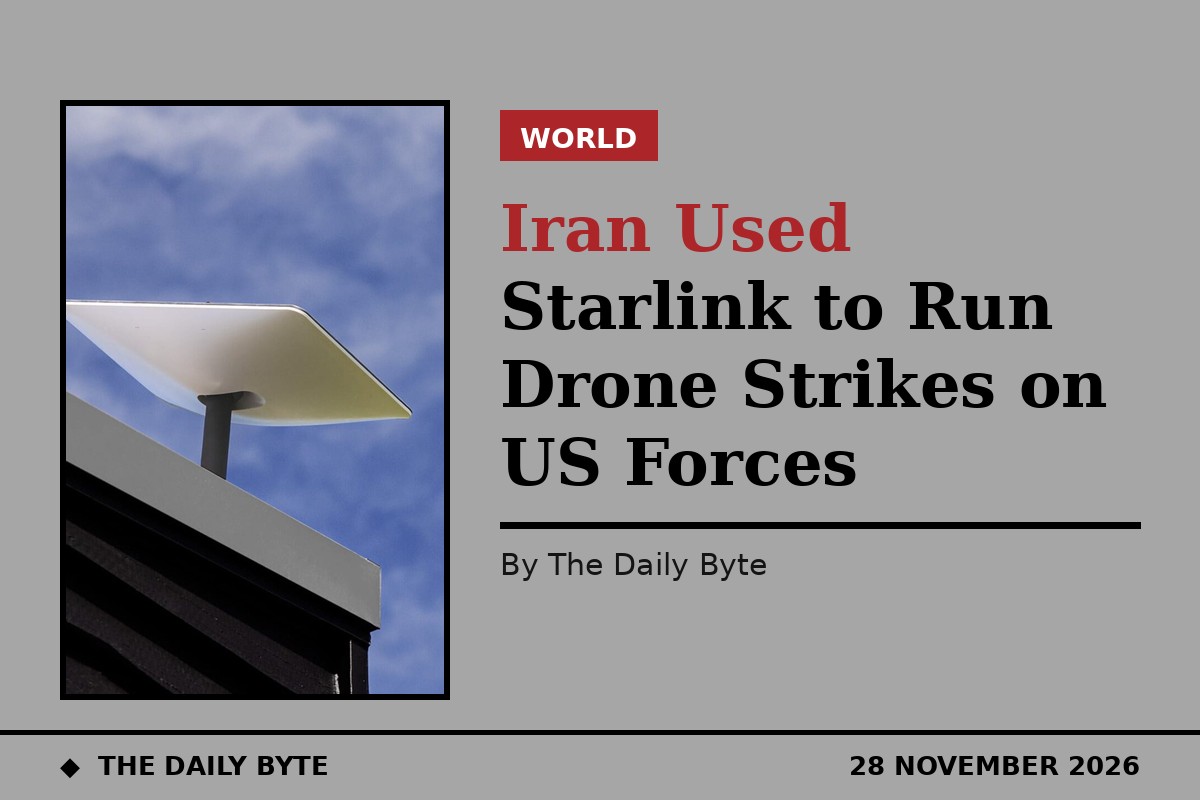
Iran used SpaceX's Starlink satellite internet service to support military operations against United States forces in the opening days of the war, the Washington Post reported on Saturday 28 November.
According to the Post, which cited four people familiar with the operations, a classified war update delivered to Defence Secretary Pete Hegseth over the summer briefly described Iran using Starlink as an alternative mode of communication after the United States targeted more traditional communication systems.
The use was detected in early March, after the United States and Israel began striking Iran and Tehran retaliated against US bases in the region. Among other things, the report said Iran used Starlink to oversee attack drone operations. Six US service members were killed after an Iranian drone strike on a military facility in Port Shuaiba, Kuwait, on 1 March.
Pentagon says it is unaware of the report
A Pentagon spokesperson said they were "not aware of the existence" of a report on this topic. Pentagon spokeswoman Kingsley Wilson said the department was unaware of a US Central Command report to the secretary's office on the subject and declined to comment on whether Iran had used Starlink.
SpaceX chief executive Elon Musk reportedly became infuriated when he learned about Iranian military usage of Starlink back in March, and he was also upset to learn that the US military was using a more affordable version of Starshield, the military-grade version of Starlink, for its own drone operations.
At least two company executives were fired by the end of that week over the two incidents, one person told the newspaper. Musk and SpaceX did not respond to its requests for comment.
Reseller checks tightened
Shortly afterwards, SpaceX put more restrictions on Starlink sales and paused its Indirect Reseller Program. It subsequently tightened checks on customers buying through resellers, according to the report.
Cutting off Starlink entirely in Iran, however, could also disconnect civilians and dissidents who rely on it during government-imposed internet blackouts. Iranians have lived through two lengthy state-imposed global internet shutdowns in 2026, one lasting three weeks during nationwide protests in January and another lasting 88 days at the start of the war.
Tehran has outlawed Starlink on national security grounds, and Iranian officials have described the service as a "tool of war" for its enemies. The use of satellite-based internet services and the distribution of Starlink terminals are subject to fines and imprisonment in Iran, with importing or distributing the devices carrying jail terms of up to five years.
The disclosure adds a new dimension to the war's opening phase, in which both sides leaned on commercial technology. It also underlines the dilemma facing Washington and SpaceX: the same satellite network that Iranian forces allegedly used for command and control is one of the few links ordinary Iranians have to the outside world when the state shuts the internet down.


