Iran Vows To Defy US Naval Blockade With All Tools
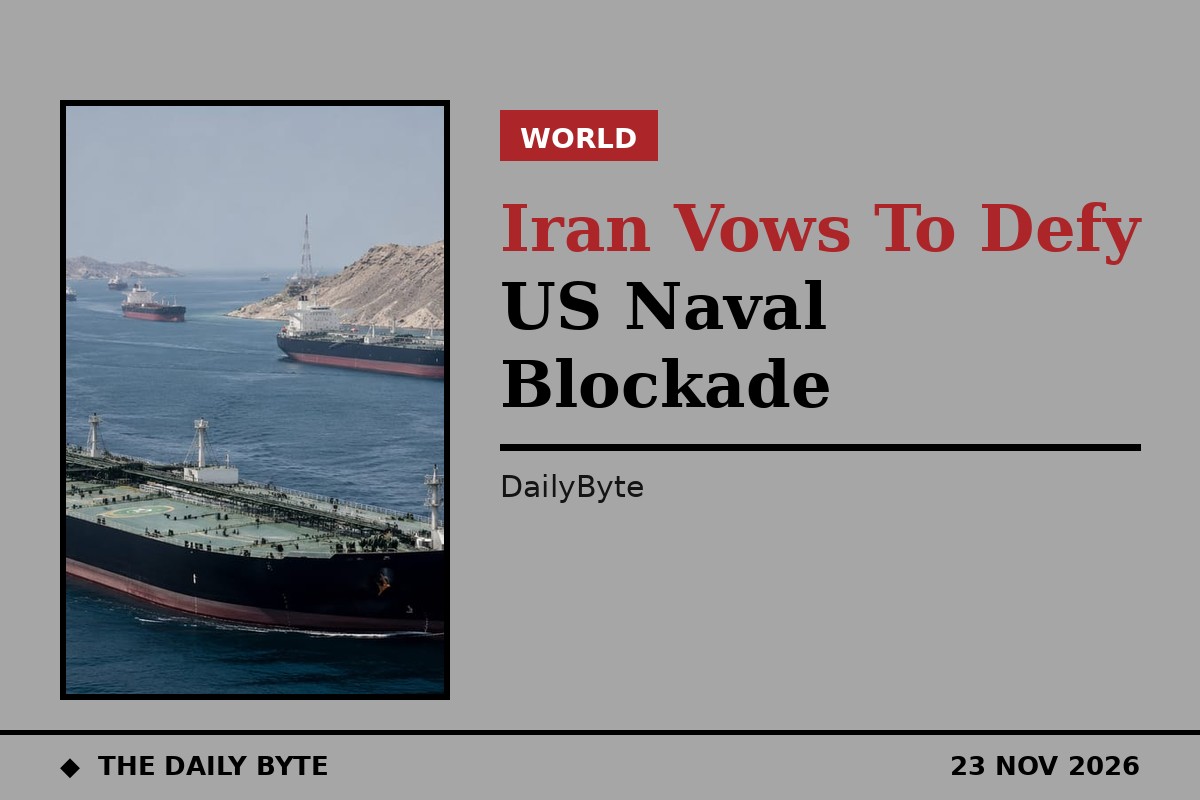
Iran said on Monday, 23 November 2026, that it will use all of its tools to confront the United States naval blockade on its oil exports, on a confrontation that has already disrupted shipping through the Strait of Hormuz. Foreign Ministry spokesperson Esmaeil Baghaei made the remarks at his weekly news conference in Tehran, where he described the blockade as an act of military aggression and said Iran would not accept it.
Baghaei's comments came as Washington and Tehran remain locked in a standoff over Hormuz, the narrow waterway that carries a large share of the world's seaborne oil. Iran says it controls passage through the strait and will only reopen it fully when the United States meets its conditions, including halting hostilities, lifting the blockade and waiving sanctions.
What Baghaei said in Tehran
"We will definitely not tolerate it (the blockade) and we will use all our tools to confront this US aggression," Baghaei said, according to Reuters. "The naval blockade ... is considered a military aggression," he added. "Iran has the right to use any available tool to defend itself in this regard."
Baghaei did not set out what specific measures Iran intends to take. According to a second report of the same news conference, carried by Cumhuriyet Daily citing the semi-official Tasnim news agency, he said Iran was examining a range of measures to confront and neutralise the blockade and sanctions, and that Tehran would begin implementing them in accordance with decisions taken on the issue, without elaborating.
In the same briefing, Baghaei said security in the Strait of Hormuz and the wider region could be restored as soon as possible if the United States fulfils its commitments. "Iran's conditions are its rights: lifting the naval blockade and sanctions, and implementing the provisions contained in the memorandum of understanding," he said.
The blockade so far
The United States blockade on Iran-related oil exports was first imposed on 13 April, lifted in June after Washington reached a draft understanding with Tehran, and then restored on 14 July after the agreement collapsed, according to Reuters. Since it was reimposed, visible Iranian crude exports have decreased to near zero in recent months, a result Tehran attributes to the blockade and Washington presents as evidence that its economic pressure is working.
Whether Iran has found a way around the restrictions remains disputed. TankerTrackers.com said last week that a tanker was loading Iranian crude oil in the Gulf through a ship-to-ship transfer and could become the first vessel to successfully export the country's crude since the blockade was reimposed in July. Baghaei said on Monday that reports about Iranian ships loading oil are "speculations". That caution matters, because several claims about tanker movements in the Gulf in recent days have not been independently verified, including reports of vessels striking mines and a purported tanker track that tracking analysts said appeared to be spoofed.
Washington's warning
The Iranian statement followed a warning from President Donald Trump on Sunday. Trump told Fox News that he hoped Iran would test the blockade, saying Iranian vessels attempting to break it would end up at the "bottom of the sea", according to Breitbart. He also indicated that he was inclined to order renewed major strikes against Iran after the New Year if Washington and Tehran fail to reach an agreement.
Trump also said on Truth Social on Sunday that Iran had launched more drones and missiles over the past week than at any point in more than a year, adding that they had all been intercepted and caused no damage, a claim that has not been independently verified. The exchange underlines how quickly the rhetoric has escalated: Tehran is threatening to break a blockade it calls aggression, while Washington is threatening to sink vessels that try and to resume strikes if talks fail.
What to watch next
The immediate question is whether either side moves from words to action. Iran has not disclosed what tools it would use, and the United States has not said how it would respond to a specific attempt to move oil through the blockade line. Talks between Washington and Tehran, which began after a memorandum of understanding was signed in June, have stalled over disagreements about freedom and security of navigation in Hormuz.
For now, the standoff leaves Hormuz at the centre of the conflict: a vital route for global energy supplies, closed in practice to Iranian oil, and the subject of competing claims about who controls it and on what terms it can reopen. Any test of the blockade, any further tanker incident, or any sign of movement in the stalled talks is likely to move oil prices and shape the next phase of a war that began on 28 February.


