Iran Warns Iraq Not to Become a Tool of Trump
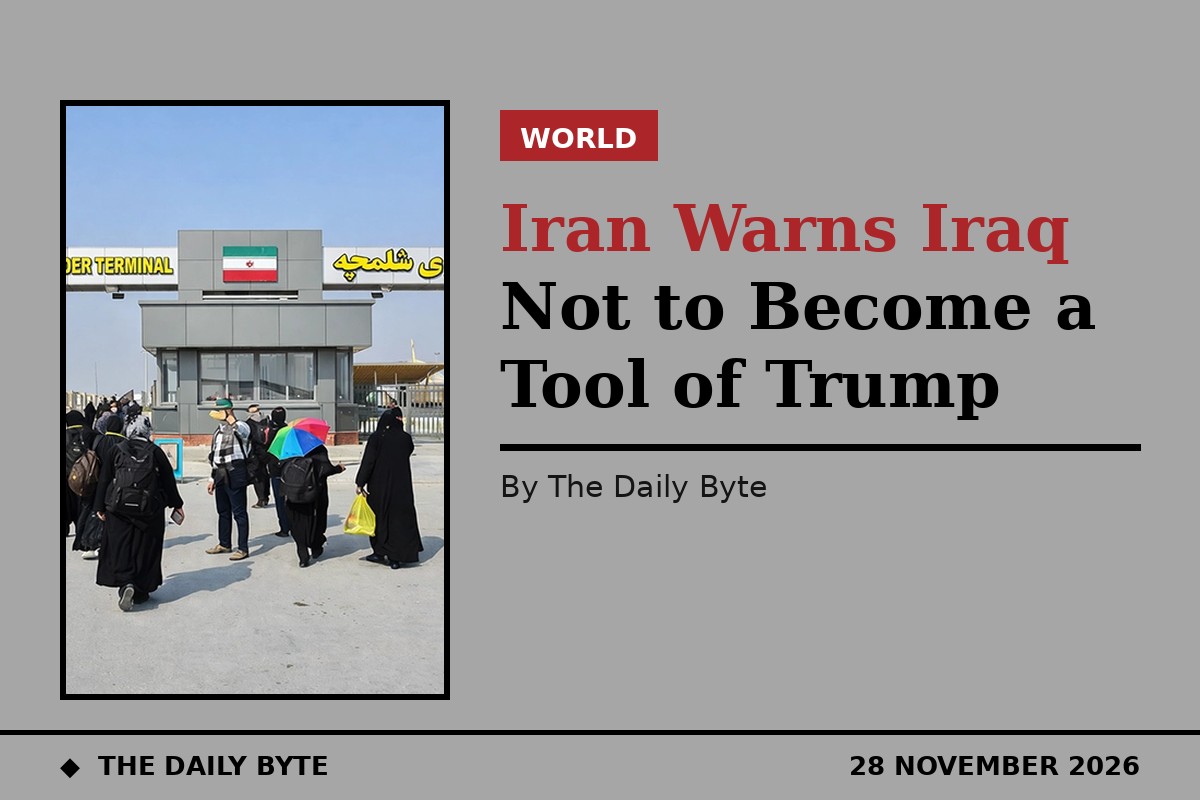
A senior adviser to Iran's Supreme Leader has warned Iraq not to become a tool of US President Donald Trump, after Baghdad closed border crossings in a crackdown on oil smuggling that Tehran sees as part of Washington's blockade of Iran.
Mohammad Mokhber, an adviser to Supreme Leader Mojtaba Khamenei and a former interim president of Iran, issued the warning in a post on X on Saturday 28 November. "Sharing a common destiny with our neighbours is a fundamental principle" of Iran's foreign policy, Mokhber wrote, adding that Iran had stood by Iraq during its darkest days.
He said that bond "requires Baghdad to remain vigilant on border issues" so that Iraq would not become "a tool in the hands of the enemies of Islam" or an instrument for carrying out the policies of Trump, whom he called "the criminal Trump".
Trump backs Baghdad's crackdown
The warning came a day after Trump publicly backed Iraq's new prime minister, Ali al-Zaidi, on the same issue. Writing on Truth Social on Friday, Trump said: "We support Iraqi Prime Minister Ali al-Zaidi's efforts to assert state authority throughout Iraq, stop the smuggling of Iraqi oil, end corruption, and bring all weapons under the exclusive control of the state."
On Thursday, Iraq closed two border crossings in its Kurdish region, one with Iran and another with Syria. The move followed an order by al-Zaidi on 24 November shutting every unauthorised crossing and placing the Kurdistan Region's crossings under federal authority, after an investigation into oil smuggling at the state-run North Oil Company. The two main Kurdish parties protested the takeover of oil fields and border crossings, calling it a red line.
A lifeline under pressure
Washington has been pressing Baghdad to go further. Earlier this month, Iraqi Foreign Minister Fuad Hussein said the US Treasury had asked Iraq to close all of its crossings with Iran except two. The United States is seeking to squeeze Iran by land as well as by sea: a naval blockade of Iranian ports has prevented the export of more than 25 billion dollars' worth of crude oil, according to US Central Command, and Washington announced Task Force Iron Gate earlier this month to restrict the movement of weapons and sanctioned materials across Iran's land borders and the Caspian Sea.
With its sea access constrained, Iran's nearly 1,000-mile land border with Iraq has become a critical economic lifeline, leaving Baghdad caught between the two powers. Iraq has presented the 24 November order as the outcome of an oil-smuggling investigation rather than a concession to Washington, and it is being sold at home as a fight against theft and for state authority.
Diplomacy continued on Saturday even as the warnings flew. An Iraqi security delegation held high-level talks in Tehran on counterterrorism, smuggling and border security, Iraq's ambassador to Iran, Yasser Abdul-Zahraa Al-Hajjaj, announced. Iraq's national security adviser, Qassem al-Aboudi, also arrived in Tehran as al-Zaidi's envoy to discuss border security and oil smuggling.
Iran's army commander-in-chief, Maj. Gen. Amir Hatami, said the Strait of Hormuz would remain closed until Iran's conditions were met, according to the state-affiliated Tasnim news agency. Mokhber stopped short of a direct threat against Iraq, but his warning shows Tehran is watching closely how far the border closures go.


