Iraq Budget Stalls Over Kurdistan Oil Deliveries
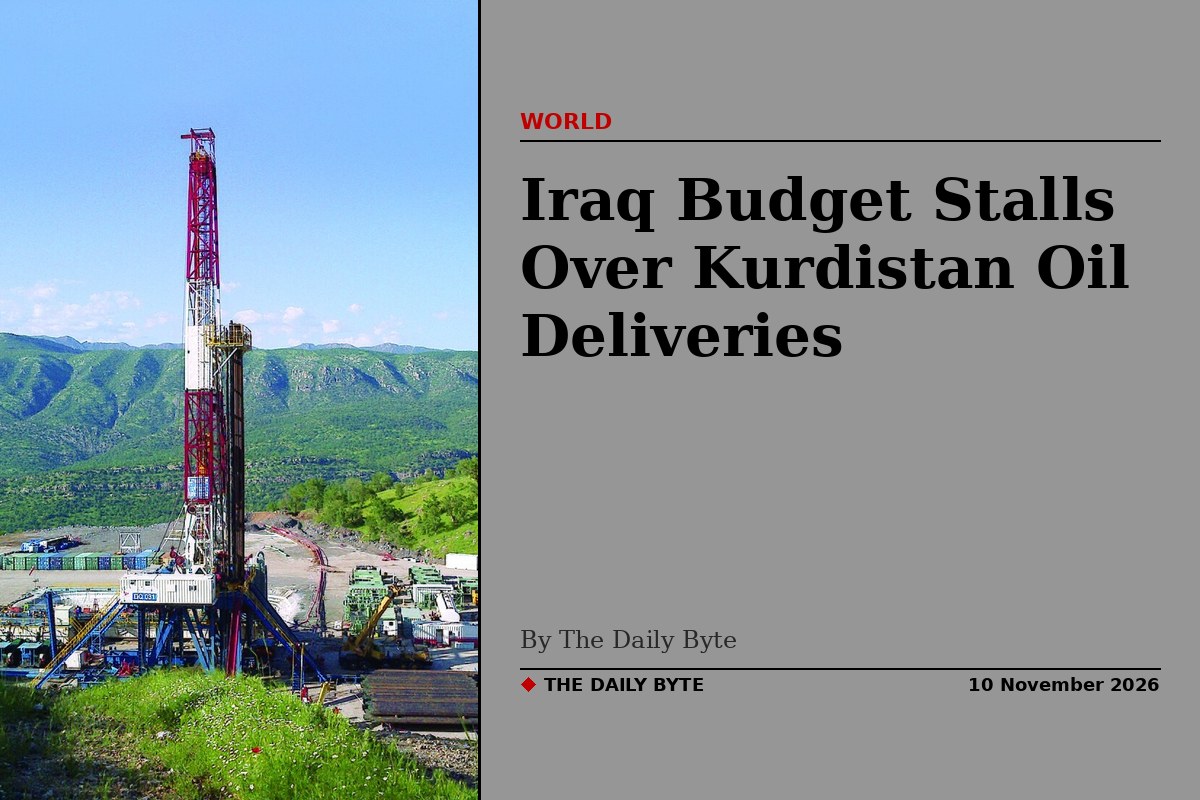
Iraq's 2027 draft budget has stalled over oil from the Kurdistan region, after disagreements over how much crude Erbil must deliver scuttled a cabinet session on 7 November. Prime Minister Ali al-Zaidi set aside the cabinet's meeting on Tuesday, 10 November, for the draft, which is due before parliament by 15 November.
Under the draft, federal transfers to the Kurdistan Regional Government hinge on four conditions, including delivering at least 400,000 barrels per day to the State Organization for Marketing of Oil, handing over non-oil revenues and surplus gas, and signing new energy contracts only through the federal oil ministry.
How much oil can Erbil deliver?
The 400,000-barrel figure is disputed. Federal Deputy Prime Minister Mohammed Ali Tamim claimed on 1 November that intelligence showed Kurdish fields producing more than 400,000 barrels a day, while Patriotic Union of Kurdistan figure Ala Talabani alleged output of 650,000 barrels a day, some of it smuggled through Syria to Turkiye.
The Kurdistan Regional Government's natural resources ministry dismissed those claims as false and misleading, citing international energy consultancy Wood Mackenzie's estimate of 255,000 barrels a day. Economist Nabil al-Marsoumi put output at the same 255,000 figure, with 80,000 barrels consumed locally and 175,000 exported through the Turkish Mediterranean port of Ceyhan.
Channel8 reported on 7 November that federal negotiators were ready to raise Erbil's budget share from 12.67 percent to above 13 percent and defer the surplus-gas condition to 2028, while raising the oil requirement to 445,000 barrels a day. Kurdistan24 put the proposed export requirement at 450,000 barrels a day, while Erbil has offered 250,000 to 280,000.
KRG spokesperson Peshawa Hawramani has rejected the 12.67 percent share and pressed for at least 14 percent, and Deputy Natural Resources Minister Ahmed Mufti said on 17 October that 400,000 barrels a day "cannot be met during 2027" without financial and security guarantees.
The figure is recycled from Iraq's 2023 budget, when Kurdish crude flowed independently through Ceyhan. Turkiye halted those flows in March 2023 after an arbitration ruling in Baghdad's favour, and exports only resumed in September 2025. A drone strike on the Khor Mor gas field on the night of 8 November, which took 2,500 to 2,800 megawatts off the Kurdistan grid, has added to the damage. The draft projects federal revenues of 174 trillion dinars against spending of 217 trillion, a deficit of 43 trillion. Read the full reports at Amwaj Media and Kurdistan24.


