Iraq jails six for 10 years over uranium trafficking
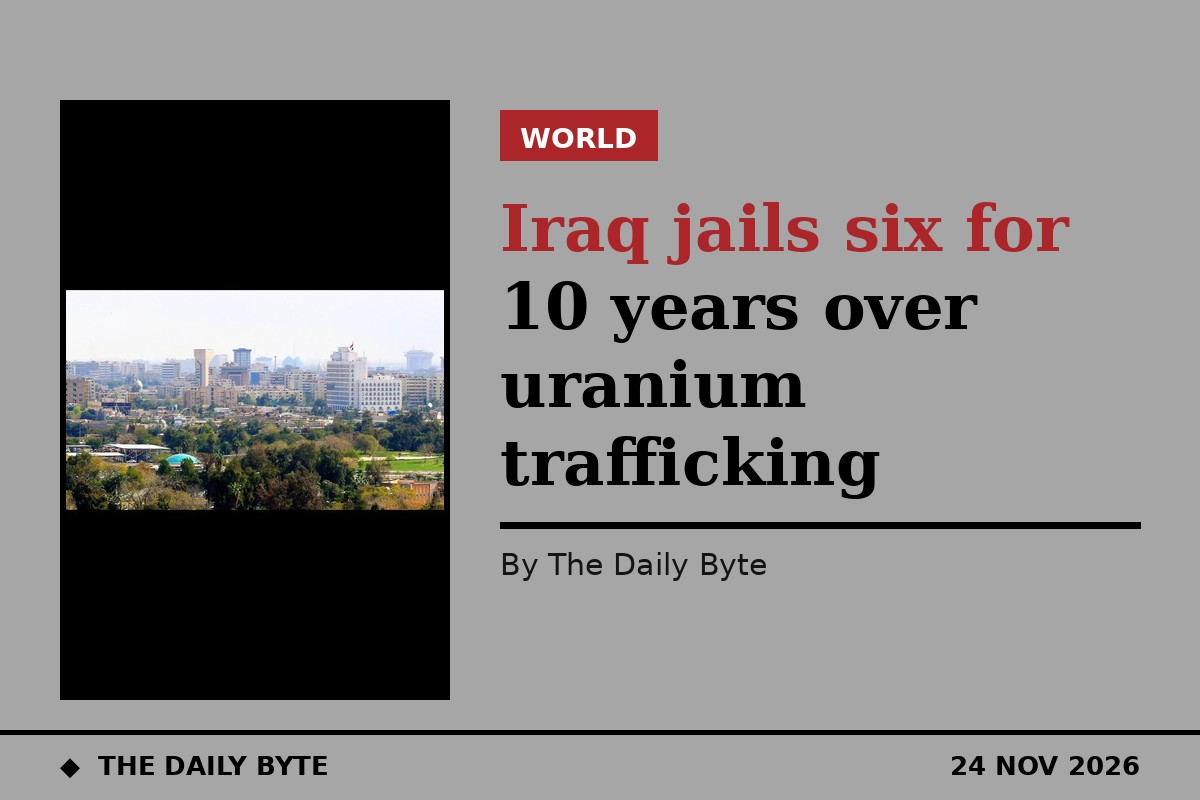
A court in Baghdad has sentenced six people, including a woman, to 10 years in prison for possessing and trafficking radioactive uranium they intended to sell, Iraq's Supreme Judicial Council said on Monday.
The Central Criminal Court handed down the sentences after finding the six guilty of possessing and trafficking highly hazardous radioactive uranium, the council said in a statement carried on its website on 23 November. The council described the material as highly hazardous and said the group had intended to sell it. Iraq's Supreme Judicial Council reported the verdict, and Rudaw reported the same sentences, noting that Iraq is strengthening its radiological monitoring.
The reports did not say how much uranium was involved, where it was seized, or who the intended buyers were. The council's statement, as reported, gave no further details of the case, and there was no immediate indication of whether the defendants would appeal.
A court case with a wider backdrop
The case lands as Iraq rebuilds its civilian nuclear oversight after decades in which the subject was inseparable from war and sanctions. Iraq began developing a nuclear programme in the 1950s, and its Atomic Energy Commission dates from 1956. Its main research centre at Al-Tuwaitha, south of Baghdad, was bombed by Israel in 1981 and by the United States in 1991, and the site has since been declared free of radiological risk, according to reporting on the commission's work.
Baghdad has been working with the International Atomic Energy Agency since March 2024 on a peaceful programme. The agency's director general, Rafael Grossi, visited Baghdad that month, and Iraq's higher education minister, Naeem al-Aboudi, who also heads the Atomic Energy Commission, has said Iraq is keen to exercise its right to the peaceful use of nuclear energy, including a small reactor for training students and researchers and for medical and scientific work.
On the same day as the court verdict, the commission set out a longer view. It announced that building a peaceful nuclear reactor would take roughly seven to ten years, with immediate preparatory steps including training specialist staff, building laboratories and developing radiopharmaceutical projects, Iraqi News reported. Murtadha Adhab, Iraq's national liaison officer with the atomic energy agency, said peaceful nuclear applications covered agriculture, industry, education and other sectors.
Why the sentence matters
A trafficking conviction of this kind is a test of whether that civilian framework can be policed. Radioactive material changing hands outside state control is a safety risk as well as a legal one, and the material at the centre of this case was described by the court as highly hazardous. The 10-year terms, handed to all six defendants, are a signal that Baghdad intends to treat the illicit trade seriously as it expands its own nuclear activities.
What the case does not show, on the evidence published so far, is any link to a weapons programme. Nothing in the council's statement or in the reporting of it described the uranium as weapons-grade or said where it came from, and no buyer was named. The verdict is best read as an enforcement story: a court punishing an attempt to sell dangerous material, in a country that is trying to rebuild a lawful, inspected nuclear sector from a difficult history.


