Iraq Detains Oil Police in Pipeline Theft Crackdown
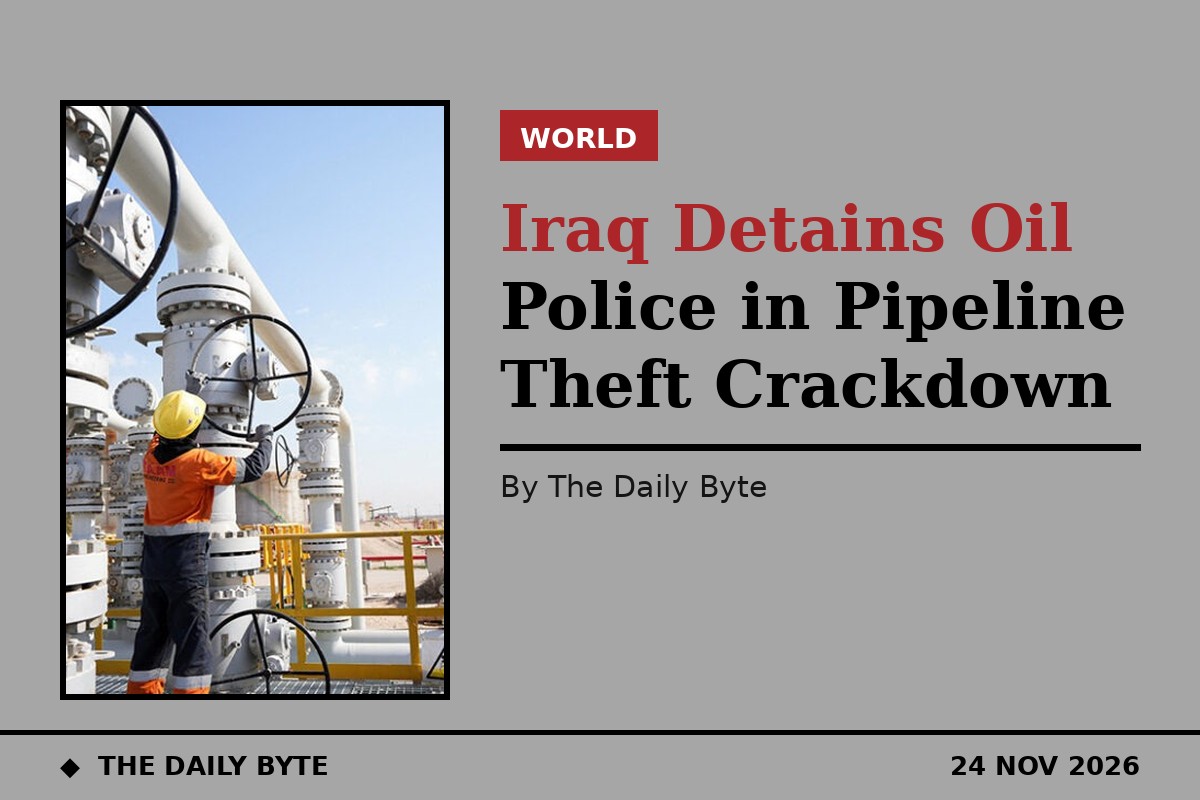
Iraq has detained several Energy Police officers assigned to guard an oil pipeline on the boundary between Dhi Qar and Basra provinces, after investigators found crude was being siphoned from the line and trucked to other parts of the country, the country’s Supreme Judicial Council said on Sunday.
An investigative judge from the Dhi Qar Court of Appeal inspected the site where the pipeline had been tapped and ordered the officers detained, along with one other suspect. The council said preliminary investigations showed a group operating what it called “an organized mechanism”, with members dividing the work between them: tanker trucks were filled with oil at the breach and then handed to other people, who drove them to several provinces.
Footage released by the judiciary showed men pulling a long hose out of the sand in a desert area as crude spilled onto the ground. The council did not say how many people were involved, how long the tap had been operating, how much oil had been taken or where it was sold. It said the investigation was continuing with the Dhi Qar Security Directorate.
Second case in two days
The Dhi Qar case is the second in two days in which members of the Interior Ministry force responsible for protecting Iraq’s oil infrastructure have been detained over thefts from pipelines they were meant to guard. On Saturday, a court in Najaf ordered the arrest of the head of the provincial council’s energy committee and his brother, and detained eight Energy Police personnel, after crude was found to have been smuggled through a pipe running across the brothers’ land.
The cases follow Prime Minister Ali al-Zaidi’s decision to refer oil smuggling investigations to the judiciary, and the deployment of state forces on Friday into Jurf al-Sakhr, the town south of Baghdad that Kataib Hezbollah controlled for 12 years and that a leaked intelligence report linked to oil theft. Al-Zaidi has said the town will be the starting point for enforcing state authority across the country.
The Jurf al-Sakhr pipeline had been illegally tapped by the Iran-backed militia since at least 2021, according to Iraqi officials cited by OilPrice, who estimate the group made away with hundreds of millions of dollars in crude. Baghdad gave the militia until Friday to leave, and federal forces then began setting up a joint command headquarters in the town, run alongside brigades of the Popular Mobilization Forces.
Billions recovered, Baghdad says
Separately, government spokesman Haidar al-Aboudi told the state news agency INA on Sunday that Operation Dawn, the anti-corruption campaign al-Zaidi launched in June, had recovered more than 2.68 trillion dinars and a further $781 million, together worth more than $2.5 billion. He did not give a breakdown of the cases the money came from.
Baghdad is now applying similar pressure in the north, accusing the Kurdistan Regional Government of delivering less oil than it produces, and tying Kurdish public employee salaries to oil deliveries under the draft 2027 federal budget. The budget requires the Kurdistan region to deliver 400,000 barrels per day to SOMO, Iraq’s federal oil marketer, against the roughly 255,000 barrels per day the regional government says it produces.
Iraq is one of the world’s largest oil producers, and the smuggling crackdown has become the sharpest test yet of Baghdad’s authority over its energy sector, pitting the federal government against both militia networks in the south and the Kurdish authorities in the north. Whether the arrests of the officers meant to guard the pipelines mark a genuine turning point, or only a brief interruption, will depend on what the Dhi Qar and Najaf investigations uncover next.
The Insight International reported the detentions from the Supreme Judicial Council statement, and OilPrice reported on the wider crackdown and the Jurf al-Sakhr standoff.


