Iraq and Egypt Sign 11 Cooperation Documents
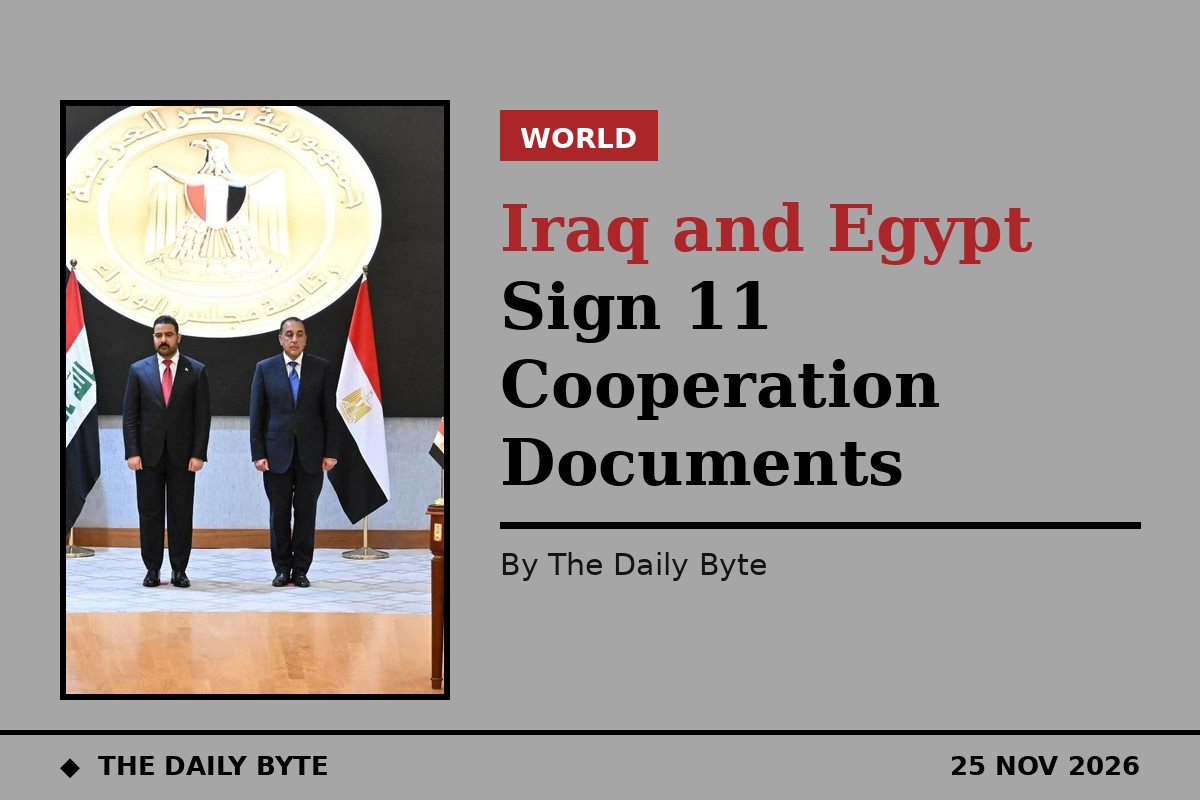
Iraq and Egypt have signed 11 cooperation documents covering taxation, medicines, nuclear regulation, fisheries, broadcasting and scientific research, at the close of the fourth session of their Higher Joint Committee in Cairo. The documents were signed on Monday at the Egyptian government headquarters in the New Administrative Capital, and reported over the following two days.
Iraqi Prime Minister Ali al-Zaidi and his Egyptian counterpart, Mostafa Madbouly, chaired the committee and then watched the signing ceremony. The visit was Zaidi's first to Egypt since he took office in May, and the committee was the fourth of its kind between the two countries.
What was signed
The package includes the official minutes of the committee session and an agreement to avoid double taxation on income and capital and to prevent tax evasion. That agreement was signed by the Egyptian Foreign Minister, Badr Abdelatty, and the Iraqi Foreign Minister, Fuad Hussein.
Six memoranda of understanding cover pharmaceuticals and medical supplies, radio and television broadcasting, fisheries, nuclear and radiation regulation, scientific research, and standards and quality control. The medicines memorandum was signed between the Egyptian Drug Authority and Iraq's Ministry of Health. Other documents link the two countries' nuclear and radiation regulators, their state broadcasters, and Iraq's Ministry of Agriculture with Egypt's lakes and fisheries authority.
The two sides also signed annexes to existing youth and sports agreements, a research cooperation memorandum between their higher education ministries, and an executive programme between Egypt's National Planning Institute and Iraq's Ministry of Planning.
Visa-free travel agreed, but no date yet
Earlier on Monday, after talks with Egyptian President Abdel Fattah al-Sisi, Zaidi announced that the two countries had agreed to lift mutual visa requirements, a step intended to make business travel, tourism and professional exchanges easier. Neither government has said when the change will take effect or published the detailed immigration rules.
During a roundtable with Egyptian business leaders, Zaidi offered streamlined investment procedures, tax and customs exemptions, and tariff protections linked to local manufacturing, as both governments try to reverse declining bilateral trade and attract Egyptian industrial investment to Iraq.
What was not agreed
Notably absent from the published list were the sectors Zaidi had named in his opening remarks as the main areas for closer cooperation: oil, electricity and investment. A proposal to supply Egypt with about 10 million barrels of Iraqi crude, which officials said before the visit was still under study, did not appear among the signed documents.
Zaidi told the committee that Iraq was working to defuse regional crises and that the cost of war would be heavy for the region and the world, according to his media office. Madbouly said Egypt was ready to expand economic, trade and investment ties. The agreements build on 12 cooperation documents signed in Baghdad in January 2025, covering transport, telecommunications, grain storage, competition policy, culture and institutional cooperation.


