Iraq Forces to Enter Jurf al-Sakhr in Militia Standoff
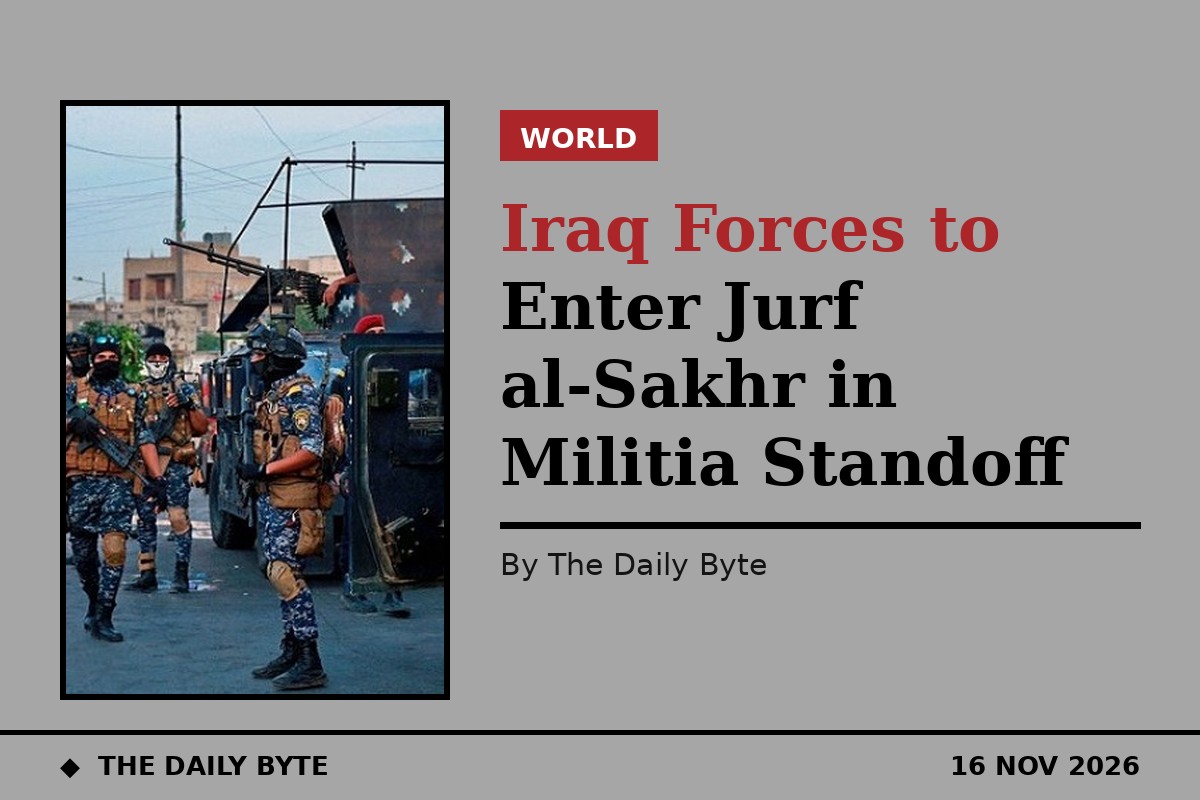
Iraqi security forces will soon enter Jurf al-Sakhr in northern Babil province after Prime Minister Ali al-Zaidi approved the move, the government has said, in a direct confrontation with the Iran-backed Kataib Hezbollah militia that has controlled the area for more than a decade.
Government spokesman Haider al-Aboudi said in a televised interview on Sunday that the forces would enter Jurf al-Sakhr, also known as Jurf al-Nasr, following the prime minister's approval. He did not specify a date for the operation.
Al-Aboudi described the issue as an internal Iraqi matter and denied Iranian involvement through mediation or other contacts. He said the government was preparing conditions for displaced residents to return to the area.
Deadline of 20 November
Earlier on Sunday, government and political sources told Shafaq News that al-Zaidi planned to deploy Counter Terrorism Service forces to take full security and military control of Jurf al-Sakhr if efforts to negotiate the armed factions' withdrawal failed.
Security sources subsequently said forces had surrounded the area from several directions, including the al-Anbar and Musayyib approaches, with a withdrawal deadline set for 8pm on Friday, 20 November.
On Sunday, Lt-Gen Abdul Amir al-Shammari, director of the Office of the Commander-in-Chief of the Armed Forces, chaired an expanded security meeting involving the army chief of staff, intelligence agencies, Federal Police commanders and senior Popular Mobilisation Forces representatives, the Iraqi News Agency reported. The same day, the Federal Police commander, Lt-Gen Mohammed Qasim al-Fahd, inspected units of the 16th Federal Police Brigade in Jurf al-Nasr.
Why Jurf al-Sakhr matters
Jurf al-Sakhr, a town and surrounding area south-west of Baghdad, has been controlled by Kataib Hezbollah since Iraqi forces and Shia militias recaptured it from Islamic State in 2014. Its original residents, mostly Sunni, have been unable to return, and the area has remained outside Baghdad's full control ever since.
The immediate crisis began after Al-Hurra published an investigation on 9 November detailing alleged oil smuggling in Jurf al-Sakhr. Parliament ordered an investigation into the alleged smuggling on 11 November, and the military was placed on its highest alert two days later as tensions rose.
Analysts say the confrontation could reshape Iran's regional influence, because Kataib Hezbollah is one of the most powerful Iran-backed armed groups in Iraq. The government has extended its deadline for armed groups to surrender their weapons until June 2027.
A test of Baghdad's authority
The move on Jurf al-Sakhr is the sharpest test yet of al-Zaidi's pledge to bring armed groups under state control. How the standoff ends, by negotiation or by force, will signal how far Baghdad is prepared to go in asserting authority over territory held by militias, and how far Tehran is prepared to let it.
There was no immediate public response from Kataib Hezbollah to the announcement. The coming days, up to the 20 November deadline, will show whether the factions withdraw or whether Iraqi forces move in as the prime minister has approved.
Source: Shafaq News; see also JBizNews analysis of the confrontation.


