Iraq Kurdistan Oil Smuggling Cost $100bn, Baghdad Says
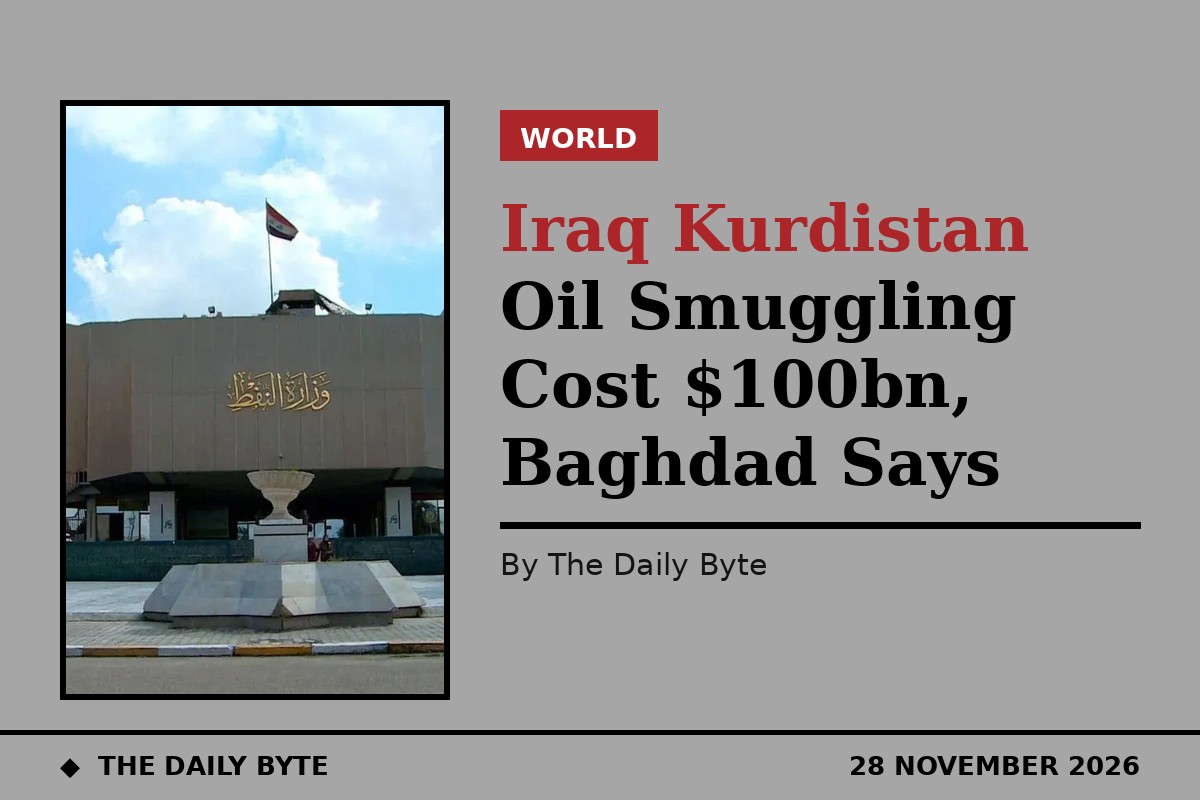
Iraq says oil exported from the Kurdistan Region outside the state oil marketer SOMO cost the country more than $100 billion between 2008 and 2025, according to a figure released by the federal government on Friday.
Government spokesman Haider al-Aboudi told the state-run Iraqi News Agency that the Federal Board of Supreme Audit had established the scale of the damage. He said crude exported away from SOMO, the State Organization for Marketing of Oil, counts as smuggling while its revenue stays out of the state treasury.
The announcement is the clearest statement yet of the financial case behind Baghdad's drive to bring Kurdish oil exports and border crossings under federal control. It comes in a week in which federal forces closed two border crossings in the Kurdistan Region, one on the Syrian border and one on the Iranian border, and Iraq's highest court ruled that Baghdad could deploy federal forces along the country's international borders, including in the Kurdistan Region.
How the figure was calculated is not clear
Al-Aboudi did not explain how the audit body reached the $100 billion figure, and no audit report was published with the statement. Reuters, reporting on the announcement, noted that it was unclear how the government had calculated the estimate. The figure should therefore be treated as an official claim rather than an independently established assessment of the loss.
The spokesman said closures and control of the international borders were aimed at smugglers, and that legal pursuit would reach any party involved in wasting what he called the state's sovereign wealth. He said Prime Minister Ali al-Zaidi's directives were clear on protecting oil wealth and preventing any tampering with it. According to al-Aboudi, the prime minister said he was concerned with protecting the people of Kurdistan, did not distinguish between one governorate and another, and had taken on defending the rights of Iraqis from Zakho to Basra.
The Kurdistan Regional Government had not responded to the figure when the announcement was checked on 27 November. The two sides have long disagreed over who controls Kurdish oil production and sales, and over how the revenue is shared. The Kurdistan Regional Government sold oil independently through Turkey for years, and although the two sides reached an interim arrangement that allowed exports to resume in 2025, disagreements over contracts, revenue distribution and constitutional authority have persisted.
Trump backs Baghdad's crackdown
The dispute moved up the agenda this week when US President Donald Trump publicly backed the Iraqi prime minister's efforts. In a post on Truth Social on Friday, 27 November, Trump said the United States supported al-Zaidi's efforts to assert state authority throughout Iraq and to build a united country capable of making its own political decisions. It was Washington's first public endorsement of the latest federal measures targeting oil exports and security arrangements in the Kurdistan Region.
Thousands of people marched in Erbil against the federal measures, and the Kurdistan Regional Government regards the decisions as a breach of its constitutional rights. The two sides are due to meet in Baghdad on 1 December under the supervision of the head of the Supreme Judicial Council.
The row matters beyond Iraq's borders because it decides who controls one of the region's significant oil flows and who receives the revenue. For Baghdad, routing all exports through SOMO is a matter of sovereignty and public money. For Erbil, control over oil sales has been a central part of the region's autonomy since 2008. Until the two sides agree on a mechanism, the $100 billion figure is likely to remain both a political argument and a disputed number.


