Najaf-Iran Flights Resume Amid US Sanctions
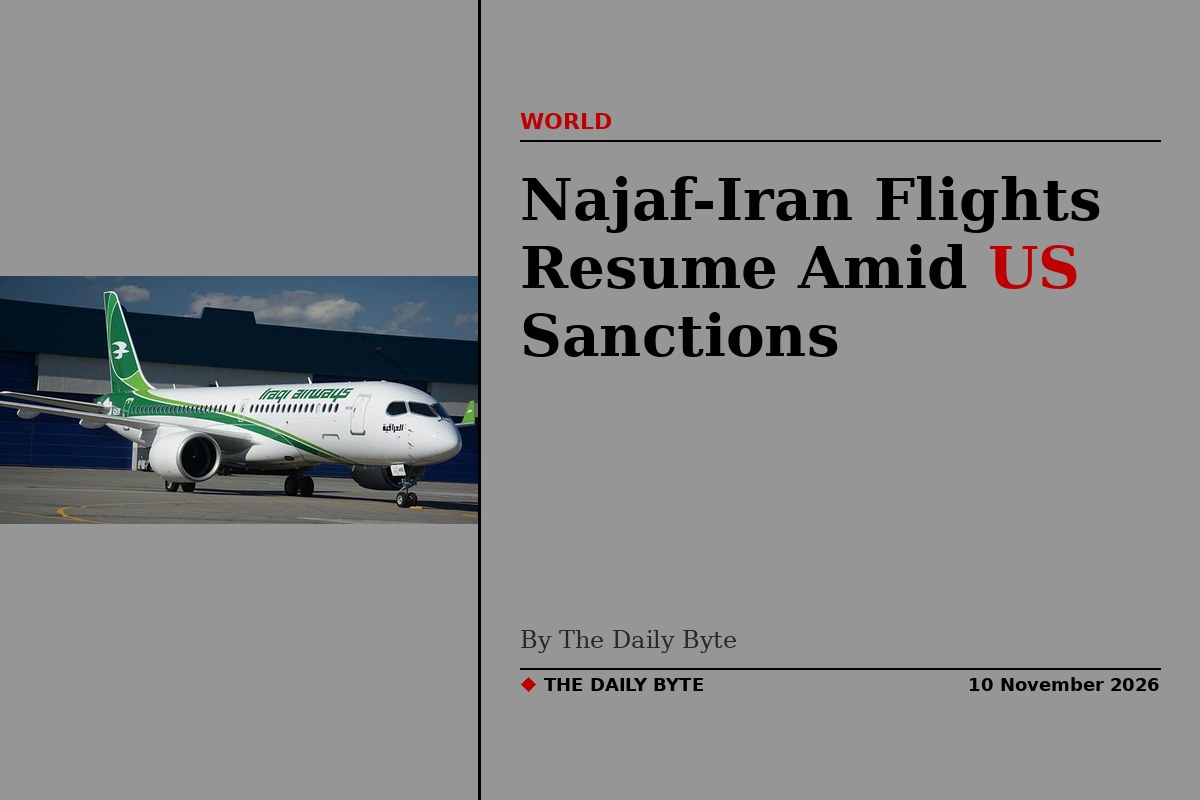
Iraqi Airways has resumed commercial flights between Najaf and Iranian airports, after a temporary suspension driven by fears of secondary sanctions from the United States.
The flights restarted on Monday, 9 November, according to Iraq’s state-run Iraqi News Agency. Najaf and three other Iraqi airports had temporarily suspended flights linked to Tehran, after Washington’s sanctions on Iranian aviation put foreign airports and service companies at risk of penalties.
The resumption allows Iraq’s flag carrier to bypass standoffs with international contractors whose fears of secondary penalties had halted handling services for flights linked to Tehran.
Sanctions that grounded the routes
US sanctions on Iranian airlines came into force on 23 September, putting foreign airports and companies that service sanctioned Iranian carriers at risk of secondary sanctions. The US Treasury had designated 27 Iranian airlines on 8 September, targeting the last carriers not already under sanction.
Airports in Azerbaijan, Georgia, Iraq, Oman and the United Arab Emirates have cancelled flights by Iranian airlines since the measures took effect. The UAE suspended all flights by Iranian airlines from 24 September until further notice, and Iraq stopped Iranian flights at Baghdad airport from 23 September and at Najaf, Erbil and Sulaimaniyah airports from 25 September.
The measures have not grounded Iranian aviation altogether. According to Iran’s semi-official Fars news agency, the head of Tehran’s Imam Khomeini International Airport said flights to East Asia were operating without cancellations.
Tehran takes its case to the UN
Earlier on Monday, Iran filed a formal complaint with the International Civil Aviation Organization (ICAO) over the US aviation sanctions, Iran’s official IRNA news agency reported.
Iran’s Civil Aviation Organisation chief, Abuzar Shiroudi, told IRNA that coordinated efforts were under way with Iran’s Foreign Ministry to resume flights legally. He said the ICAO had ruled in Iran’s favour regarding its formal protest over the US aviation sanctions.
Mr Shiroudi also said Tehran had filed a complaint with the International Court of Justice in The Hague over attacks on airports, aircraft and radar systems. The case remains under review, and any compensation depends on its final ruling, he added.
Iran’s civil aviation chief said Tehran was seeking explanations from several countries regarding halted flight routes through diplomatic channels.
A lifeline for pilgrims and travellers
The Najaf route matters well beyond trade. Najaf is one of Shia Islam’s holiest cities, and the flights carry large numbers of pilgrims between Iran and Iraq. The suspension had pushed travellers to overland routes, adding hours to journeys that are normally a short flight.
Iraqi Airways, rather than an Iranian carrier, operates the resumed service. That distinction matters under the sanctions regime, which targets companies that service sanctioned Iranian airlines, and Iraqi Airways had previously held a US licence for the Najaf to Iran route.
What happens next
It is not yet clear whether other suspended routes will follow Najaf back into service, or whether further Iraqi airports will restore flights linked to Iran. Much will depend on how Washington applies its secondary sanctions and on the outcome of Iran’s complaint to the ICAO.
For now, the Najaf resumption offers a limited reopening in an aviation network that has been sharply disrupted since September, and a small sign that Iraq is finding ways to keep its busiest pilgrim route running despite the pressure.


