Iraq Oil Exports 3.6 Million Barrels a Day, $8.8bn
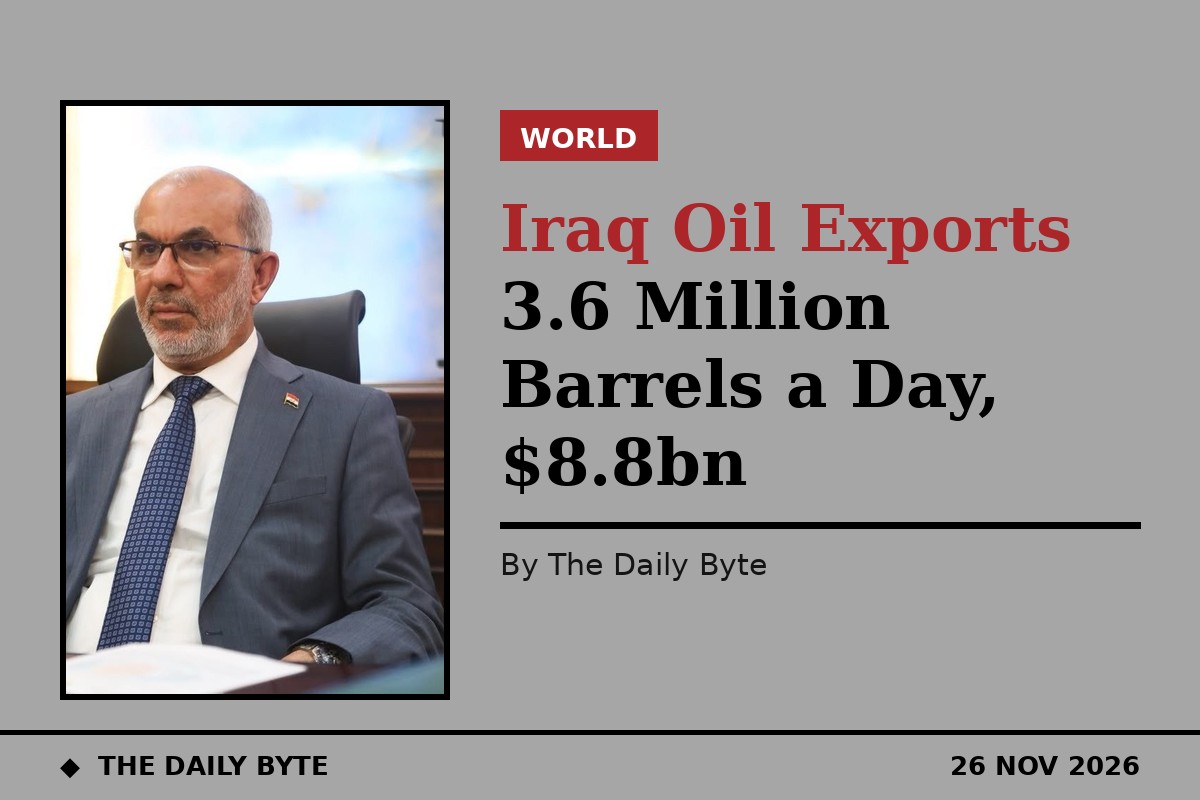
Iraq has raised its oil exports to 3.6 million barrels a day, Oil Minister Basim Mohammed Khudair al-Abadi said on Thursday, with revenue for October reaching $8.8 billion.
In an interview with the state-run Iraqi News Agency, al-Abadi said exports had recovered from about 200,000 barrels a day when the current government took office in May. He said the October revenue figure had not been achieved even before the crisis, although the ministry has not published a detailed breakdown of the October sales.
Iraq relies on oil for the vast majority of state revenue, and the recovery in exports matters well beyond Baghdad. The country is OPEC's second-largest producer, and its sales have been disrupted this year by the war in the Gulf and by attacks on shipping in the Strait of Hormuz, through which most of its exports leave.
Exports through Hormuz, Turkey and Syria
Al-Abadi said most exports left through the Strait of Hormuz, with further volumes moving through the pipeline to Ceyhan in Turkey and under a contract to truck crude to Syria by tanker. Sales of fuel oil, sulfur and naphtha had brought in more than $4.5 billion, he said.
The minister said Baghdad was negotiating with OPEC to raise Iraq's production ceiling, and was in talks with ExxonMobil, Chevron and ConocoPhillips about investing in several oil fields. He said he hoped those talks would produce draft contracts next month. Companies already working in Iraq were asked last week to submit plans to expand production capacity.
He also said there were no plans to raise the official prices of gasoline, diesel or kerosene, a sensitive issue for households already facing higher living costs.
Minister denies resignation reports
The minister has faced public criticism in recent weeks as investigations into oil smuggling have widened, and earlier this week he denied that he had resigned under pressure. In Thursday's interview he said pressure "from various quarters" would not deter him, and that judging his performance was a matter for the government.
The export recovery comes as Baghdad moves to take control of oil fields and border crossings in the Kurdistan Region, a dispute that has escalated this week with protests in Erbil and Duhok and the closure of two Kurdish-run border crossings. The dispute is due to be discussed at a national dialogue on 1 December.
Iraq's northern export pipeline to Turkey resumed operations this month after a 12-year suspension, adding another route for Kurdish crude. How Baghdad and Erbil share the revenue from that oil remains one of the central issues in the dispute, alongside control of the border crossings and the oil fields in the disputed territories.


