Iraq PM Sacks Nine Officials Over Oil Smuggling Probe
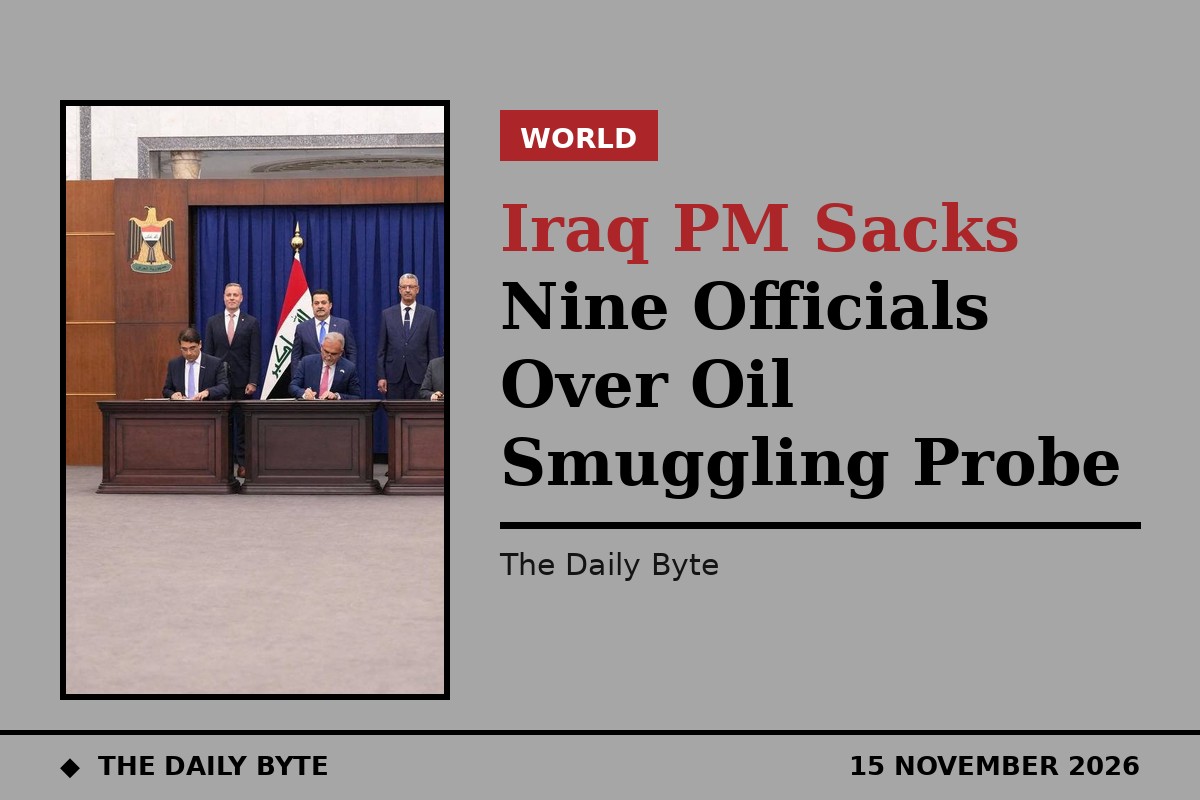
Iraq’s Prime Minister Ali al-Zaidi has dismissed nine senior security and government officials over an alleged oil smuggling operation in Jurf al-Nasr, a stronghold of the Iran-backed Kataib Hezbollah group.
Al-Zaidi chaired an emergency security meeting on Saturday to review the findings of a committee investigating smuggling in the area, in Babil province south of Baghdad. Military spokesperson Sabah al-Numan told the Iraqi News Agency that the investigation had confirmed information from the Federal Intelligence and Investigations Agency about oil-smuggling activity, illegal refineries and irregularities in the handling of petroleum products.
The prime minister ordered all individuals accused of involvement in the smuggling operations to be referred to the judiciary for legal action.
Who was dismissed
The nine officials dismissed include the Babil provincial police chief, the director of North Babil Police, provincial intelligence and counterterrorism officials, the director of national security in Babil, and the provincial intelligence and security director serving under the Defence Ministry.
The list also includes the Babil commander of the Popular Mobilization Forces, the commander of the Interior Ministry’s Sixth Energy Police Brigade, and the director of the Oil Pipelines Company at the Ministry of Oil.
Network said to be worth millions
Al Jazeera, citing reporting around a leaked intelligence assessment, said the alleged network may have been worth as much as $30 million a month. The assessment, based on satellite imagery from 2021 to 2026, documented suspected illegal extraction near pipelines and repeated tanker movements at four sites said to be protected by an armed faction.
Babil Governor Ali Turki al-Jamali, who denied the allegations, resigned on Thursday.
Deadline for handover
Shafaq News reported on Sunday that al-Zaidi had given Kataib Hezbollah until the end of this week to hand full security responsibility for Jurf al-Sakhr to government forces, warning of possible military intervention. The committee investigating the smuggling had been prevented from accessing some parts of the subdistrict, the report said.
The move is part of al-Zaidi’s effort to cut funding for Iran-backed militias that have resisted disarmament, a campaign that has faced delays and public defiance from hardline factions. Authorities have also opened broader probes of crude smuggling routes, including alleged flows from Kirkuk and the Kurdistan Region through Iran to Afghanistan.
No convictions have been announced. The referrals mean the case now moves into the judicial process, and those accused remain subject to the presumption of innocence unless a court establishes individual responsibility.


