Iraq Targets 10 Million Barrels of Oil a Day by 2030
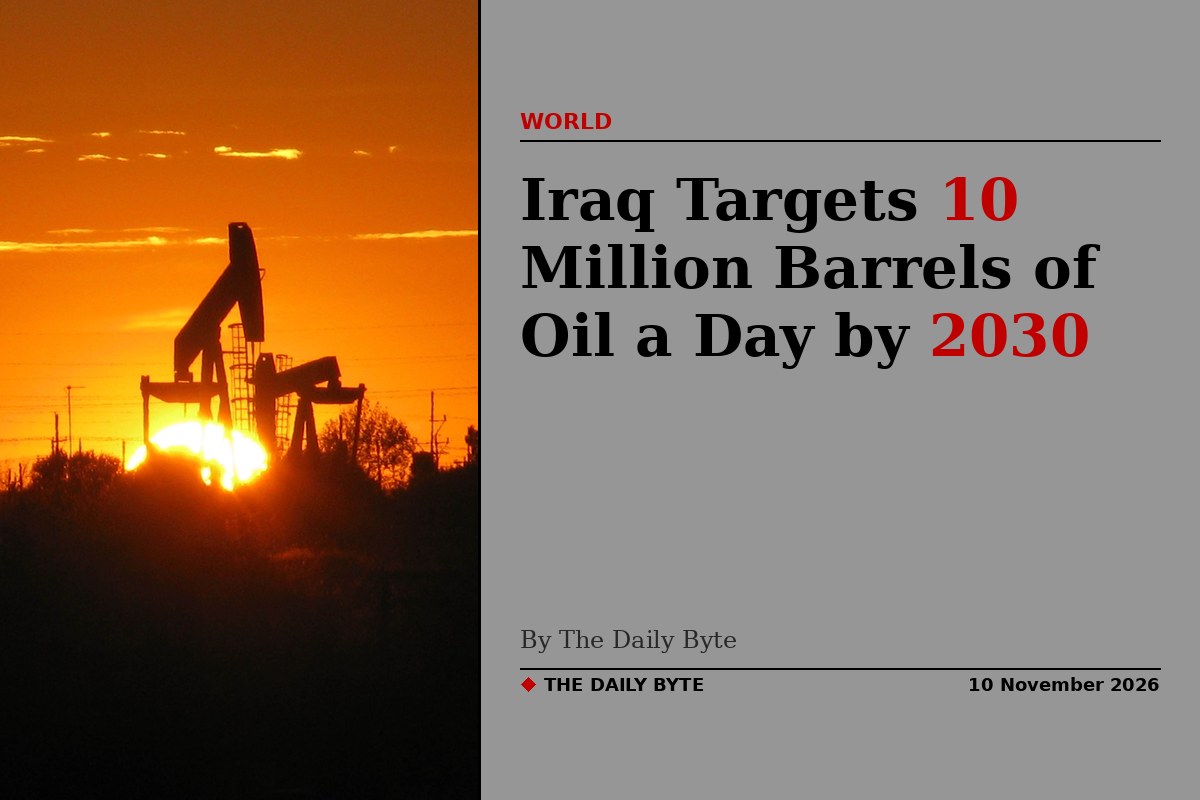
Iraq aims to increase oil production to 10 million barrels a day by 2030, Prime Minister Ali al-Zaidi has said, setting one of the most ambitious targets in the country's modern oil history as Baghdad looks to rebuild an economy battered by war and a shipping blockade.
Al-Zaidi announced the target on Sunday at a meeting with provincial officials in Al-Anbar, saying higher output would strengthen the economy and support development, Shafaq News reported. The goal would more than double Iraq's current production of around 4 to 4.5 million barrels a day. Iraq's crude oil exports averaged 3.35 million barrels a day in October, according to Bloomberg.
The target is not new in outline: on 21 August, al-Zaidi said Iraq planned to raise output to between 8 million and 10 million barrels a day within six years and had sent a delegation to Saudi Arabia to seek a higher OPEC quota, Reuters reported. But the 10 million figure, now attached to a firm 2030 date and a 2027-2030 sector plan, puts the ambition on the record as formal policy.
Chevron deal at West Qurna-2 is central to the plan
A key piece of the plan is the West Qurna-2 field, one of Iraq's largest. The oil ministry said on 3 November that contract terms for the field had been agreed with Chevron, with signing targeted before the end of 2026, according to Oil and Gas Middle East. West Qurna-2 currently produces about 460,000 barrels a day, roughly 10 percent of Iraq's output, and Iraq has previously said it wants to lift the field to between 750,000 and 800,000 barrels a day after Chevron takes over operations.
Chevron signed memorandums of understanding with the Iraqi government covering West Qurna-2 and the Nassiriya oilfields, and Iraq is targeting initial production capacity of 600,000 barrels a day from the Nassiriya project within seven years of work starting. Deputy Prime Minister for Energy Affairs Mohsen al-Mandalawi met the US charge d'affaires, Stephen Fagin, on 8 November as the plan was being discussed.
Hurdles: the OPEC quota and the Hormuz blockade
Analysts say the target is technically reachable but faces two large obstacles. First, Iraq is a founding member of OPEC and its second-largest exporter, and its output is governed by OPEC+ quotas. As Iraqi energy analyst Walid Khaddouri has noted, Iraq cannot increase output at will unless it leaves the group, so the plan depends on Baghdad winning a higher quota from its partners.
Second, Iraq's only sea outlet for its oil is the Strait of Hormuz, where shipping has been disrupted by the war with Iran. Production tumbled to as low as 1.4 million barrels a day at one point after Iran attacked ships passing through the strait. Iraq has begun negotiations over possible pipeline connections through Jordan and Syria to reduce its dependence on the single southern maritime outlet, and regional warfare has already cost Iraq about $60 billion, chiefly through disrupted oil exports and maritime activity, according to its foreign minister.
Wood Mackenzie, in a separate assessment, was more cautious, forecasting that Iraq's oil output could reach 5.5 million barrels a day by 2030, with gas output more than doubling to 4.4 billion cubic feet a day. The gap between that forecast and the prime minister's 10 million target shows how much of the plan depends on new investment, new export routes and OPEC agreement.
How much oil does Iraq produce now? About 4 to 4.5 million barrels a day, with crude exports averaging 3.35 million barrels a day in October, according to Bloomberg.
Why does Iraq want 10 million barrels a day? Prime Minister Ali al-Zaidi says higher output will strengthen the economy and support development, and Iraq holds about 145 billion barrels of recoverable crude, the world's fifth-largest reserves.


