Iraq Court Backs Baghdad Troops in Kurdistan
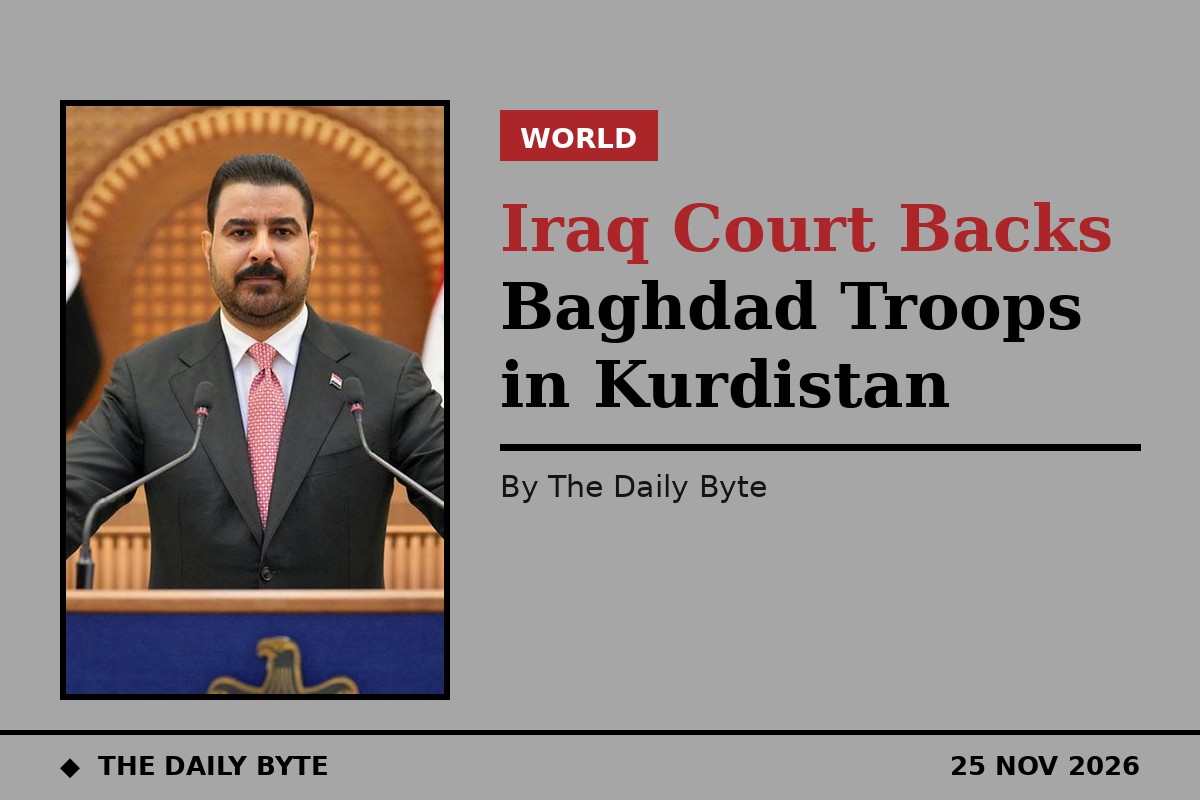
Iraq's Federal Supreme Court ruled on Wednesday that Baghdad can deploy federal troops to secure Iraq's international borders, including in territory administered by the Kurdistan region, Iraqi state television reported. The ruling backs Prime Minister Ali al-Zaidi's push to assert more central control over the semi-autonomous region.
Zaidi ordered federal authorities on Tuesday to take over border crossings run by the Kurdistan Regional Government, after an investigation into oil smuggling at the state-run North Oil Company. He also directed the federal oil ministry to manage fields under Kurdish security control in Kirkuk, Nineveh, Diyala and Salahuddin provinces.
Court sets conditions on Baghdad's powers
The court said federal authorities could oversee the agencies operating at all border crossings, including those in the Kurdistan region, but must coordinate with regional and provincial governments on customs. The oil ministry could also oversee and audit oil and gas fields, while Baghdad shares responsibility for managing production with regional governments and producing provinces.
The Kurdistan Regional Government rejected what it called 'military language and threats' in a statement from the Iraqi military spokesman, and called for talks with Baghdad. It said it was working with the federal authorities against corruption and to end oil smuggling across Iraq.
Smuggling claims behind the crackdown
Iraq's state news agency, citing a government intelligence report, said North Oil Company oil was diverted from Kirkuk and Sulaymaniyah and smuggled to Iran and onward to Afghanistan. The decision comes a week after Zaidi took on Kataib Hezbollah, the Iran-backed Shi'ite militia, which let soldiers into its Jurf al-Sakhar stronghold.
Analysts cautioned the measures may prove hard to enforce against factions empowered by decades of warfare. Renad Mansour of Chatham House said Zaidi was trying to build a centralised political order and reclaim sovereignty for a fragmented state.


