Is the US Government Shutdown Over? House Vote Explained
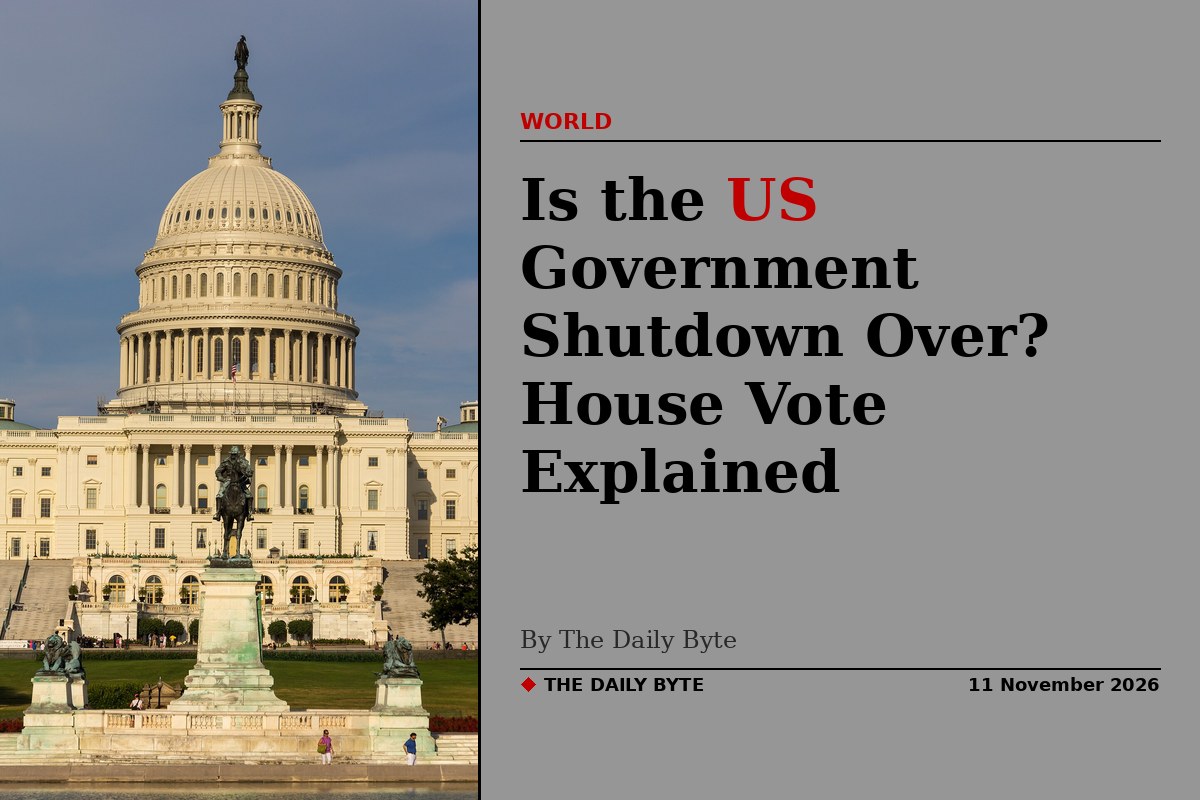
No — not yet. The United States Senate voted 60-40 late on Monday night, 9 November, to pass a funding package that would end the longest government shutdown in American history. But a Senate vote alone does not reopen the government. The bill must still pass the House of Representatives, which is expected to vote on Wednesday evening, 11 November, and then be signed by President Donald Trump. Until both of those steps happen, the shutdown — which began on 1 October — is still in force.
If the House passes the bill as expected and the president signs it the same night, federal agencies could begin reopening within hours. Even then, getting the whole machinery of government back to normal will take longer: staff must be recalled, systems restarted and a six-week backlog cleared. This explainer sets out what the Senate passed, what still has to happen, when workers will be paid, and what the deal deliberately leaves unresolved.
What did the Senate actually pass?
The Senate approved a package built around a short-term funding bill — known in Washington as a continuing resolution — combined with three full-year spending bills. Seven Democrats and one independent who caucuses with the Democrats, Angus King of Maine, broke ranks to vote with Republicans, taking the total to the 60 votes needed to overcome the Senate's filibuster threshold. The final vote came about four hours after a series of procedural votes that began shortly before 6 p.m. in Washington on Monday.
| Key fact | Detail |
|---|---|
| Senate vote | 60-40, late on Monday night, 9 November 2026 |
| Shutdown began | 1 October 2026 |
| Length so far | 41 days — the longest in US history, passing the 35-day record of 2018-19 |
| Most of the government funded through | 30 January |
| Full-year funding through the end of the fiscal year | Agriculture (including the Food and Drug Administration), military construction and veterans' affairs, and the legislative branch |
| Federal workers | Layoffs made during the shutdown reversed; back pay guaranteed for furloughed staff |
| Not included | No extension of Affordable Care Act health insurance subsidies |
| Next step | House vote expected on Wednesday evening, 11 November |
The package funds most of the federal government through 30 January, giving lawmakers about twelve more weeks to negotiate full-year spending bills for the rest of the government. The three areas that receive full-year funding — agriculture, military construction and veterans' affairs, and the legislative branch — are covered through the end of the current fiscal year.
The deal also reverses layoffs of federal workers made during the shutdown and guarantees retroactive pay for those who were furloughed. That matters because hundreds of thousands of federal workers have gone unpaid for more than a month, and the shutdown has also delayed food assistance for millions of families and disrupted air travel across the country.
Why is the government still shut if the Senate voted yes?
Because the United States has a two-chamber legislature, and a bill only becomes law when both chambers pass the same text and the president signs it. The Senate's vote was the breakthrough, not the finish. The House of Representatives has been out of session since 19 September, when it passed its own funding bill, and Wednesday will be its first day back in session in 54 days.
House Speaker Mike Johnson told lawmakers to return to Washington and gave them 36 hours' formal notice so the House could vote as soon as possible. He has said he expects the bill to pass quickly, and President Trump signalled his support earlier on Monday, telling reporters: "We're going to be opening up our country very quickly." The president has already endorsed the legislation, so if the House passes it unchanged, a signature the same night is the expected outcome — and federal agencies could then begin reopening within hours.
There is still a risk, even at this late stage. If the House amended the bill, it would have to go back to the Senate, and the shutdown would continue. House Minority Leader Hakeem Jeffries has said his party will not support legislation that fails to extend the health care tax credits, and Speaker Johnson is expected to need at least some Democratic votes because defections within his own conference are likely. The expectation in Washington is that the bill passes, but it is not a formality until the votes are counted.
When will federal workers be paid?
The funding package guarantees back pay for furloughed workers, and it reverses the layoffs of federal workers made during the shutdown. Once the president signs the bill, agencies can begin recalling staff and processing the pay they are owed. Workers who kept working without pay during the shutdown are also covered by the back-pay guarantee.
Exactly how quickly the money reaches bank accounts will vary by agency, because payroll systems have to be restarted and six weeks of missed pay periods worked through. The law requires the back pay to be paid; the practical question is speed, not entitlement. Federal workers should not expect every system to be normal on the first morning back — reopening a government is a phased process, with offices, call centres and services coming back in stages.
What happens to flights, food aid and public services?
The shutdown's effects have been felt well beyond Washington. Air travel has been disrupted, with flight cuts and delays at airports across the country as air traffic controllers and other aviation staff worked without pay. Food assistance has been delayed for millions of families. National parks, museums and other federal services have been closed or running on reduced staffing.
None of that switches off the moment the president signs. Flights, for example, depend on controllers returning to their posts and schedules being rebuilt, and food aid depends on state agencies receiving and processing federal funds again. The direction of travel after a signature is clear — services restart and backlogs begin to clear — but anyone planning travel or waiting on a federal service should expect a few days of disruption while the system catches up.
What was the fight actually about?
At the centre of the standoff was health care. The enhanced tax credits that help more than 20 million Americans pay for health insurance under the Affordable Care Act are due to expire at the end of December. Senate Democrats had made extending those subsidies the price of reopening the government. The deal the Senate passed does not extend them.
Instead, Senate Majority Leader John Thune has promised a vote on extending the subsidies no later than the second week of December. That promise was enough for the eight Democratic caucus members who broke ranks, but the measure faces long odds in the Republican-controlled Senate and is even less likely to pass in the Republican-controlled House. Senator Angus King, one of the eight, defended the decision by saying a 30 or 40 per cent chance of success on the tax credits was better than the zero per cent assured if the shutdown continued and no vote was ever held.
The split inside the Democratic Party was bitter. Senator Bernie Sanders said those who voted with the Republicans had made a "horrific mistake" and warned that health care premiums could double for more than 20 million Americans. Senator Chris Murphy called the continuing resolution a mistake that "will make things worse, not better". Supporters of the deal argue that almost seven weeks of shutdown had produced no movement on the subsidies, while the harm — unpaid workers, delayed food aid, disrupted flights — kept growing.
Could the government shut down again?
Yes — the deal only buys time. Most of the government is funded through 30 January, so if Congress cannot agree full-year spending bills by then, the same fight could return in the new year. The December vote on health care subsidies is also unresolved, and the two issues are likely to collide in the same negotiations.
That is why the House vote on Wednesday matters beyond the immediate reopening. It ends the longest shutdown in American history, but it does not settle the spending and health care arguments that caused it. The next deadline is already on the calendar.
Frequently asked questions
Is the US government shutdown over? Not yet. As of Wednesday, 11 November, the Senate has passed a funding deal by 60 votes to 40, but the House still has to vote and President Trump still has to sign the bill. Until then, the government remains shut.
When will the US government reopen? If the House passes the bill on Wednesday evening as expected and the president signs it the same night, federal agencies could begin reopening within hours. Full normal service will take longer as staff return and backlogs are cleared.
Will federal workers get back pay? Yes. The Senate-passed package guarantees retroactive pay for furloughed workers and reverses layoffs made during the shutdown. The timing of individual payments will depend on each agency's payroll system.
What happens to the health insurance subsidies? The deal does not extend the Affordable Care Act tax credits, which expire at the end of December. Senate Majority Leader John Thune has promised a vote on an extension by the second week of December, but it faces long odds in both chambers.
How long was the shutdown? It began on 1 October 2026 and had lasted 41 days when the Senate voted on 9 November, making it the longest shutdown in US history. The previous record was 35 days, set in 2018-19.
Sources: The Well News — Senate Advances Bill to End Shutdown, House Vote Slated for Wednesday; The Hourly News — Senate Passes Funding Bill 60-40 to End Record 41-Day Government Shutdown (citing The Well News and Associated Press reporting).


