Isolated Awá People Emerge From Brazil's Amazon as Loggers Close In
By The Daily Byte
·18 Nov 2026
·4 min read
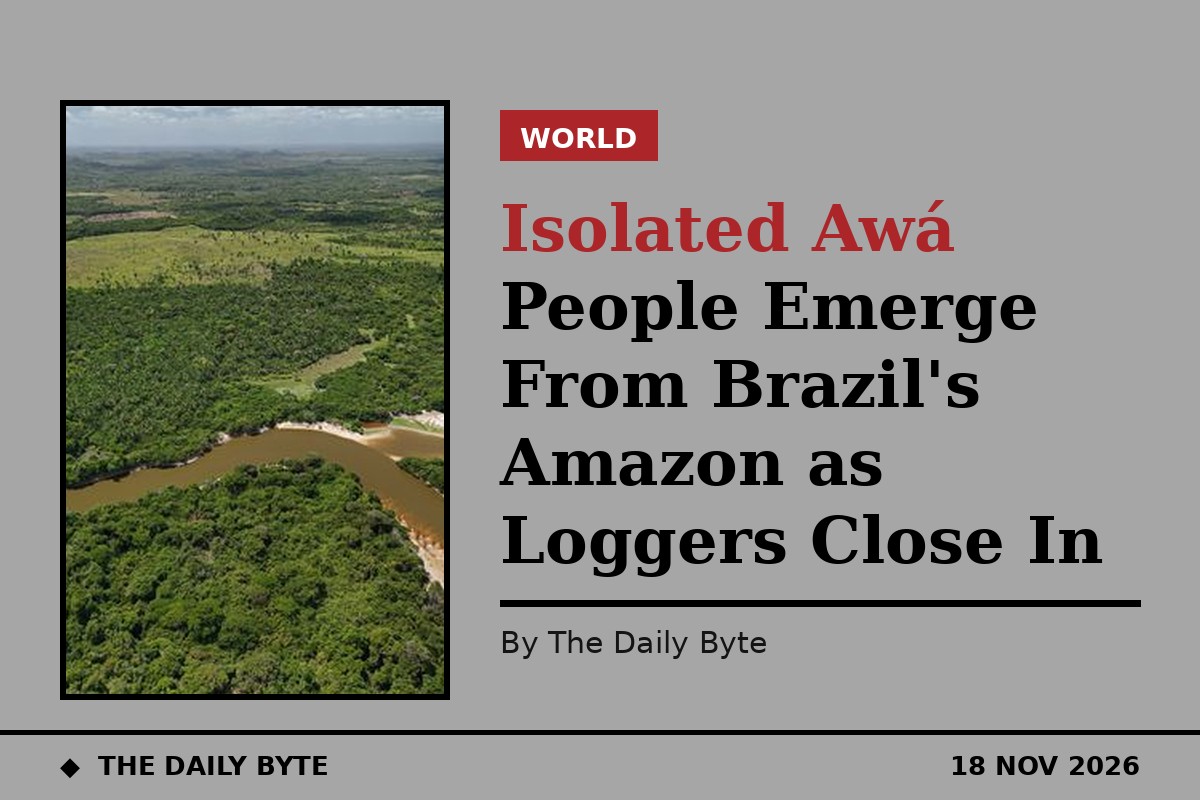
About 20 members of an isolated Awá Indigenous group have emerged from Brazil's Amazon rainforest and approached a government team, asking for food, in a rare encounter that advocates say shows the intense pressure the community faces from loggers, hunters and ranchers.
Survival International, a UK-based Indigenous peoples' rights group, shared images on Tuesday 17 November of what it described as a "historic encounter" the day before in the Araribóia Indigenous Land, in the north-eastern state of Maranhão. The group said the Awá had approached a government team and a nearby Guajajara village.
"There hasn't been a similar approach like this with the Awá in recent history, certainly for some decades," Survival International said. The organisation suggested the people may have sought food because outsiders entering their territory had made it harder for them to live as they have for generations.
Readers should note one important caveat: Reuters, which reported the encounter, said it could not independently verify the location and date of the footage, although no older versions of it had appeared online before 17 November.
## What happened in Maranhão
The encounter took place near a government access-control post operated by Funai, Brazil's Indigenous affairs agency, and the Tawari village, home to the Guajajara people. Members of the Guajajara community recorded the meeting, and Survival International released the images at the request of a local Indigenous group known as the Guardians of the Amazon, which campaigns against illegal loggers and cattle ranchers.
Funai told Reuters it was reviewing videos and accounts shared on social media showing isolated Awá people interacting with a village in the Araribóia Indigenous Land. The agency said it had activated a contingency plan for contact situations, with a focus on minimising health risks for the Indigenous people.
Funai also stressed that the Brazilian state is not seeking contact with the group and that its policy remains one of non-contact. The Awá are a Tupi-Guarani people of north-western Maranhão, some of whom continue to live in voluntary isolation, according to Funai.
## Why the encounter matters
Isolated Indigenous groups across the Amazon, the world's largest rainforest, have come under growing threat in recent decades from encroaching illegal miners, loggers and ranchers. Survival International says it has identified 196 uncontacted Indigenous groups across 10 countries in South America, Asia and the Pacific, and that almost 95 per cent of them are in the Amazon, with 124 in Brazil alone.
"The uncontacted Awá are under extreme pressure as intruders encroach from all sides of their territory, driving them into an ever-smaller island of the Amazon rainforest, surrounded by destruction," said Caroline Pearce, Survival International's director, as reported by Reuters.
The Maranhão Indigenous people's organisation COAPIMA said on Tuesday that the encounter "underscores the importance of careful action by the responsible agencies, given the risks that unplanned contact can pose to isolated Indigenous populations, mainly through exposure to diseases and other threats to their integrity."
## What happens next
Funai, the Ministry of Indigenous Peoples and the Indigenous Health Secretariat are monitoring the situation, according to reports of the encounter. The immediate priority, officials say, is to limit health risks to the Awá, who have little or no immunity to common diseases carried by outsiders.
The episode is a reminder of how fragile the position of uncontacted peoples remains. Their territories are legally protected, yet enforcement on the ground is thin, and the economic forces pushing into the forest — timber, cattle and mining — have not gone away.
For the Awá, the brief emergence from the forest raises difficult questions that Brazil's authorities will have to answer in the days ahead: why the group felt it had to seek food from outsiders, and what protection can now be put in place so that it does not have to do so again.
## Frequently asked questions
**Who are the Awá?**
The Awá are a Tupi-Guarani Indigenous people of north-western Maranhão in Brazil. Some members of the community live in voluntary isolation, avoiding contact with outsiders.
**What does "uncontacted" mean?**
Survival International defines uncontacted groups as Indigenous peoples who avoid contact with outsiders and have no permanent relationship with them, even while being aware of the outside world.
**Why is contact dangerous for isolated peoples?**
Unplanned contact carries serious risks, above all exposure to diseases to which isolated peoples have little immunity, as well as threats to their land and way of life.
Sources: [Reuters](https://www.reuters.com/world/americas/rare-images-isolated-indigenous-group-brazil-highlight-threats-2026-11-17/) reported the encounter on 17 November 2026; Survival International released the images and described the encounter, and Funai, Brazil's Indigenous affairs agency, confirmed it was reviewing the footage and had activated its contingency plan for contact situations.


