Israel Adds $5bn to Defence Budget Amid Funding Strain
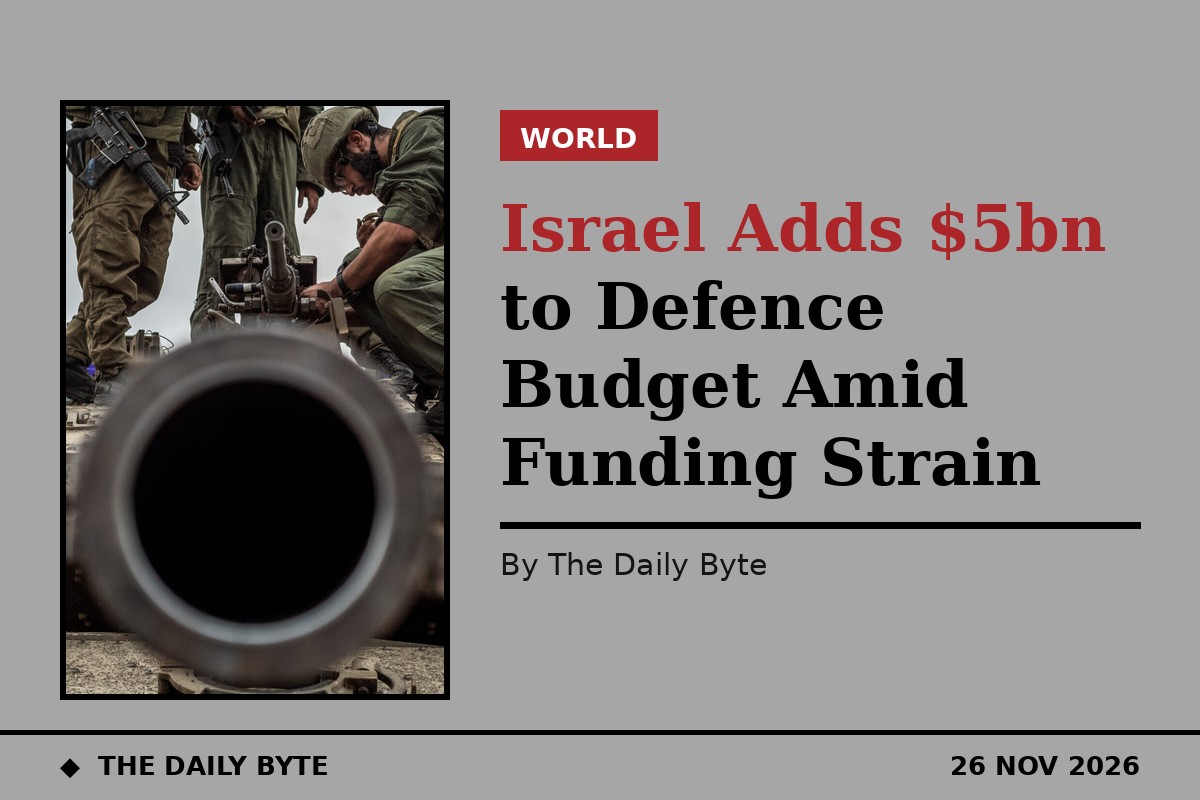
Israel's Joint Committee on the Defense Budget has approved an increase of about $5 billion to the country's defence budget, despite uncertainty over who will be prime minister after the October 27 elections and budget pressures that are expected to stretch into 2027.
Defence Minister Israel Katz welcomed the decision, saying the committee had approved "an addition of approximately NIS 17.3 billion to the 2026 defense budget, as part of the initiative I led to strengthen the IDF's capabilities and build up its forces for the coming years."
What the extra money is for
Katz said the approval would let Israel "advance plans for blue-and-white self-reliance in long-term procurement in space, attack helicopters, air defense, and other classified areas." The term "blue and white", the colours of the Israeli flag, refers to an effort to make Israel more independent in defence production by investing in local companies and products.
"We will continue to act decisively to ensure Israel's military superiority and give the IDF the tools it needs to protect our citizens and prevail in every arena," Katz said.
The decision was reported on November 25 by Breaking Defense, and confirmed in a separate report by the TPS news agency on November 24, which put the figure at NIS 17.3 billion, or $5.17 billion.
A year of repeated top-ups
The increase is the latest in a series of additions to a defence budget that has grown repeatedly during 2026. In March 2026, Israel approved a record defence budget of $45 billion, but it has continued to receive supplemental spending since then, including a transfer in August of around $300 million, a $5 billion increase in September and an October deal to fund Apache helicopter purchases.
Breaking Defense reported that Tuesday's committee decision would appear to bring the defence budget to around $55 billion. The increases were funded by moving money from one part of the approved budget to the defence ministry, including from the Ministries of Transport, National Security and Education, among others.
Where the money comes from
That pattern of shifting funds between ministries has become a recurring feature of Israel's wartime budgeting, as the government has repeatedly moved money to cover defence costs while other departments absorb the cuts. The committee's approval does not by itself resolve the longer-term question of how the higher level of spending will be paid for in future years.
Israel's Ministry of Defense Director General Amir Baram said the Apache deal was made possible by "creative solutions we developed together with our American partners," without elaborating. He said the ministry was working to sign more agreements for unnamed "platforms, munitions, interceptors, and more. This is to ensure immediate readiness for any scenario, alongside the implementation of the decade-long force buildup plan."
Debts and the end of US aid
At the same time, Israel appears to be in debt to its own state-run defence companies, Israel Aerospace Industries and Rafael Advanced Defense Systems. On November 12, IAI said in its third quarter financial results that, as of September 30, 2026, the Ministry of Defense's outstanding debt to the company "amounts to billions of shekels" and called on the ministry and the Ministry of Finance to reach an urgent agreement to settle it.
Israel's Calcalist publication said in October that the debt is around $2.3 billion to Rafael and around $2 billion to IAI. Rafael has not released a statement about the debt issue.
The budget challenges will continue into the new year, especially following the announced end of US military aid. It is unclear, however, when or how that will go into effect. The new Knesset is now led by the opposition, even though the opposition has not yet been able to form a new government, and if that situation continues it will also affect the budget discussion in 2027.


