Israel Demolishes Hezbollah Tunnel in South Lebanon
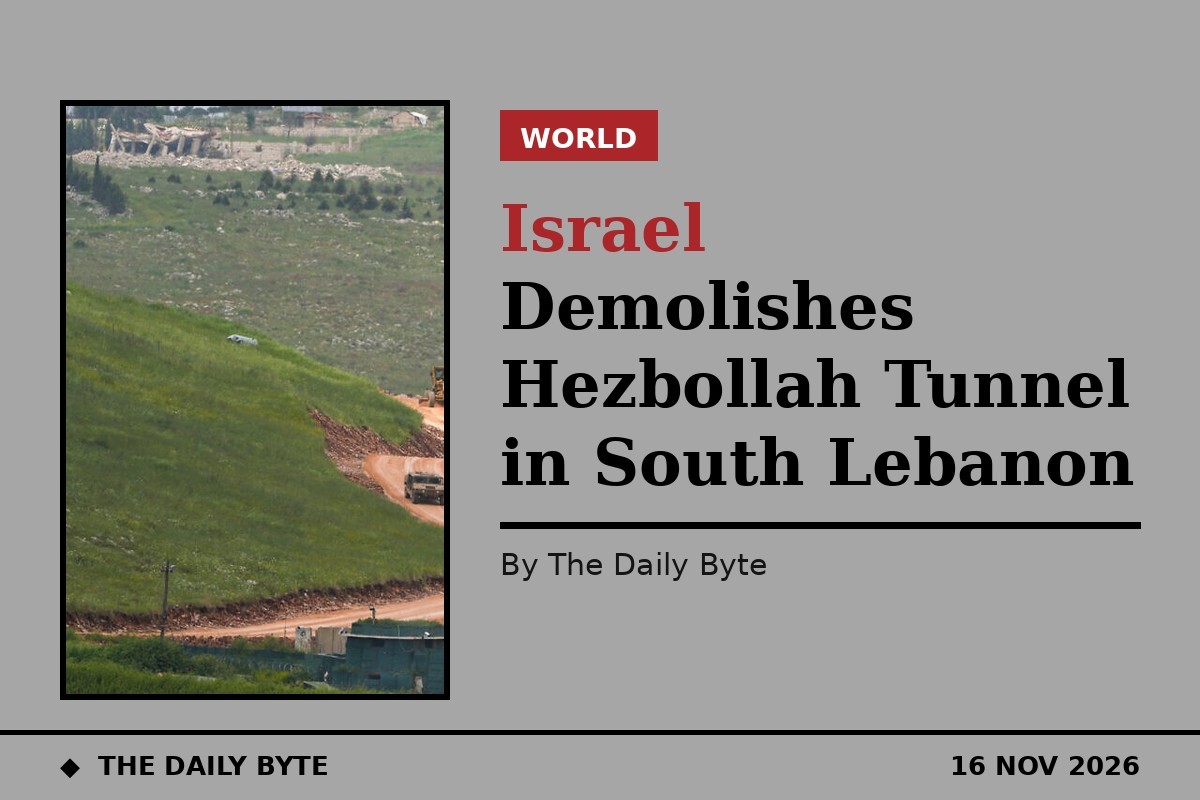
Israeli forces have demolished a 35-metre underground tunnel near Majdal Zoun in southern Lebanon, the Israel Defense Forces (IDF) announced on Sunday, 15 November. The tunnel contained two rooms prepared for Hezbollah operatives, according to the military.
The operation was carried out by troops of the 300th Brigade, operating under the 91st Division in the security zone in southern Lebanon, together with the Yahalom combat engineering unit. The IDF released footage from inside the tunnel and said the brigade would continue operating to remove threats to Israeli civilians.
What the IDF said about the tunnel
According to the IDF, the tunnel was approximately 35 metres long and contained two Hezbollah living quarters. The military described it as part of Hezbollah's underground infrastructure in the area, and said its troops had located and dismantled it during operations in the security zone around Majdal Zoun, a village in southern Lebanon.
The Yahalom Unit, the IDF's specialist combat engineering unit, took part in the operation. The military said the unit had investigated and cleared the tunnel route before it was demolished. Footage released by the military showed the inside of the tunnel.
The IDF said it would continue to neutralise threats to Israeli civilians and soldiers while honouring the current ceasefire agreement between Israel and Lebanon. The account of the tunnel's size, contents and purpose comes from the IDF announcement, and no independent verification of the details was available in the sources reviewed.
The wider operation in southern Lebanon
Israel has maintained a security zone in southern Lebanon and has continued operations against what it describes as Hezbollah infrastructure there, even as a ceasefire remains formally in place. Israeli forces have carried out a series of strikes and demolitions in the south in recent months, and the military has repeatedly said its aim is to prevent Hezbollah from rebuilding its capacity near the border.
Majdal Zoun has been a focus of Israeli operations before. Earlier in 2026, the IDF demolished a much larger Hezbollah underground complex beneath the same village, in a separate operation. The tunnel announced on 15 November is a different and smaller structure, and should not be confused with that earlier demolition.
The pressure on Hezbollah's armed presence is not coming only from Israel. On 13 November, the Lebanese army said it had raided an arms depot in the Musharrafiya area of Beirut's southern suburbs, a Hezbollah stronghold, seizing a large quantity of weapons and ammunition and arresting one person. The army said the raid followed close monitoring of weapons transfers and trafficking.
That operation was notable because the Lebanese army rarely announces raids in the southern suburbs. It forms part of a wider effort, backed by the Lebanese government, to bring all weapons in the country under state control and to dismantle Hezbollah's military infrastructure south of the Litani River and elsewhere.
What happens next
Neither Hezbollah nor the Lebanese government has publicly commented on the 15 November tunnel demolition in the sources reviewed. The IDF has given no indication of when its operations in the security zone will end, and has said its troops will keep working to remove threats in the area.
The demolition is the latest in a steady series of Israeli operations in southern Lebanon, rather than a single decisive event. Its significance lies in what it shows about the current state of the border: more than a year after the ceasefire, Israeli forces are still operating on the ground in southern Lebanon, still finding Hezbollah infrastructure, and still demolishing it, while the Lebanese army pursues its own seizures of weapons in Beirut.
For residents of southern Lebanon, the continuing operations mean that the border area remains an active military zone, with demolitions, patrols and restrictions on movement continuing alongside the formal ceasefire. For Israel, the tunnel's discovery is presented as evidence that Hezbollah's underground network has not yet been fully dismantled.
Sources: The World Opinion; Israel RealTime; Arab News.


