Israel Upgrades David's Sling Against Iran
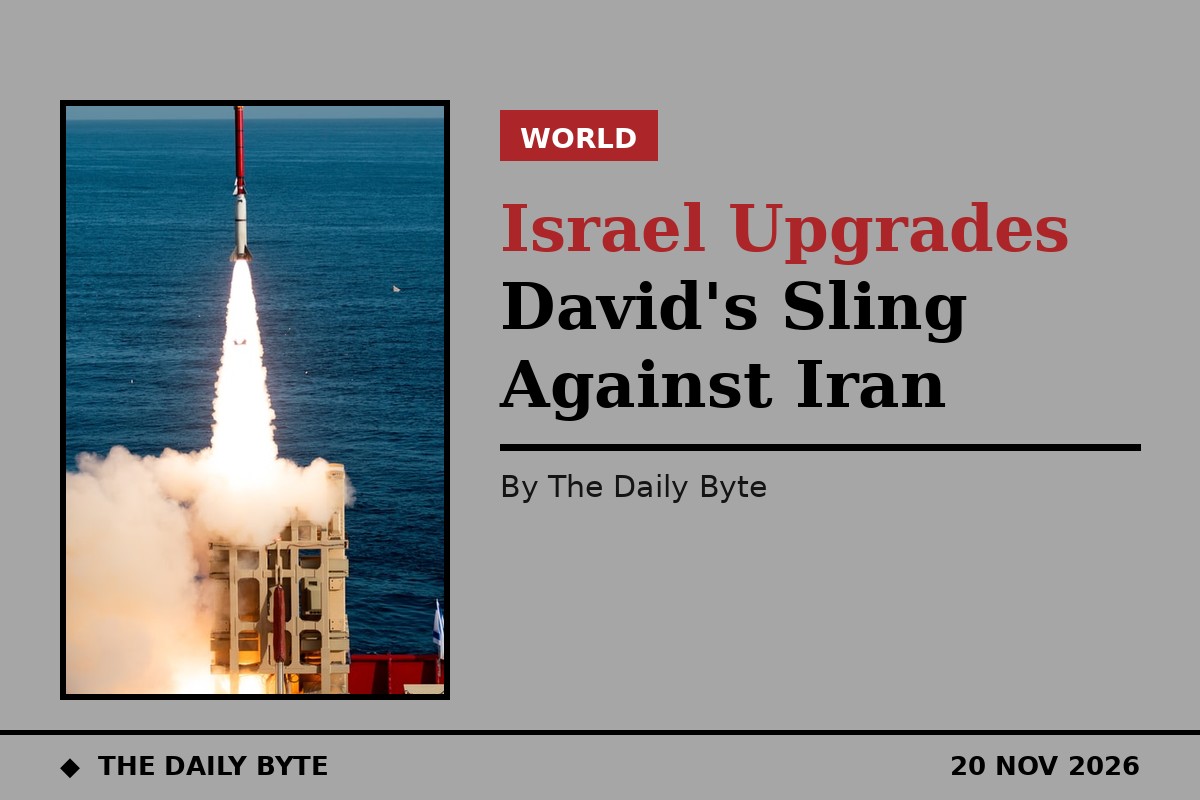
Israel has upgraded its David's Sling missile defence system to intercept a wider range of ballistic missiles and drones and to withstand weeks of sustained attack, according to a Bloomberg report published on Friday.
The improvements, described to Bloomberg by an Israeli Air Force official involved in air defence assessments, are designed to let the system take on threats that would otherwise require far more expensive interceptors, preserving Israel's stock of Arrow missiles for the most advanced ballistic threats.
A cheaper shield
David's Sling fires the Stunner interceptor, developed jointly by Israel's Rafael Advanced Defense Systems and the US contractor RTX. Each Stunner costs about $1 million, according to Bloomberg, roughly a third of the price of an Arrow 3 interceptor and less than a quarter of the cost of a Patriot PAC-3, which can cost more than $4 million.
The system forms the middle layer of Israel's air defence network, between Iron Dome, which intercepts short-range rockets, and the Arrow systems, which target longer-range ballistic missiles, including the Arrow 3, which can intercept targets in space. Israel also relies on US-operated THAAD batteries and ship-launched interceptors.
Production is another advantage. An industry source told Bloomberg that Rafael and RTX can produce thousands of interceptors a year in Israel, with a further 2,500 produced in the United States for the Iron Dome and David's Sling systems.
Lessons from the war with Iran
The need for the upgrade became clear during the war with Iran, when repeated missile barrages exposed weaknesses in Israel's defences. David's Sling was deployed against ballistic threats, including during two Iranian attacks on the southern cities of Arad and Dimona on 21 March, when interceptors failed to destroy the incoming missiles, which struck populated areas, caused extensive damage and injured dozens of people.
Despite those failures, Israeli defences intercepted more than 90 percent of Iranian missiles launched towards the country during the first three weeks of the war, according to Haaretz, as cited by CTech. The attacks killed 20 people and injured thousands.
The fighting also gave the military extensive operational data. The Air Force official told Bloomberg the information allowed engineers to introduce improvements to defensive systems, sometimes within days. Israel's defence ministry said on 2 November that it had completed a successful test series for David's Sling with the US Missile Defense Agency and Rafael, built on lessons from combat.
The threat has not gone away
A Western intelligence assessment cited by Bloomberg last week estimated that Iran likely retains at least 1,700 ballistic missiles and is producing about 50 more each month, despite the damage caused by American and Israeli airstrikes.
The pressure on interceptor stocks is also being felt elsewhere. The United States is struggling to meet demand for Patriot missiles, and Ukrainian President Volodymyr Zelenskyy has said his country needs about 350 a month to defend against Russian attacks, several times more than current annual production, according to Bloomberg.
Israel has also been exporting its missile defence systems as European countries increase military spending. Finland and Greece have ordered David's Sling, while Germany has incorporated Arrow 3 into its defences.
Interceptor supply is among the factors US President Donald Trump is weighing as he considers whether to resume fighting against Iran, according to JFeed's account of the Bloomberg report. For now, Israel is betting that a cheaper, more plentiful middle layer will let it fight longer if the barrages return.


