Israeli Airstrike Hits Al-Qantara in South Lebanon
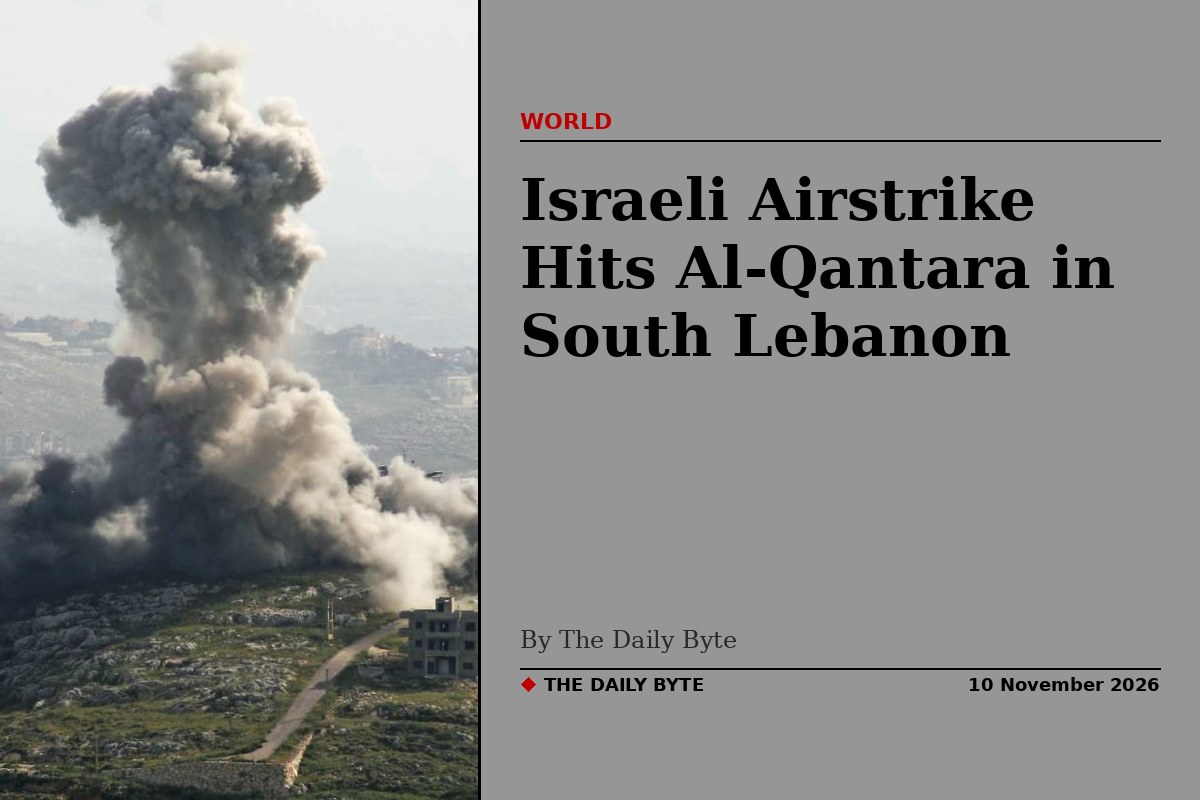
Israeli warplanes launched an airstrike on the town of Al-Qantara in southern Lebanon on Tuesday morning, 10 November, in a fresh breach of the fragile ceasefire that has held, unevenly, since June.
Citing Lebanon's official National News Agency, the German Press Agency (DPA) reported that the strike focused on Al-Qantara, in the Marjayoun district. At the same time, Israeli forces opened fire with heavy machine guns towards the outskirts of the nearby town of Shaqra, and intensive artillery shelling struck the towns of Al-Mansouri and Majdal Zoun in the Tyre district at dawn.
There was no immediate official information on casualties or injuries, and the extent of damage to property and infrastructure in the targeted areas was not clear in the first reports. The Israeli army had issued no statement explaining the objectives of the strikes.
Ceasefire under growing strain
The attack is the latest in a pattern of almost daily Israeli operations in the south. The June ceasefire framework brought a fragile calm after large-scale confrontations erupted on 2 March, when rockets were fired towards northern Israel and Israel launched extensive air and ground operations inside Lebanese territory, taking control of a number of border towns.
But the pace of operations never fully subsided. Just a day earlier, the UN peacekeeping force UNIFIL reported six Israeli airstrikes and 360 artillery trajectories across southern Lebanon between Thursday and Sunday, along with engineering work and road construction that peacekeepers said looked like preparations for a sustained presence.
Al-Qantara itself has been repeatedly hit in recent weeks. Israeli forces carried out demolitions and controlled explosions in and around the town earlier in November, and artillery has regularly struck the surrounding valleys and neighbouring villages.
No comment from Israel
As with many of the recent strikes, Israel gave no public account of what it had targeted in Al-Qantara or why. Lebanese officials have repeatedly described the continuing operations as violations of the ceasefire, while Israel says its actions are aimed at Hezbollah infrastructure and at preventing the armed group from regrouping near the border.
The renewed strikes heighten concern, in Beirut and beyond, that the truce could unravel into full-scale escalation. With UNIFIL due to end its operations on 31 December, there is also growing uncertainty about who will monitor the border, and what will restrain either side, once the peacekeepers leave.
For residents of the southern villages, the immediate reality is unchanged: warnings, shelling and strikes continue, and the ceasefire agreed in June offers little protection on the ground.


