Israel Carried Out 70 Incursions in Southern Syria
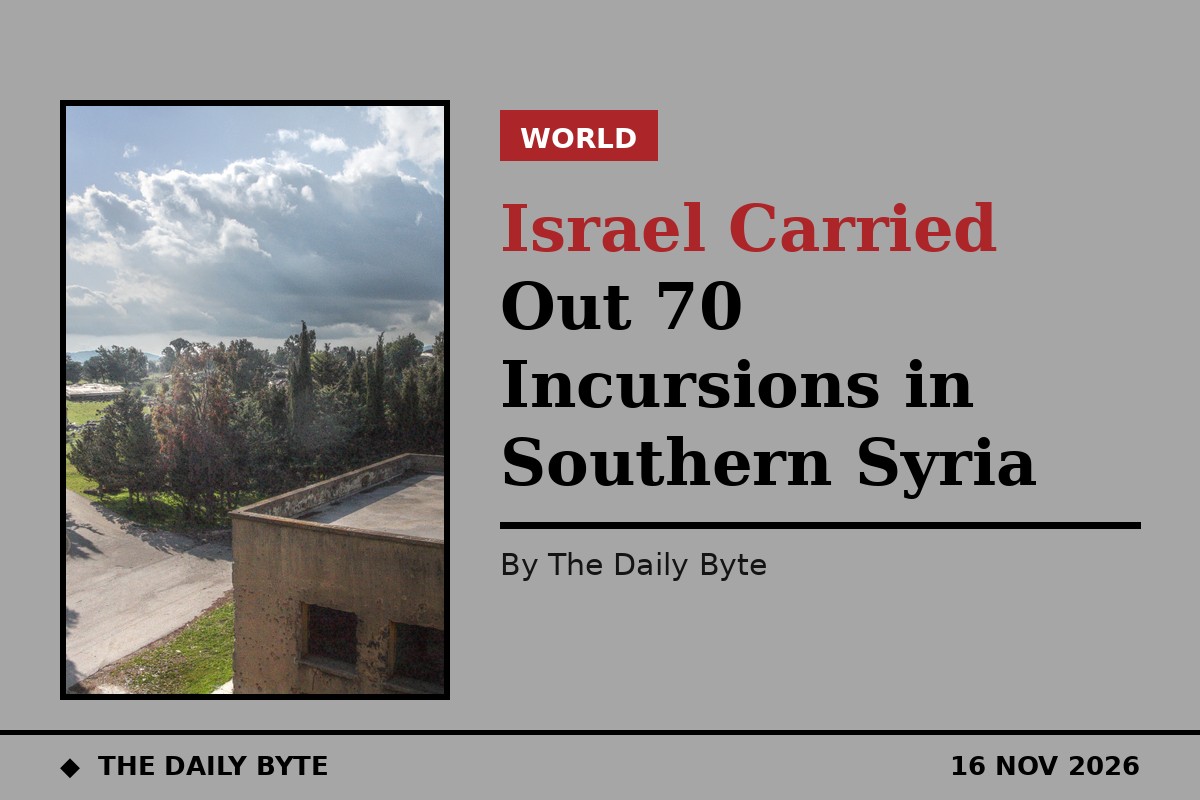
Israeli forces carried out nearly 70 ground incursions and military movements across southern Syria in the first two weeks of November, according to the Syrian Observatory for Human Rights (SOHR), a Britain-based war monitor. The group said the activity, recorded between 1 and 14 November, showed an intensified Israeli military presence in the southern provinces of Quneitra and Daraa and around Mount Hermon in the Damascus countryside.
The monitor said the operations included patrols through towns and villages, house raids, detentions and questioning of civilians, temporary checkpoints, identity checks and road closures. It said the pattern had disrupted daily life for residents, including their movement and their access to farmland.
Where the incursions were recorded
According to SOHR, repeated military movements were recorded in Jbata Al-Khashab, Ofanya, Al-Hurriya, Taranjah, Al-Samadaniya, Al-Asbah, Al-Rufayd, Umm Batna, Ruwayhina and Al-Mushairfa in rural Quneitra, and in Maariya, Jamleh, Abdin, Saysun and Al-Masritiya and around Wadi Al-Raqqad in western rural Daraa.
The monitor also reported excavation and bulldozing work at Al-Maakar, near the Tel Abu Al-Ghithar base, which it linked to a project it called the Sufa 53 Line, with tanks deployed and military exercises carried out in the area. Near Al-Mantara Dam in central rural Quneitra, it said military vehicles entered the area accompanied by two cranes, although the purpose of the work was not clear. In Wadi Sayhan, near Abdin, it said a five-vehicle force accompanied by a bulldozer began building a new road from an observation post towards the outskirts of the Al-Raqqad River in the Yarmouk Basin.
SOHR said the ground activity was accompanied by repeated flights by Israeli fighter jets, helicopters and drones over Quneitra, Daraa and Rif Dimashq, as well as the use of flares and smoke bombs. It said gunfire was reported towards the outskirts of residential areas and farmland, and that Israeli forces blew up an abandoned former military building near Darbal and Arnah in the Mount Hermon area.
In one incident reported separately, Israeli troops entered the town of Jabata Al-Khashab in northern Quneitra on Friday night. Syria's state news agency SANA said the troops searched several homes, detained three people and damaged several shops, before withdrawing on Saturday after releasing two of the detainees. SOHR later reported that the third detainee had also been freed.
Detentions and restrictions on civilians
At least 11 people, including a child, were detained between 1 and 14 November during Israeli military operations in rural Quneitra and Daraa, according to SOHR. Detentions were recorded in or around Koya, Khan Arnaba, Ofanya, Al-Asbah, Al-Fityan farm and Jbata Al-Khashab, as well as other areas of rural Quneitra. Several detainees were released during the same period, some within hours and others after several days, including people who had been detained before the beginning of November. SOHR said the detentions and releases took place without clear information on the grounds for the measures or the legal safeguards available to detainees.
The monitor said Israeli forces had increasingly restricted civilian movement in parts of Quneitra and western rural Daraa through temporary checkpoints, searches and identity checks. It said warning signs in several areas instructed residents not to travel in convoys of more than three vehicles and warned that convoys breaking the restriction could be targeted. The warnings were posted in western Al-Samadaniya, Rasm Al-Rawadi and the destroyed city of Quneitra, according to SOHR.
Access to farmland was also affected, the monitor said. Olive harvest workers west of Al-Rufayd were stopped and searched before being forced to leave the area and prevented from continuing their work, while smoke bombs fired onto agricultural land near Taranjah caused fires. In another incident, SOHR said Israeli forces opened fire towards journalists documenting violations in Bariqah in rural Quneitra.
What the monitor is asking for
SOHR called for an end to the incursions and to what it described as violations affecting residential areas and farmland, for the protection of civilians and their property, and for freedom of movement. It also called for the fate of all detainees to be disclosed and for their legal and human rights to be upheld.
The monitor urged the United Nations and the United Nations Disengagement Observer Force (UNDOF) to fulfil their responsibilities in monitoring developments on the ground, documenting violations and working to curb them. UNDOF visited Al-Rufayd, where its personnel met residents and heard complaints about Israeli military activity, SOHR said, and a UN patrol also entered areas of the Yarmouk Basin in western rural Daraa.
The incursions have continued since the fall of President Bashar al-Assad's government in December 2024, a period in which Israel has also carried out a series of airstrikes on military facilities in Syria, according to the monitor's reporting.
Sources: Syrian Observatory for Human Rights and Press TV.


