Italy textbook row: Valditara seeks Laterza withdrawal
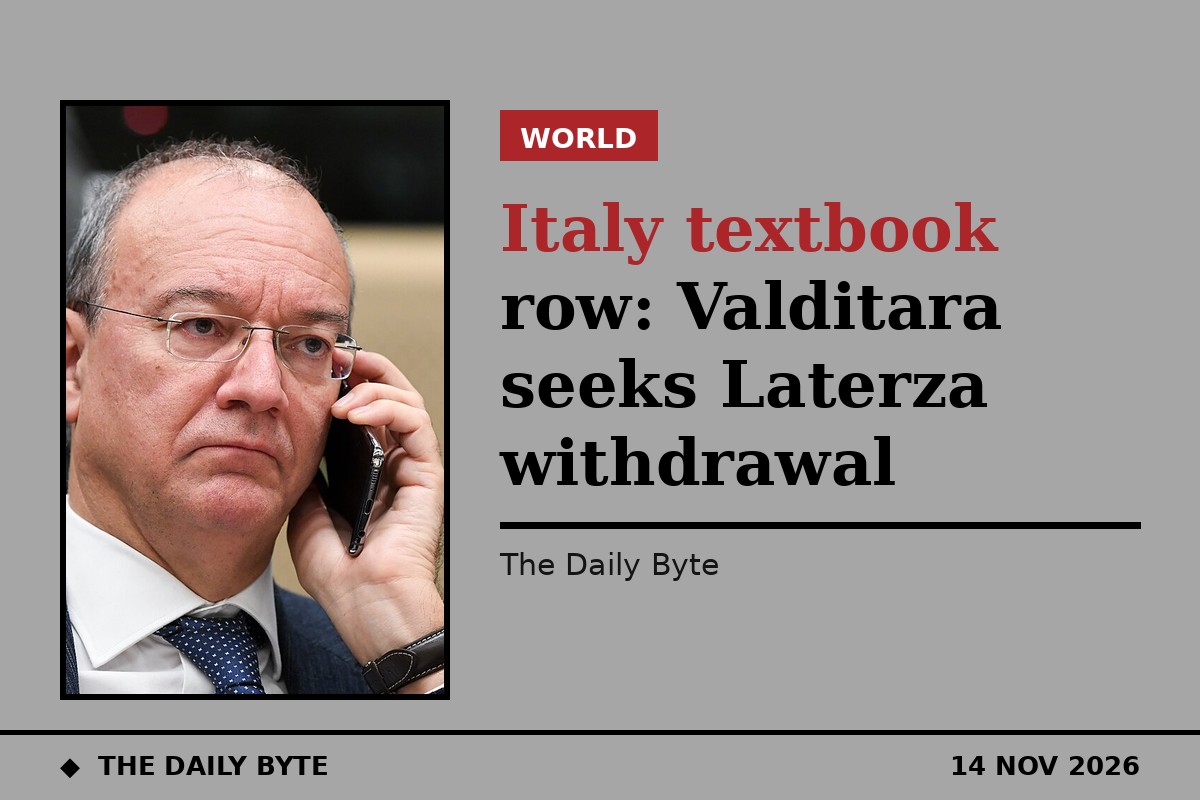
Italy’s Education Minister, Giuseppe Valditara, has called on publisher Laterza to withdraw a school history textbook over passages sharply critical of Giorgia Meloni’s government, reopening a national debate about politics, history teaching and freedom in the classroom. The minister said the book, Trame del tempo 3, was scientifically inadequate and risked being used to indoctrinate pupils.
Speaking in Rome on 11 November, Valditara said it was in the publisher’s own interest to withdraw the text “to safeguard the scientific reputation of its publishing house”. He objected in particular to the way the book portrays the government, saying: “Frankly, portraying this government as one that deports immigrants by blacklisting them, or as a fascist government or whatever else, I believe does no one any good.” LaPresse reported the minister’s remarks.
What the textbook says
The row centres on a page of the fifth-year high-school history book, which describes Meloni’s government as standing out for “declaredly liberticidal measures”, and refers to a “war on migrants” and “deportation plans”. The same passage links the governing Brothers of Italy party to the legacy of fascism. The disputed page, numbered 666 in the volume, was first raised in a parliamentary question in June 2025 and resurfaced on social media this month after it was shared by Galeazzo Bignami, leader of the Brothers of Italy group in the Chamber of Deputies.
Valditara argues that the passages present contested political judgements as settled historical fact. In remarks at a Milan school, he said the text contained “completely instrumental and unreliable claims” and that a textbook should clearly distinguish between documented facts and the authors’ interpretations. Footage of the minister’s comments was reported by Alanews.
Publisher refuses to back down
Laterza has rejected the minister’s request. Alessandro Laterza, the publisher’s chief executive, has said a minister cannot intervene to demand changes to, or the withdrawal of, a textbook, and the company has defended the book’s scientific autonomy and the authors’ freedom from political censorship. Supporters of the publisher argue that history books should be read and discussed in class, not removed because a government dislikes their conclusions.
The dispute has divided Italian politics along familiar lines. Government supporters say a school textbook should not present one-sided political assessments to teenagers as truth. Critics of the minister, including opposition politicians and teachers’ groups, say the call for withdrawal amounts to political pressure on education, and point to Article 33 of the Italian Constitution, which protects freedom of teaching.
Why the row matters
The case goes beyond a single page. It raises a wider question about who decides what Italian schoolchildren learn about their own recent history: the authors and publishers of textbooks, or the government of the day. Meloni has led Italy since October 2022, and her government’s approach to migration, security and the teaching of contemporary history has been contested throughout its time in office.
For now, no formal ban or administrative recall order has been reported. Valditara has asked the publisher to act voluntarily, and Laterza has refused. That leaves the book in use in schools that have adopted it, while the argument over its contents continues in parliament, in the press and on social media. The episode is also a reminder of how quickly a classroom text can become a political flashpoint in Italy, where arguments over the country’s fascist past and its present politics remain closely entwined.


