Holness Urges US-Cuba Dialogue to End Embargo
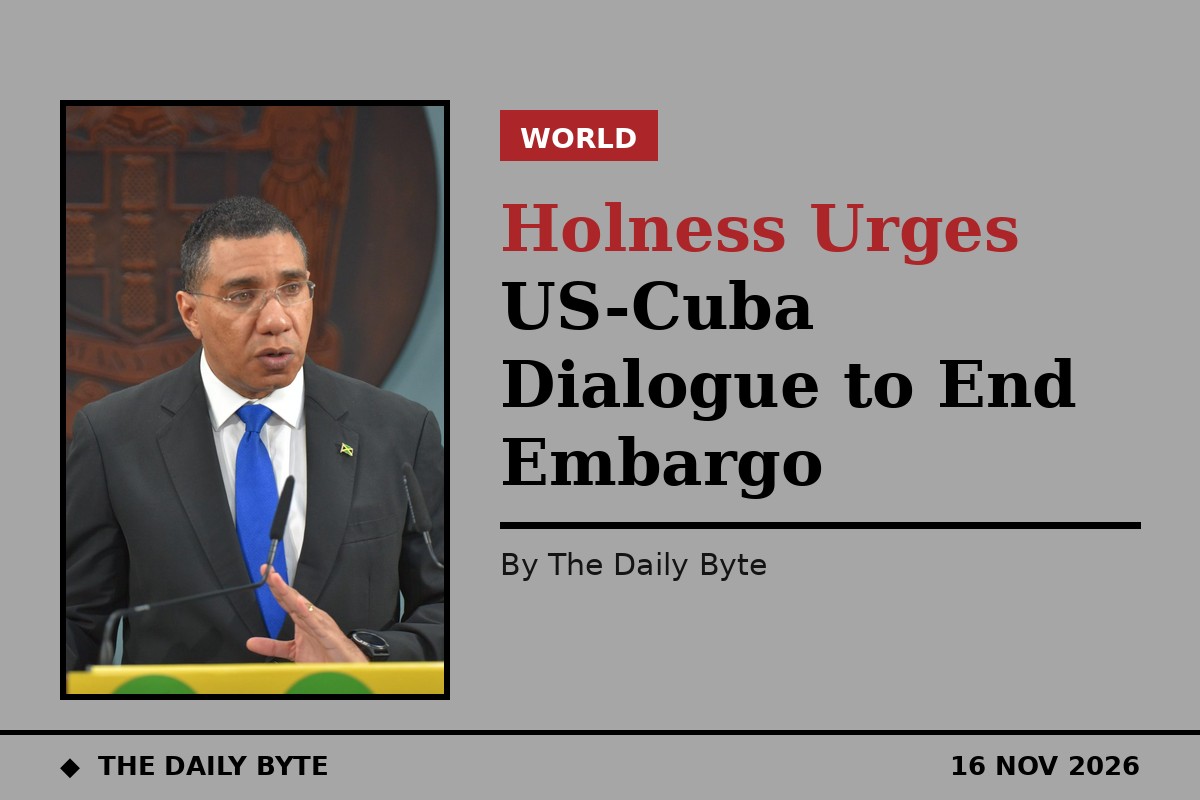
Jamaica’s Prime Minister Andrew Holness has called for dialogue between the United States and Cuba to end the long-standing American economic embargo on the Caribbean island, saying talks offer the only practical way forward. Holness made the call on Sunday while addressing the 83rd annual conference of the governing Jamaica Labour Party (JLP) at the Montego Bay Convention Centre in St James.
His remarks came as he defended Jamaica’s decision to abstain from a United Nations vote on 28 October calling for an end to the embargo — the first time in more than three decades that Jamaica has withheld its support for the annual resolution. The General Assembly voted 130 in favour, 17 against, with 25 abstentions.
Defending the abstention
Holness insisted the abstention did not mean Jamaica had turned its back on Cuba. “We stand in solidarity with the people of Cuba. We want our brothers and sisters there to enjoy the political and economic freedoms that we have here,” he told delegates, according to the Jamaica Gleaner.
He said Jamaica’s foreign policy must be guided by practical considerations and the interests of Jamaicans at home and abroad, rather than by outdated ideological loyalties. Foreign Affairs Minister Kamina Johnson Smith has made the same argument, saying the government remains opposed to the embargo but no longer believes that backing the same annual resolution is the most constructive approach.
The opposition People’s National Party (PNP) has strongly criticised the abstention, and former prime minister PJ Patterson has also spoken out against it. Holness dismissed the criticism, saying the opposition was mistaken in its reading of the government’s position.
Dialogue, not isolation
The prime minister argued that engagement, rather than isolation, would do more for ordinary Cubans. “We believe that constructive dialogue between the United States and Cuba, and greater reforms in Cuba, will provide the only practical path to resolve the longstanding economic isolation of Cuba and avoid conflict in the region,” Holness said, in remarks reported by the Caribbean Media Corporation.
He also called for greater reforms inside Cuba, saying political and economic change on the island must go hand in hand with any easing of external restrictions.
Regional split over the vote
Jamaica was not alone in breaking with the region’s usual position. Trinidad and Tobago voted against the resolution, while Guyana and Haiti abstained alongside Jamaica. Antigua and Barbuda, Dominica and Saint Lucia did not vote.
The debate comes as Cuba faces a deepening economic crisis, with shortages of food, fuel and medicine. Foreign ministers from the Group of Seven nations also called last week for significant political and economic reforms in Cuba, alongside credible democratic elections in Haiti, in a joint declaration issued after their meeting in Paris.
Holness said Jamaica would continue to press for a broader approach that improves life for the Cuban people, rather than repeating an annual vote that has not shifted the embargo in more than 30 years.


