Japan Household Spending Falls 6.8% in September
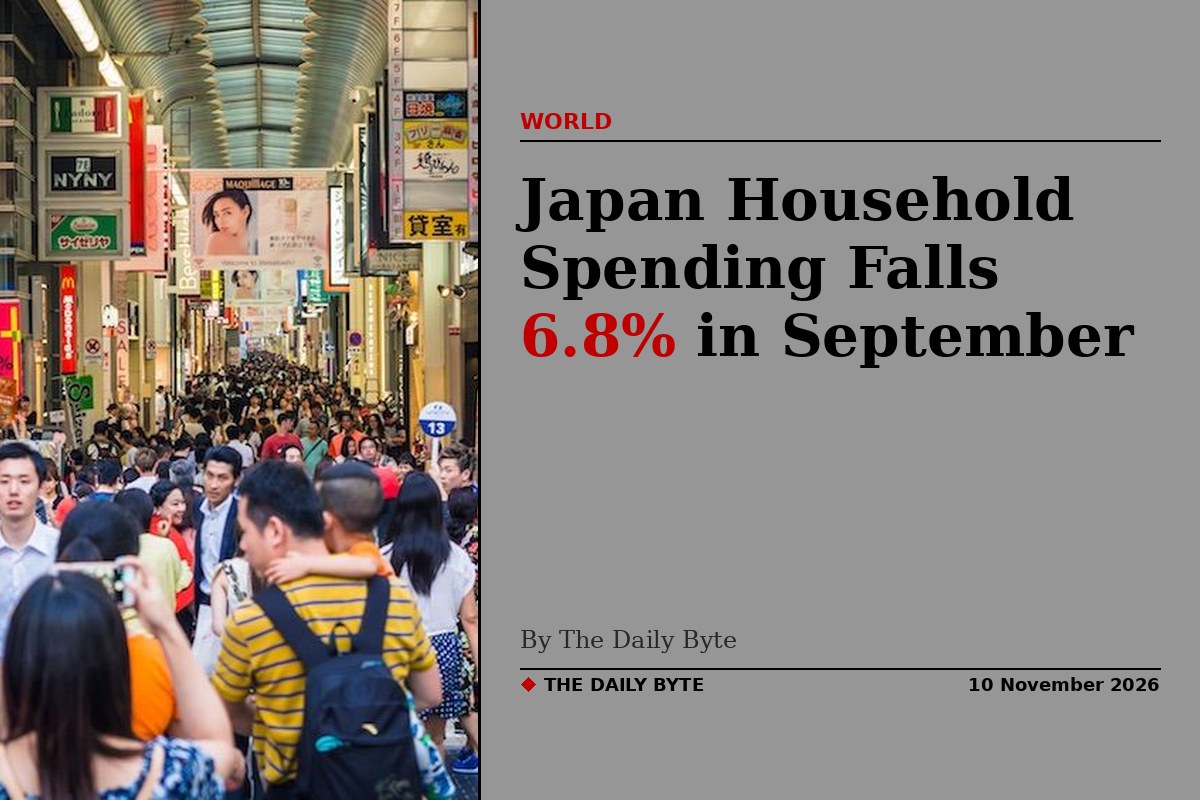
Japanese household spending fell far more sharply than expected in September, dropping 6.8 percent from a year earlier in the tenth consecutive monthly decline, according to government data released on Tuesday, 10 November 2026.
The fall, reported by Japan's internal affairs ministry, was more than double the median market forecast of a 3.1 percent drop and the largest year-on-year decline since September 2020. It extends a run of falling spending that has now lasted ten months, underlining how cautious Japanese consumers remain even as pay packets grow.
Weather blamed for the sharp drop
An official from the ministry pointed to the weather as the main reason for the weak month. Heavy rain kept people indoors through much of September, and in Tokyo precipitation was recorded on every single day of the month for the first time on record.
That disruption showed up across the figures. On a seasonally adjusted basis, spending fell 2.8 percent from August, against a forecast rise of 0.3 percent. The contrast with the previous month was stark: spending had fallen by a more modest 3.1 percent in August, the ninth straight annual decline.
The September figures cover the final month of the third quarter, and the Statistics Bureau of Japan published its full third-quarter survey results on Tuesday. The data will feed into Japan's growth figures for the July to September period, with household consumption a central part of the economy.
Rising wages, falling spending
The weakness in spending sits alongside a very different trend in pay. Japan's real wages rose for a ninth consecutive month in September, and nominal wages increased at the fastest pace since January 1997, according to data issued last week.
That combination, higher pay but lower spending, suggests households are still holding back. Rising prices have squeezed family budgets for years, and many consumers appear to be saving rather than spending the extra income. A Bank of Japan survey published in October found that more than half of households felt their finances had worsened over the previous year, even as wages climbed.
The ministry's figures measure spending by households and are watched closely as a gauge of the strength of domestic demand. When spending falls for ten months in a row, it raises questions about how much momentum the economy carries into the final part of the year.
What it means for the Bank of Japan
The spending data will be among the factors the Bank of Japan studies as it decides whether to raise interest rates further. The central bank held its key rate at 1.25 percent at its meeting on 29 and 30 October, while declaring that underlying inflation had reached its 2 percent target, and many analysts expect the next increase to come as soon as December.
A summary of opinions from that October meeting, also released on Tuesday, showed some policymakers calling for the pace of rate rises to be stepped up. For the Bank of Japan, weak consumption argues for caution, while inflation running at target argues for further tightening. The September spending slump, driven in large part by the weather, is unlikely on its own to settle that debate, but it adds to the evidence the board will weigh next month.
For now, the message from the data is plain: Japanese households spent considerably less in September than a year earlier, and the wettest September on record in Tokyo played a large part in keeping them at home.


