Japan Gives Pakistan $4.3m for Polio Vaccines
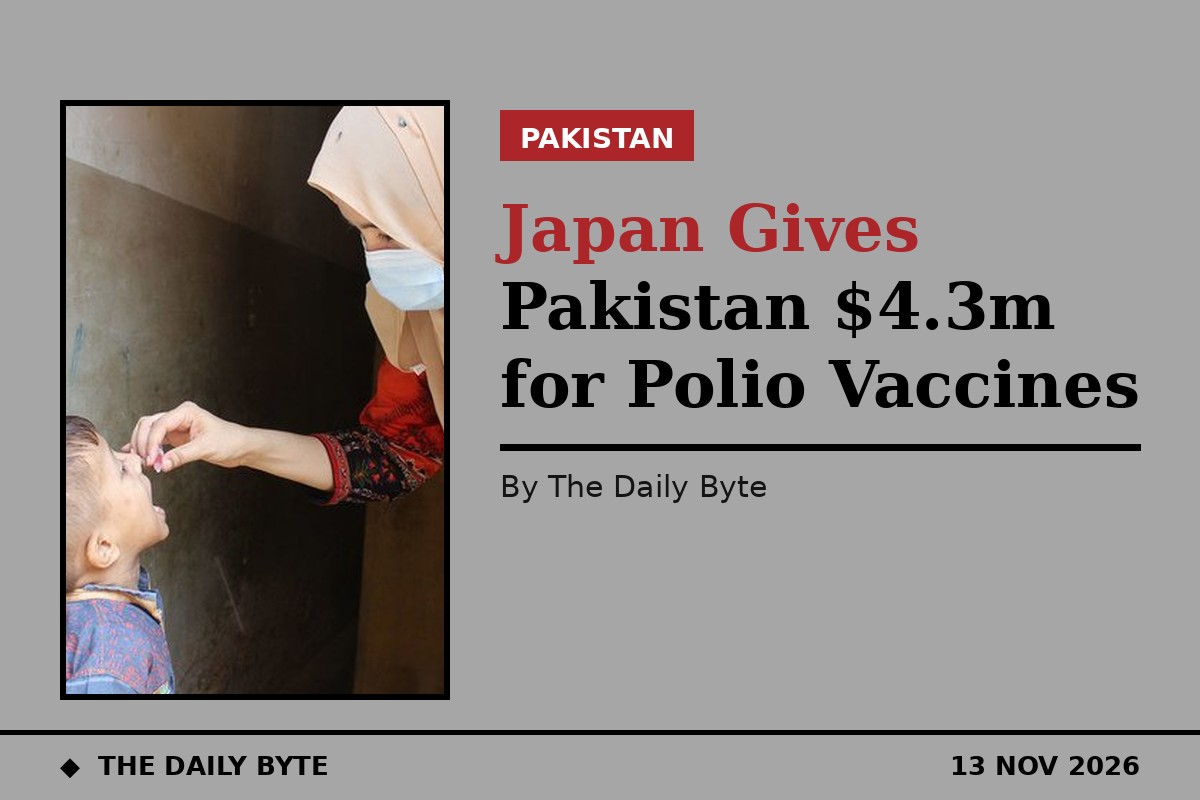
Japan has announced a new grant of US$4.3 million to help Pakistan buy oral polio vaccines, giving fresh backing to the country's drive to wipe out a disease that still circulates in only two countries in the world. The funding will pay for more than 28 million doses of oral polio vaccine for immunisation campaigns planned for 2027, UNICEF Pakistan announced in Islamabad on Friday, 13 November.
The money will go to the Pakistan Polio Eradication Initiative, the national programme that runs the country's vaccination drives. It is the latest instalment in a partnership between Japan and Pakistan that has run since 1996, and it is larger than the US$3.5 million grant Tokyo announced a year ago for the 2026 campaigns.
What the money will buy
The grant will fund the procurement and delivery of the vaccines, making sure that immunisation teams have the supplies they need when the 2027 campaigns begin. Each national immunisation drive in Pakistan aims to reach more than 45 million children under the age of five, supported by more than 400,000 frontline health workers who go door to door, including in remote and insecure areas.
Ayesha Raza Farooq, the Prime Minister's Focal Person on Polio Eradication, said the contribution had come at a critical time as Pakistan intensified its efforts to stop the virus spreading and end what she called a preventable disease. She said every dose bought with Japan's support brought the country closer to a polio-free Pakistan, and thanked the government and people of Japan for their continued partnership.
Japan's ambassador to Pakistan, Akamatsu Shuichi, said Tokyo had supported Pakistan's polio efforts consistently since 1996, working closely with UNICEF and other partners. He said the new grant, which had been increased from last year, showed Japan's continued support for the shared goal of a polio-free Pakistan, and that Japan fully backed Pakistan's determination to stop the virus spreading by the end of 2027.
Cases are falling, but the virus remains
Pakistan is one of only two countries in the world where wild poliovirus transmission has not yet been interrupted. The other is Afghanistan. But the trend is moving in the right direction. Cases in Pakistan have fallen from 74 in 2024 to 31 in 2025, and eight cases have been reported so far in 2026, according to UNICEF.
Six of this year's eight cases have been reported from south Khyber Pakhtunkhwa, where insecurity and difficulty reaching every child continue to pose serious challenges. Health workers and their police escorts have also been attacked in the province during vaccination campaigns, underlining the risks faced by the teams who deliver the vaccine.
The continued detection of the virus shows why sustained effort is needed everywhere, UNICEF said, and why no child can be left unreached if transmission is to be stopped for good.
The road to zero by 2027
Pakistan has drawn up a National Emergency Action Plan for 2026-27 under its Roadmap to Zero, setting out a focused approach to interrupting poliovirus transmission by the end of 2027. The plan relies on repeated high-quality campaigns, stronger surveillance for the virus, and reaching children in the highest-risk districts.
Yusuke Shinozaki, chief representative of the Japan International Cooperation Agency's Pakistan office, praised the commitment of the government of Pakistan and the dedication of frontline health workers who continue to serve communities in challenging circumstances. He said Japan would continue working with Pakistan, UNICEF and all partners until no child suffered from polio.
Pernille Ironside, UNICEF's representative in Pakistan, said Japan had been a steadfast partner and that the contribution would help sustain the high-quality vaccination campaigns needed to stop transmission. By ensuring every child is reached with the vaccine, she said, Pakistan could be brought closer to a polio-free future.
Three decades of Japanese support
Japan has been one of Pakistan's most consistent international partners in the fight against polio. Since 1996 it has contributed more than US$248 million in grants and loans through UNICEF to support vaccination and help Pakistan achieve a polio-free future.
The new funding underlines how much the final stage of eradication depends on sustained international support. With cases down sharply from two years ago, health officials say the next two years will decide whether Pakistan can finally join the rest of the world in ending polio transmission.