Japan Rice Harvest Stays High Despite Bad Weather
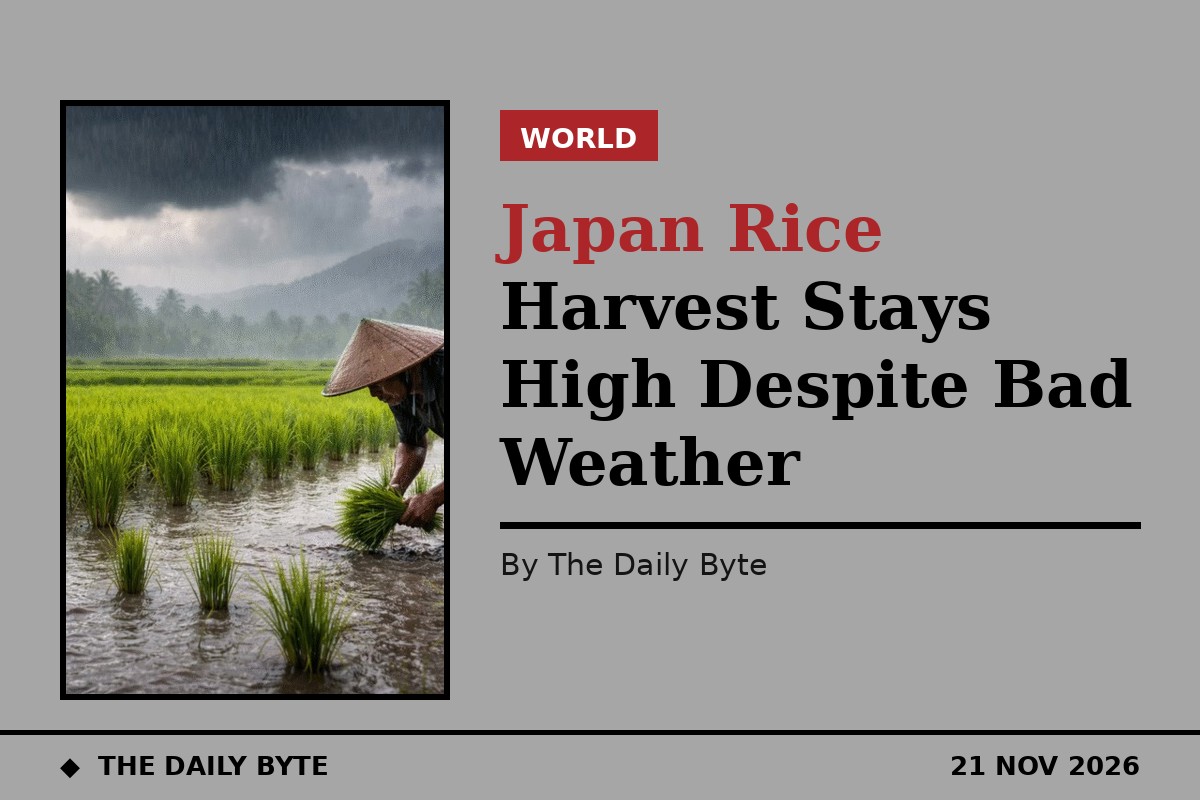
Japan's 2026 rice harvest is expected to stay at a high level despite a season of prolonged rain and weak sunshine, the country's farm ministry said on Thursday 20 November.
The Ministry of Agriculture, Forestry and Fisheries said production of rice for direct consumption was projected at 7.365 million tons, based on crop conditions as of 25 October. That is about 1% below the previous year. Agriculture Minister Takebe said Japan had secured enough rice to meet domestic demand, and that the expected harvest would be adequate despite the slight fall.
Extended rain and limited sunlight affected rice in some regions, but the ministry said the overall effect on the national harvest was relatively minor. The forecast is the ministry's latest reading of the crop, and it will be revised again as the harvest is gathered in.
A calmer year after the rice shock
The steady forecast matters because rice has been one of Japan's most sensitive household issues. Prices doubled during the rice shortage of 2025, and the average supermarket price of a five-kilogram bag peaked at 4,416 yen in January 2026. By mid-September it had fallen below 3,000 yen for the first time since September 2024, helped by government releases of reserve rice and a surge in imports.
Supplies have also rebuilt. Private-sector stocks of rice reached a record 2.43 million tons at the end of June 2026, and the ministry has been buying back reserve rice to rebuild the government stockpile, with tenders for 207,521 tons of 2026-crop rice fully awarded. The aim is to lift the stockpile from about 320,000 tons back towards 530,000 tons.
The United States Department of Agriculture's Foreign Agricultural Service, in a report published in September, put Japan's total rice production for the 2026/27 marketing year at about 7.4 million tons, marginally above the previous year. The two figures are measured on different bases, but both point in the same direction: a harvest close to last year's, rather than a collapse.
What happens next
The new crop is now reaching shops, and the next question is whether retail prices keep easing. The harvest is running ahead of the ministry's demand projection, which suggests the supply squeeze that pushed prices to record highs has eased for now. That is good news for shoppers, but it creates a different problem for growers, who have warned that low prices make it hard for smaller farms to stay in business.
The ministry will also have to judge how much rice to hold in reserve. Rebuilding the stockpile after last year's releases is a priority, and the pace of the buyback will depend on how the rest of the harvest comes in. For now, the official message is one of reassurance: the weather hurt the crop in places, but Japan will have enough rice.


