Japan to Triple Saudi Oil Storage to 24m Barrels
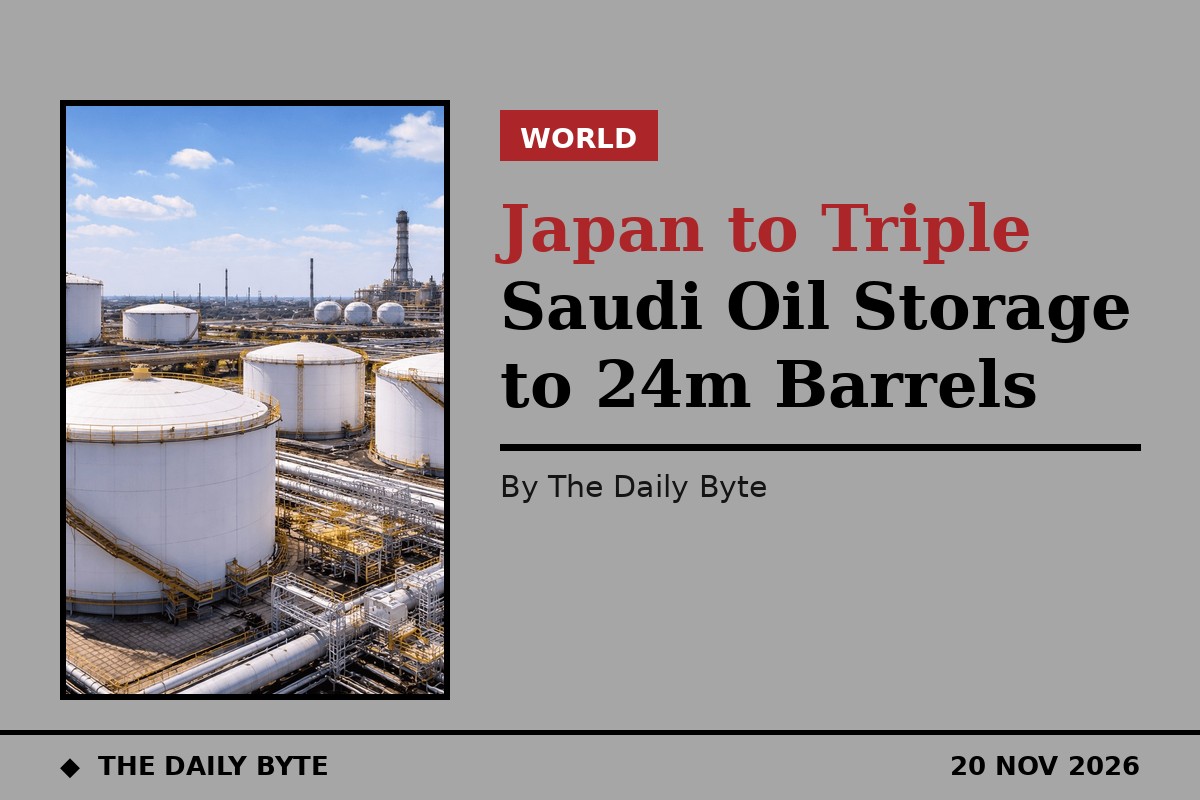
Japan will give Saudi Arabia temporary use of an additional 16 million barrels of crude oil storage capacity, tripling the kingdom's storage in Japan to 24 million barrels, under an agreement announced on Friday.
The deal, set out in a joint statement carried by the Saudi Press Agency and reported by Bloomberg, also sees Japan intending to buy up to eight million barrels of Saudi crude for its own national petroleum reserve, subject to favourable market conditions and the completion of internal procedures.
Saudi Arabia already holds eight million barrels of storage capacity in Japan under a joint stockpiling arrangement that dates back to 2010. The new agreement adds 16 million barrels of capacity in Japan's national stockpiling facilities for a specified period, and the kingdom has already begun refilling the tanks it holds there.
Rebuilding reserves after the Hormuz disruption
The agreement follows a virtual meeting on 9 November between Saudi Energy Minister Prince Abdulaziz bin Salman and Japan's Minister of Economy, Trade and Industry, Ryosei Akazawa. It comes as Tokyo works to rebuild reserves it drew down last month as part of a coordinated release by International Energy Agency members, who agreed to release a record 400 million barrels from emergency stockpiles.
Japan was heavily exposed to that disruption. Middle Eastern crude made up more than 90 percent of its imports before the war, and when Iranian attacks all but shut the Strait of Hormuz, Japanese buyers were forced to seek cargoes from as far away as Canada, Azerbaijan and Africa to keep refineries running.
Gulf crude exports had recovered to 82 percent of pre-war levels by October, according to the International Energy Agency, and Brent crude traded at around 92 dollars a barrel on Thursday, down from above 110 dollars in October. The question for the market now is when importers will start buying back the oil they released.
How the shared storage works
Under the existing arrangement with Saudi Aramco, Japan holds preferential rights to buy the Saudi crude stored in its facilities if supplies are disrupted. In normal conditions Aramco is free to sell that oil to other customers in Asia, so the tanks serve both countries: Riyadh gains storage close to its buyers, and Tokyo gains a first claim on the oil in an emergency.
The new purchase is framed as an intention rather than a firm commitment. Japan will buy up to eight million barrels for its national reserve only if market conditions are favourable, and the extra storage lent to Saudi Arabia is time-limited rather than permanent.
A wider Asian stockpiling push
Tokyo is also pressing for a regional system on top of the bilateral deals. Prime Minister Sanae Takaichi this week proposed a joint Asian task force to manage crude stockpiles, which she described as an Asian version of the International Energy Agency. ASEAN members have separately agreed on a shared reserve with storage sites in Indonesia and Thailand, coordinated by the Philippines.
Producers are building their own buffers closer to their customers as well. Saudi Arabia has held talks with foreign governments about access to their strategic storage, and Singapore announced last month that it plans to store Saudi crude in its Jurong Rock Caverns during the second half of 2027.
For Japan, the Saudi deal is a practical step towards the same goal: more oil held closer to home, and a clearer claim on it when the next disruption arrives.


