Japan School Absences Hit Record 359,424
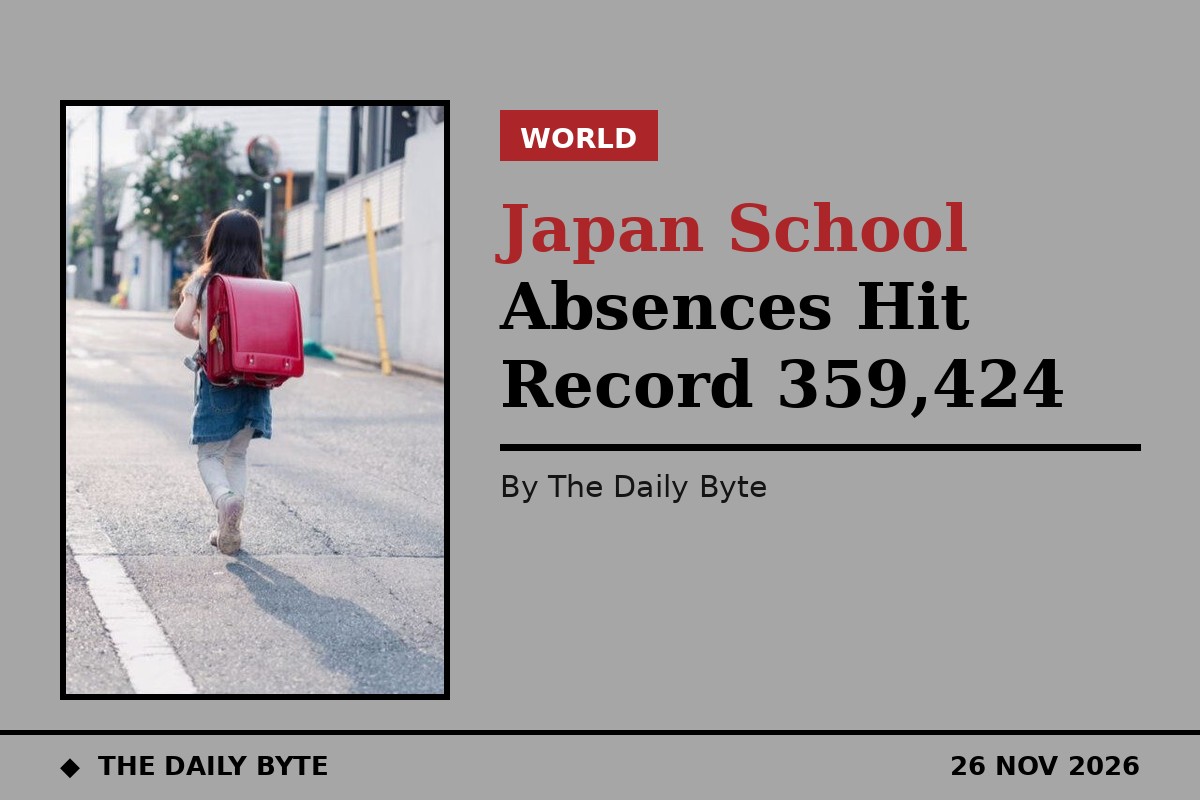
A record 359,424 elementary and junior high school pupils in Japan stayed away from school in fiscal 2025, according to an education ministry survey released on Thursday, 26 November 2026. The figure rose by 4,023 on the previous year, an increase of 1.1 percent, and marks the 13th consecutive year the number has climbed to a new high.
The survey by the Ministry of Education, Culture, Sports, Science and Technology (MEXT) counts pupils absent for 30 days or more for psychological, emotional, physical or social reasons, excluding illness and financial reasons. The previous year, fiscal 2024, recorded 353,970 pupils in the same category. A decade ago, in fiscal 2014, the figure stood at 122,897, meaning the number has nearly tripled in ten years.
Bullying cases also at a record
The same survey found recognised bullying cases at elementary, junior high, high schools and special needs schools reached a record 791,784. Serious bullying incidents also hit a record high of 1,798. The figures were released together, underlining the scale of the pressures facing schools and families.
High school pupils are counted separately. Truant high school students in fiscal 2025, which ended in March this year, stood at 71,983. The ministry's survey is the most comprehensive annual picture of school non-attendance in Japan, covering national, public and private schools.
A long-running rise with no sign of stopping
The 13-year run of increases has become one of Japan's most persistent social problems. The number passed 300,000 for the first time in fiscal 2022 and has risen every year since. Schools and local authorities have expanded support, including free schools and alternative learning spaces, but the survey shows the trend has not turned.
The scale of the change is stark. In fiscal 2014, 122,897 pupils were counted as non-attending, or 12.1 per 1,000 pupils. By fiscal 2024 the rate had reached 38.6 per 1,000. In that year, 137,704 elementary pupils and 216,266 junior high pupils were counted, equivalent to 2.30 percent of elementary pupils and 6.79 percent of junior high pupils, or 3.86 percent of all pupils in those schools.
There was one small sign of a possible turn in the previous survey. New cases in fiscal 2024, pupils not counted as non-attending the year before, were 153,828, the first fall in nine years. The most common factors schools noted were consultations about a lack of motivation for school life, cited in 30.1 percent of cases, irregular daily rhythms in 25.0 percent, and anxiety or depression in 24.3 percent.
The government has put money into the problem. In November 2024, Japan's Children and Families Agency allocated 800 million yen to addressing bullying and school refusal. The record figures are likely to renew debate over how Japan supports children who cannot attend mainstream school, and whether the current measures are reaching them fast enough.


