Japan Turns to Bangladesh, Nepal for Farm Workers
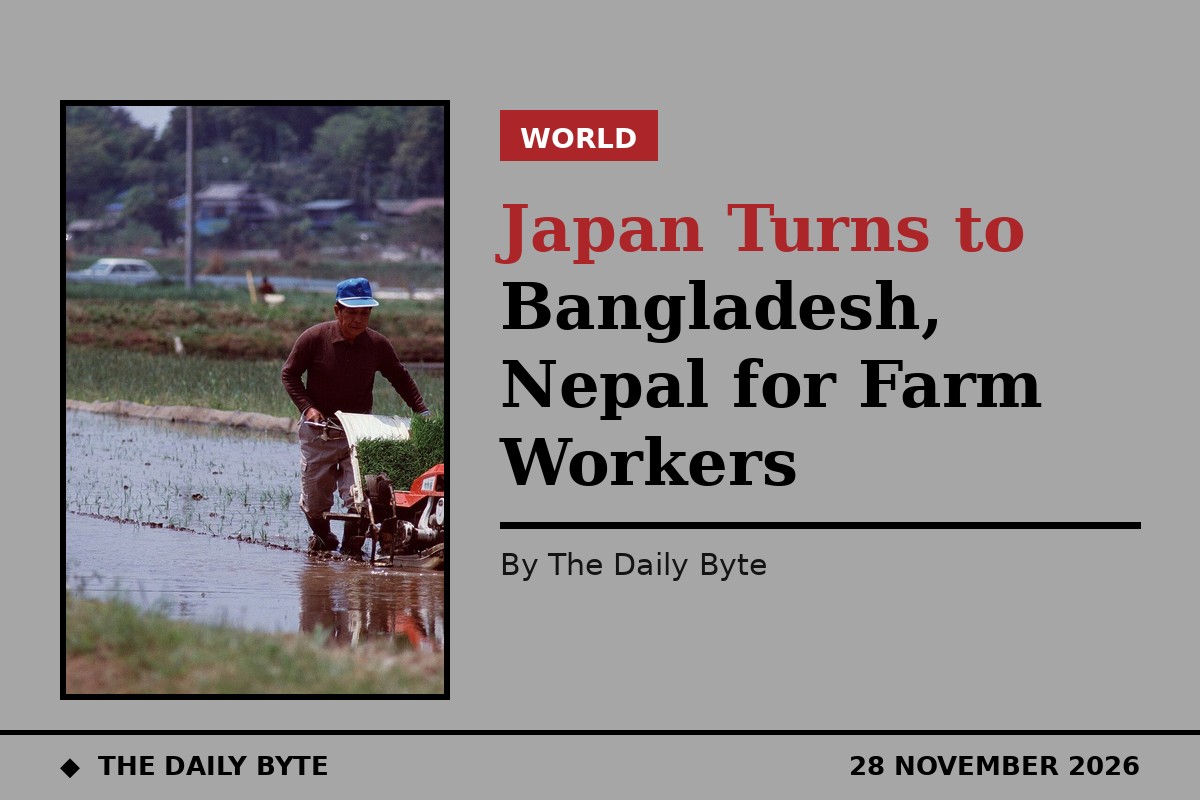
Japan is turning to Bangladesh and Nepal to staff its ageing farms, as the flow of agricultural workers from Vietnam and the Philippines slows. Tokyo-based training company Mirai, which trains and places skilled foreign workers, has introduced its first Bangladeshi candidates for farm work, in a sign of South Asia's rise as a fresh labour source for Japanese agriculture.
Two students from one of Mirai's partner schools in Bangladesh passed Japan's specified skilled worker agriculture exam in August. They have job offers from an agricultural company in Aomori Prefecture, in the north-east of Japan, and will travel there in the coming months.
“I am very excited to go to Japan and learn about Japanese agriculture,” said Muhammad Ahasan Habib, 21, from Mymensingh in northern Bangladesh, who wants to care for chickens. Another candidate, Siam Ur Rahman, 20, from Barisal in southern Bangladesh, said he was grateful for the opportunity and wanted to work very hard. He added that he was looking forward to seeing snow.
The numbers behind the shift
Japanese government data show that the number of Type 1 specified skilled foreign workers in agriculture, whose stays are generally limited to five years, rose 26 per cent in June from a year earlier to 44,050. Indonesia remained the largest supplier, with 18,255 workers, up 45 per cent, followed by Vietnam with 10,261.
But the smaller South Asian numbers are growing fast. Nepal supplied 916 workers, up 30 per cent, Sri Lanka supplied 638, up 60 per cent, and Bangladesh supplied 334, up 127 per cent, according to Japan's Immigration Services Agency. Vietnam's share of agricultural specified skilled workers fell from about 26 per cent to 23 per cent.
Across all sectors, Vietnam is still the largest source of Type 1 specified skilled workers in Japan, with 163,154 of 425,961. But Japan has slipped as a destination for Vietnamese workers. It was Vietnam's top destination in 2025, with more than 64,600 workers, and has now fallen to second place behind Taiwan, according to Vietnam's Department of Overseas Labor Management. Of 114,276 Vietnamese sent abroad on contracts in the first 10 months of this year, 50,473 went to Taiwan and 45,658 to Japan.
Why recruiters are looking elsewhere
Recruiters say rising wages in Vietnam, the Philippines and other South-East Asian countries are making it harder to attract workers, while a weaker yen has cut the value of what workers can save. The yen has weakened from about 200 to 220 Vietnamese dong to about 160 to 170 dong, and recruiters say each job order that once drew seven or eight applicants now draws about two.
“We're seeing a shift to South Asia for labour supply sources,” said Yuji Nomura, general manager of the Career Advisory Division at Sustainable Holdings, Mirai's parent company. “Although Bangladesh is not a big farming nation, it is an agricultural country with a population of about 170 million and high potential for growth.”
Candidates must pass the N4 beginner-level Japanese-language test and written and practical agriculture exams. Mirai offers free tuition at its partner schools, including three in Bangladesh, and helps students find housing once they arrive in Japan. Its network of partner schools spans the Philippines, Indonesia, Vietnam, Bangladesh and Myanmar, with new additions in Sri Lanka and Nepal.
Japan's farm workplaces have faced chronic labour shortages because of ageing and other factors. Including Type 1 workers, those with Type 2 status and technical intern trainees, the number of foreign workers in agriculture totalled 67,905 at the end of December 2025, according to government data.


