Jetstar refund case: 1.1m customers sent court notices
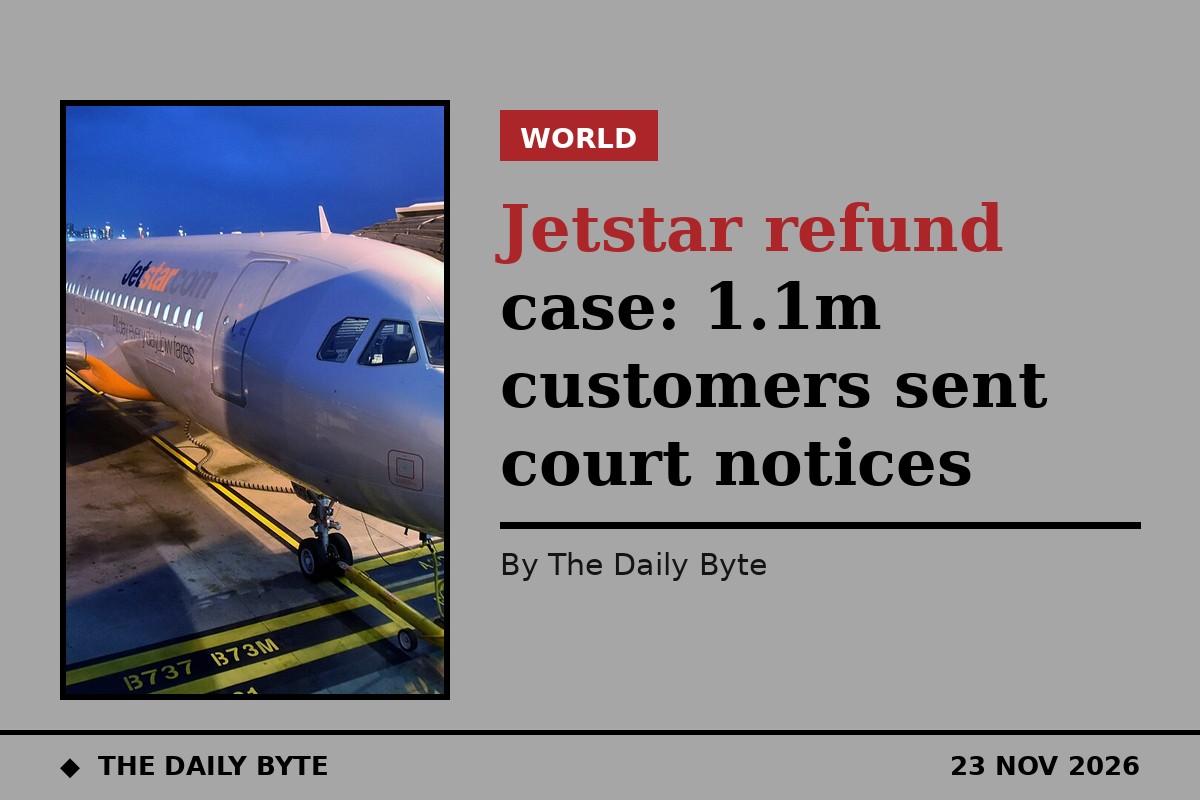
More than 1.1 million Jetstar customers are to be contacted by the Federal Court of Australia about a class action over refunds for flights the airline cancelled during the pandemic. The court confirmed on Monday, 23 November 2026, that it had ordered notices to be sent to customers who may be eligible to take part in the case, or to opt out of it.
The notices are due to be distributed by 4 December, and customers who wish to remain part of the group do not need to take any action. Anyone who prefers not to be involved can opt out, with the deadline for doing so set for 22 January 2027. Some opt-out notices had already begun reaching customers from 13 November.
Echo Law, the firm running the action, has urged people who receive a notice to read it and to understand that it is genuine rather than a scam. The firm says there is no need for class members to act if they wish to remain part of the action.
What the case is about
The case centres on flights Jetstar cancelled between January 2020 and November 2022, when the pandemic brought wave after wave of travel restrictions. Thousands of domestic and international services were cancelled during that period, and the lawsuit alleges that many affected passengers were given travel credits instead of the cash refunds they were owed.
Echo Law alleges that Jetstar breached its legal obligations to customers by failing to refund payments for flights it cancelled, and that the airline misled customers and engaged in unconscionable conduct under Australian consumer law. The firm alleges that customers were pushed into accepting hundreds of millions of dollars in restricted travel credits, even though they were entitled by law to obtain refunds when Jetstar cancelled their flights.
The firm also alleges that documents obtained since the action began suggest Jetstar management knew the approach was wrong and developed a deliberate strategy to put the airline's interests ahead of its customers, preserving the airline's cash position at customers' expense. The action is seeking refunds with interest for affected customers, and is funded by litigation funder Court House Capital.
What Jetstar says
Jetstar denies the allegations and is defending the case. A spokesperson for the airline said that during the pandemic it took a range of steps to respond to rapidly changing travel restrictions while continuing to support customers affected by disruption.
The airline said customers were given a range of options depending on their circumstances, including travel credits, fee-free flight changes and refunds. It added that passengers holding a Covid-19 voucher can use it whenever they are ready, after the airline removed the expiry date on the vouchers in 2023.
Echo Law previously ran a separate class action against Qantas over its handling of Covid-19 travel credits. That case, launched in 2023, was settled in March 2026 when Qantas agreed to pay $105 million, without admitting liability. Echo Law says that, unlike Qantas, Jetstar has not acted to settle the action and is continuing to force claimants to litigate to secure compensation.
What happens next
The dispute is set down for mediation in December 2026, and if the two sides cannot reach an agreement it is expected to go to trial in 2027. The case was filed in the Federal Court in 2024, with the proceeding listed under the name of applicant Kaye Perkins. Group members can register with the firm to receive updates on the case, including details of any settlement or other outcome.
For the customers receiving notices, the practical message is simple: the letters are real, staying in the group requires no reply, and those who do stay in can still use any Covid-19 credits they hold. Millions of dollars' worth of those vouchers were redeemed during the 2025-26 financial year, and the outcome of the case will decide whether the passengers behind them are also owed cash back.
The case is one of the largest customer claims of its kind in Australia, and its result will be watched closely by other airlines and by consumer groups, because it tests whether travel credits offered during the pandemic were an acceptable substitute for the cash refunds passengers say they were owed.


