Johannesburg Brings In Level 2 Water Restrictions From Saturday As Demand Outstrips Supply
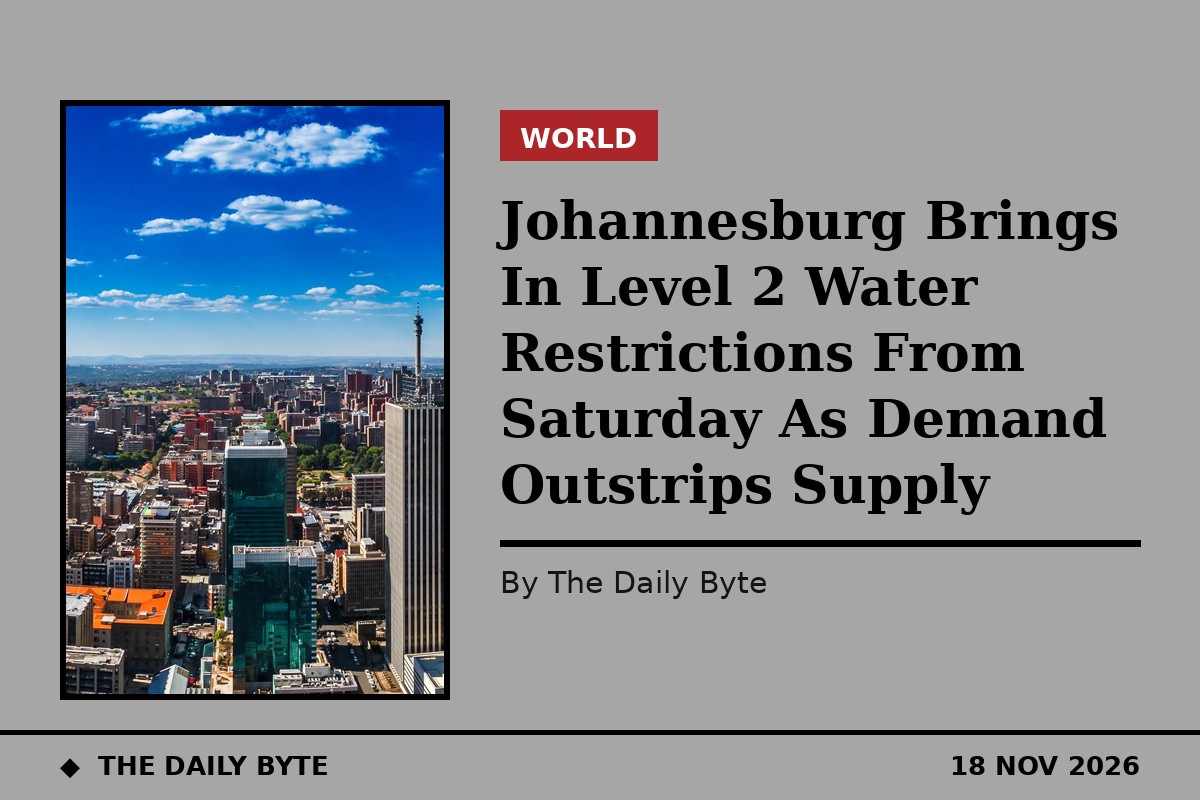
Johannesburg will move to Level 2 water restrictions from Saturday 21 November 2026, after the city's water utility warned that demand is outstripping the supply of treated water. The restrictions, announced on Wednesday 18 November, ban the use of municipal drinking water for watering gardens, lawns, parks and public spaces at any time of day.
Johannesburg Water said the measures were declared under Section 58(4) of the City of Johannesburg Water Services By-laws, 2023, and will remain in place until formally withdrawn. The utility says it needs to cut demand by 200 million litres a day to stabilise supply, support the recovery of reservoir levels and improve reliability across the city.
What changes from Saturday
From 21 November, residents, businesses and institutions will be prohibited from using municipal drinking water to irrigate gardens, lawns, parks and public spaces at all hours. Hosing down hard surfaces such as driveways, paved areas and pavements is also prohibited. The all-day irrigation ban replaces the limited watering hours previously allowed under Level 1 restrictions.
The restrictions apply to residential, commercial, institutional and other consumers across Johannesburg. Johannesburg Water said it would step up monitoring and enforcement through the utility and the city's relevant departments, and that compliance is compulsory.
Why the city is acting now
Johannesburg Water said the supply system is under pressure because high demand continues to strain the available treated bulk water supply from Rand Water, leaving reservoirs and towers struggling to recover after interruptions. The problem is not a shortage of raw water: the Vaal Dam stood at 104.3 per cent of full supply level on 11 November, and the wider Integrated Vaal River System held 97.4 per cent. The constraint is the volume of water that can be treated and delivered.
The utility also pointed to heavy losses in its own network. Non-revenue water is currently estimated at about 48.4 per cent, with physical losses of about 26.4 per cent, according to Johannesburg Water spokesperson Nombuso Shabalala.
The move follows a letter dated 2 November 2026 from the Gauteng Department of Co-operative Governance and Traditional Affairs, which called on municipalities to assess their water supply and demand conditions and implement and enforce Level 2 restrictions in line with their by-laws.
Joburg joins Tshwane and Cape Town
Johannesburg is the latest major city to tighten water use. Tshwane introduced Level 2 restrictions on Monday 16 November, while Cape Town said it would introduce Level 1 restrictions from 1 December. Johannesburg's revised Level 2 restriction tariffs will also take effect on 1 December 2026.
Summer heat has added to the pressure on Gauteng's water system, with high demand persisting even as dam levels remain strong. The restrictions are intended to reduce demand, support the recovery of reservoir levels and improve the reliability of supply across the city, Johannesburg Water said.
Frequently asked questions
When do Johannesburg's Level 2 water restrictions start?
They take effect on Saturday 21 November 2026 and remain in force until the city formally withdraws them.
Can I water my garden under Level 2 restrictions?
No. The use of municipal drinking water to irrigate gardens, lawns, parks and public spaces is prohibited at all times under the new rules.
Why are there restrictions when the dams are full?
Johannesburg Water says the strain is on treated bulk water supply from Rand Water, not on raw water storage. Demand is exceeding the volume that can be treated and delivered, so reservoirs cannot recover.
Sources: Sowetan; The African Chronicle.


