Justice Department Drafts Civil Lawyers as Immigration Detention Challenges Top 97,000
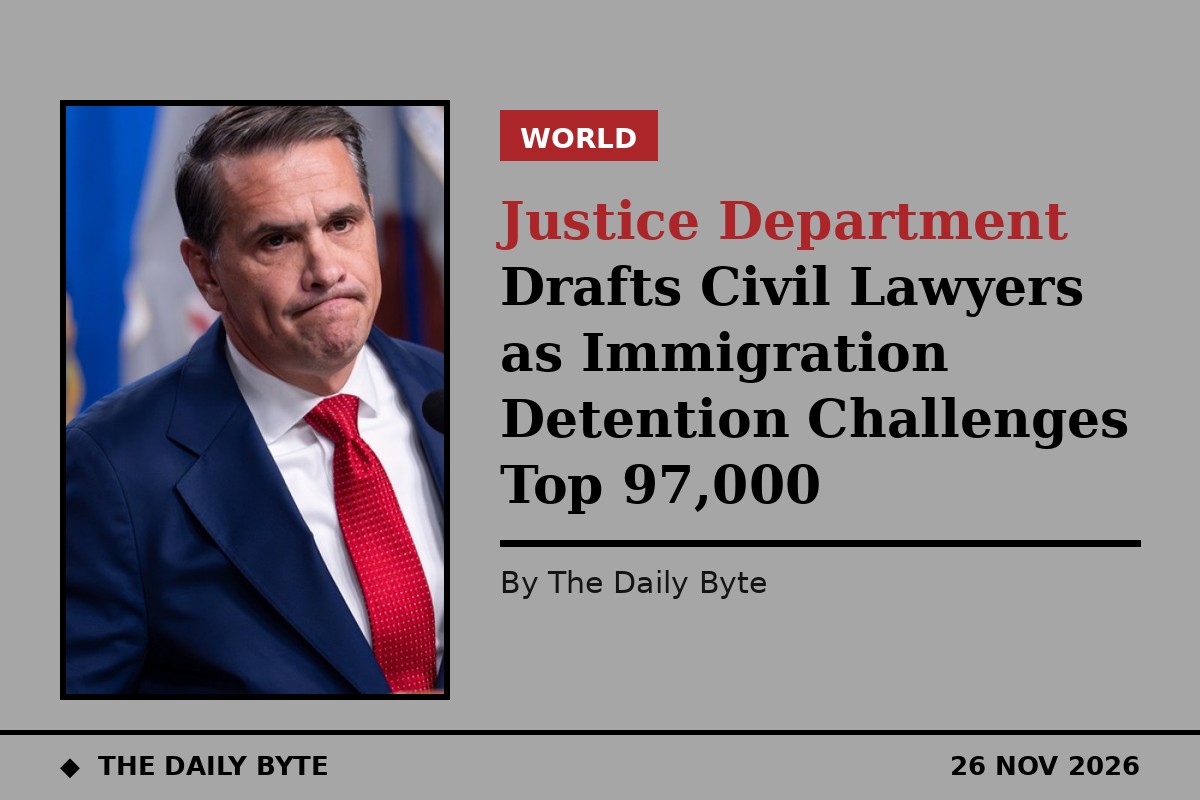
The US Justice Department is drafting lawyers from across its civil divisions to defend immigration detention cases, after more than 97,000 habeas corpus petitions from detainees overwhelmed the federal prosecutors who normally handle them.
Attorney General Todd Blanche issued a three-page memo on Tuesday 24 November ordering attorneys from the Antitrust, Civil, Civil Rights, and Environment and Natural Resources divisions, as well as the US Trustee Program, to help US attorneys' offices answer the flood of challenges. Lawyers in the offices of the attorney general, deputy attorney general and associate attorney general will also take cases.
More than 97,000 immigration detainees have filed habeas corpus petitions since President Donald Trump returned to office in January 2025, including about 10,000 new petitions since October alone, according to the memo, which was obtained by CBS News and the Washington Examiner. Federal courts typically saw only a few hundred such petitions a year before Trump's second term.
What the memo says
“Many of the Department's US Attorneys' Offices have been overwhelmed by the influx of petitions and impracticable procedures set by the courts,” Blanche wrote in the memo. He called many of the petitions “frivolous” and accused immigration lawyers of using the litigation to frustrate the president's crackdown on illegal immigration.
“The increase in habeas petitions resulted, in part, from the immigration bar's attempt to thwart President Trump's promise to the American people to prioritize their safety and security,” Blanche wrote.
The civil components tapped to assist have roughly 2,000 litigators among them, but the memo did not specify how many attorneys would actually be reassigned or how many petitions each would carry. Senior department offices must also propose an “aggressive appellate strategy” on habeas litigation within 30 days.
Why the petitions have surged
Habeas corpus petitions allow detainees to ask a federal judge to review whether the government is holding them lawfully. The cases can take weeks or months to resolve, and they have the effect of moving immigration cases out of immigration court and into federal court, where judges are appointed by presidents and typically have little experience in immigration law.
The surge follows a change in detention policy in July 2025, when Immigration and Customs Enforcement began treating people who entered without inspection as applicants for admission subject to mandatory detention, a provision that offers no bond hearing before an immigration judge. The administration has also narrowed other avenues for release, including on bond, while holding record numbers of people in custody.
The staffing crunch had already forced one US attorney's office to pull back. In an October 26 letter later entered into the court record, acting US Attorney Charles Neil Floyd told the chief federal judge in Western Washington that his office lacked the staff to defend every ICE detention challenge and would stop appearing in many cases. He suggested judges email release orders directly to the detention centre when no government lawyer was assigned. The office reversed course in November after reaching an agreement with judges on new procedures.
Supreme Court cases ahead
The legal fight is also heading to the Supreme Court. In one case this month, a federal judge in Nebraska gave the administration until November 30 to justify a detainee's custody and barred the government from removing the petitioner or transferring them out of the district while the case proceeds. The justices are due to hear arguments in early 2027 in Rhoney v. Barbosa da Cunha, a challenge to the administration's detention policy, and in October agreed to review a second appeals court ruling that struck down the policy of denying bond hearings to people who have lived in the US for years. A decision is expected by late June or early July 2027.
An independent ProPublica tracker built from federal court records counted about 97,050 such cases through November 17, broadly matching the figure in Blanche's memo.


