K-P Hospitals Still Struggle Despite 13 Years of PTI Rule
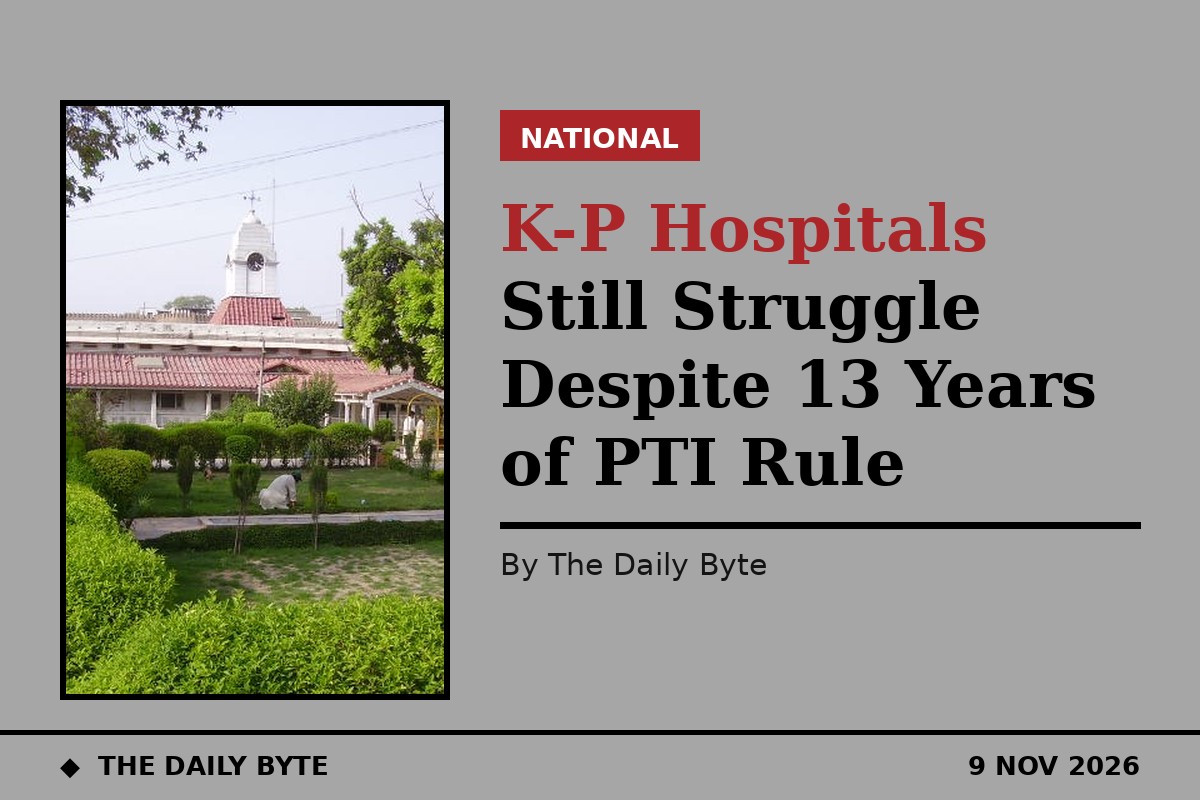
A new report says public hospitals across Khyber Pakhtunkhwa still struggle with shortages of basic facilities, medicines and treatment, despite 13 years of Pakistan Tehreek-e-Insaf (PTI) rule and a series of flagship health initiatives. The Express Tribune reported on 9 November that residents are questioning whether the province's much-praised health reforms have actually reached ordinary patients, as the governor vowed a review of the Sehat Card scheme and the hospital system.
The PTI has governed Khyber Pakhtunkhwa since 2013, and health reform has long been presented as its signature achievement, above all the Sehat Card, which promised free treatment to families across the province. The new report, published from Peshawar, suggests that promise is wearing thin on the wards, with patients still buying basic supplies from private shops and waiting for medicines that hospitals cannot provide.
What the report found
Residents cited shortages of medicines, basic facilities and treatment as the daily reality in public hospitals, according to the report. The findings echo a pattern documented repeatedly in recent years: flagship schemes announced in Peshawar, while district hospitals and teaching institutions struggle with stock, staff and equipment.
Medicine shortages on the ground
The picture was underlined during a recent surprise visit by Ehtesham Ali, the chief minister's adviser on health, to the Landi Kotal headquarters hospital. Patients told him they had to buy all their medicines outside the hospital, including basic items such as cannulas and needles, and one showed him items bought from the market. The adviser found the emergency medicine store almost empty and summoned the medical superintendent to explain, directing senior officials to take stern action over the negligence.
An independent monitoring unit report published by Dawn in June 2025 found a similar story across more than 30 district headquarters hospitals in the province. Only 45 per cent of the 174 essential medicines patients needed were available, while syringes and infusion devices were also in short supply. The same report found 390 doctors absent from duty in May, 228 of them without formal permission, and only three hospitals had 90 per cent of 60 essential pieces of medical equipment working.
Cancer patients waiting for drugs
The shortages have hit some of the sickest patients hardest. Dawn reported in April 2026 that free treatment for cancer patients had been hampered by a lack of funds at three major teaching hospitals, Hayatabad Medical Complex and Khyber Teaching Hospital in Peshawar and Ayub Teaching Hospital in Abbottabad. More than 1,000 poor patients registered for treatment were waiting for drugs, with no stock at Khyber Teaching Hospital, where 623 patients were waiting, while the government had released Rs820 million of the Rs1.5 billion required.
Strikes add to the pressure
Repeated strikes by health workers have added to patients' difficulties. Dawn reported in August 2026 that a four-day strike by the Young Doctors Association at the 1,200-bed Hayatabad Medical Complex, called over allegations of illegal appointments and corruption, left thousands of patients affected, with surgeries postponed and diagnostic tests not carried out. Earlier strikes over the non-implementation of a 2020 law protecting health workers were also called off after assurances, but inquiries into such incidents were rarely completed and those responsible were generally not held to account.
The Sehat Card question
At the centre of the debate is the Sehat Card Plus scheme, which once offered more than 7.2 million families free inpatient treatment worth up to Rs1 million a year. The programme has been suspended more than once when payments to hospitals fell behind, with the State Life Insurance Company halting claims when the province's unpaid dues reached about Rs30 billion. The governor has now vowed to review both the card and the hospitals, but residents will judge that review on whether medicines return to the shelves and doctors return to their posts.