Kanlaon Volcano Ash Emission Keeps Alert Level 2 in Place
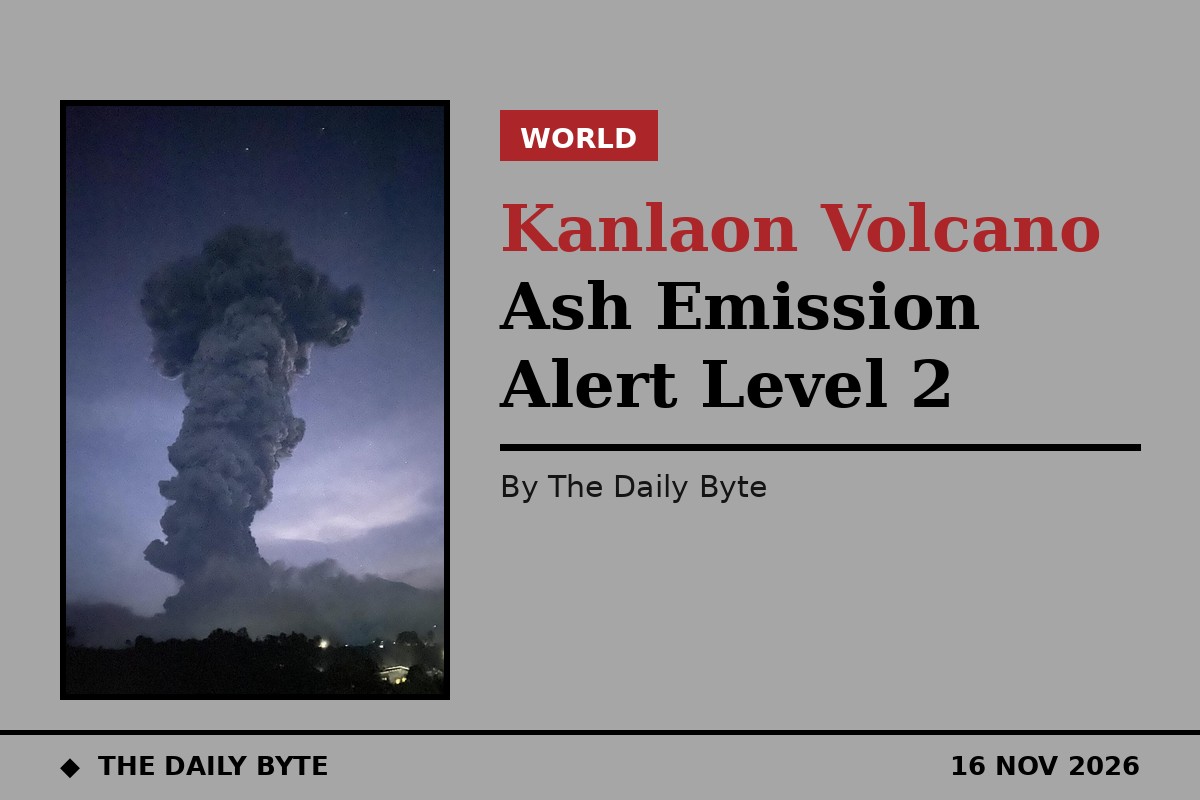
Kanlaon Volcano on Negros Island in the Philippines emitted ash again on Monday, 16 November 2026, sending grey plumes 350 metres above its summit crater. The Philippine Institute of Volcanology and Seismology, known as PHIVOLCS, said Alert Level 2 remains in force, meaning minor to moderately explosive eruptions are possible.
PHIVOLCS Director Teresito Bacolcol said about 280 ash emission events have been recorded at Kanlaon since the start of 2026. He urged people planning to go near the volcano to take the necessary precautions and to follow the advisories of PHIVOLCS and local government units.
Ashfall reaches nearby towns
The latest emission followed a burst of activity on Sunday, 15 November, when four ash emissions sent plumes up to 900 metres above the crater, according to Digicast Negros, quoting resident volcanologist Mari Andylene Quintia. Thin ashfall reached parts of La Carlota City and La Castellana in Negros Occidental.
Kanlaon straddles the provinces of Negros Occidental and Negros Oriental. The communities around its slopes are used to living with an active volcano, but ashfall can still disrupt daily life: it can irritate eyes and lungs, coat roofs and crops, and make roads slippery. Residents in affected areas were advised to follow local safety instructions and to stay out of the danger zone.
PHIVOLCS’ bulletin for 15 November listed Alert Level 2, or increased unrest, and barred entry into the four-kilometre Permanent Danger Zone. The agency also warns that sudden steam-driven eruptions can occur and that aircraft should not fly close to the volcano.
What Alert Level 2 means
Alert Level 2 means the volcano is showing increased unrest, but it does not predict a specific eruption. Entry into the four-kilometre permanent danger zone is prohibited, and people in nearby areas should be ready to follow evacuation advice from their local government if the alert level changes.
PHIVOLCS monitors Kanlaon around the clock, tracking volcanic earthquakes, sulphur dioxide emissions and plume height. Its bulletin for 15 November recorded 18 volcanic earthquakes, including one volcanic tremor lasting two minutes, and sulphur dioxide flux of 2,825 tonnes a day on 14 November. The plume on that day was 100 metres tall, with a weak emission drifting west and southwest.
The pattern in recent weeks has been episodic rather than continuous: short bursts of ash, separated by quieter periods, rather than a sustained eruption. That is why the alert level has stayed at 2, even as the count of ash emissions through the year has climbed to around 280.
A restive volcano with a recent history
Kanlaon is one of the most active volcanoes in the Philippines. On 19 February 2026, a short-lived, moderately explosive eruption sent a dense dark grey plume 2,000 metres above the vent and displaced more than 30 families in La Carlota City, with ashfall reported across 41 villages in six cities and municipalities. A further eruption on 24 October 2026 also generated a plume of about 2,000 metres.
Those events are a reminder of why the four-kilometre danger zone exists, and why PHIVOLCS repeats its advice after every ash emission. For now, the advice is unchanged: stay out of the permanent danger zone, heed PHIVOLCS bulletins and local government instructions, and take precautions against ashfall if it reaches your area. The photograph with this article shows Kanlaon during an earlier eruption. Philippine News Agency and PHIVOLCS Kanlaon bulletin


