Katz Rules Out Syria Security Deal and Calls al-Sharaa a Smart Enemy
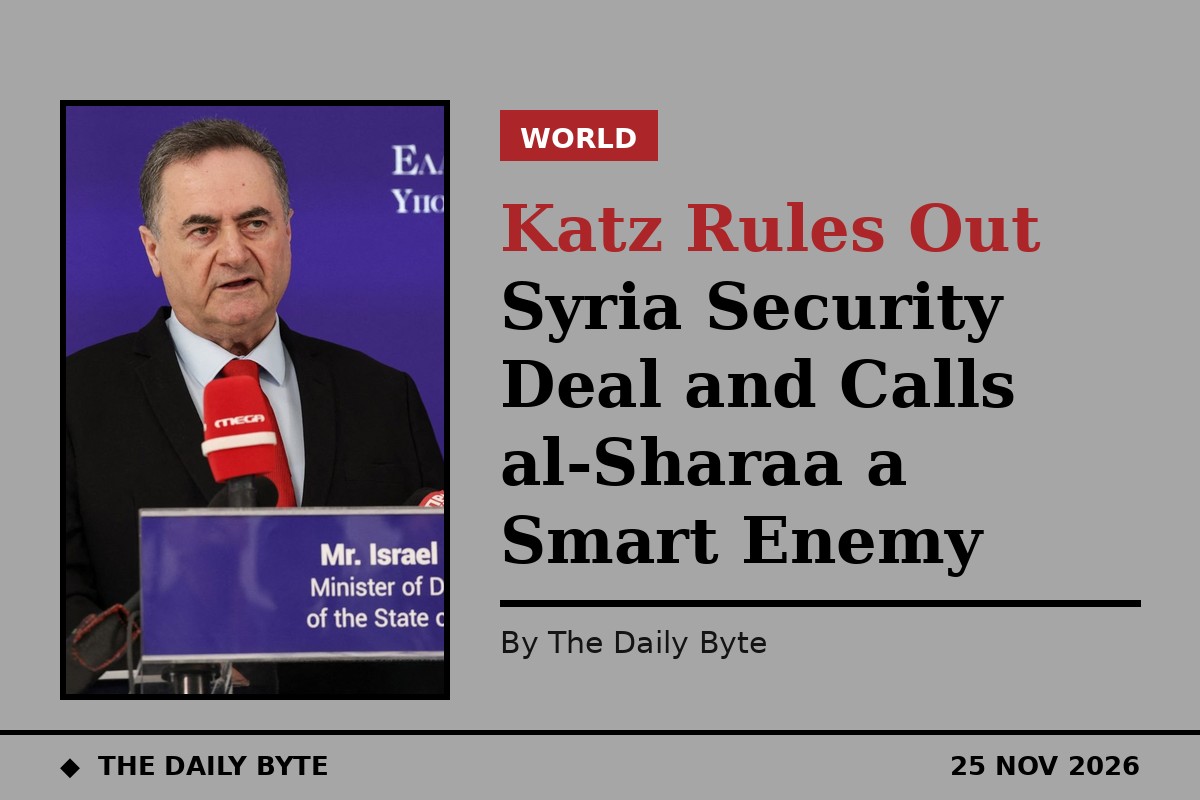
Israeli Defence Minister Israel Katz has ruled out reaching a security agreement with Syria, describing Syrian President Ahmad al-Sharaa as a “smart enemy” who is building up military capabilities with Turkish support. Katz made the remarks on Tuesday during a briefing with Israeli journalists at his office in Tel Aviv, according to the Times of Israel, as reported by Welat TV.
Katz said a deal was not within reach because the Syrian leadership was not seeking a peace agreement so much as demanding the withdrawal of Israeli forces. He expressed doubt about the prospects for the United States-backed diplomatic efforts under way with both Syria and Lebanon, and reaffirmed that Israel intends to keep its military presence in the buffer zones it controls in Syria, Lebanon and the Gaza Strip.
A “smart enemy” with Turkish backing
Speaking about al-Sharaa, Katz described him as a smart enemy working to develop military capabilities with Turkish backing, pointing to the military cooperation between Damascus and Ankara. The Largo Herald, reporting on the same briefing, said Katz described al-Sharaa as a clever enemy and maintained that a security deal was not feasible because the Syrian leader wanted a withdrawal rather than a peace agreement.
Katz had previously declared, during a visit to Mount Hermon in August, that Israeli forces would not withdraw from the area while threats to Israel’s security remained, according to his own assessment. The buffer zone, and the possible return to the 1974 Disengagement of Forces Agreement, remain among the main points of contention in the security talks between Damascus and Tel Aviv.
Doubts over the diplomatic track
Katz also voiced scepticism about the diplomatic process in Lebanon, describing the Lebanese Armed Forces’ efforts to confiscate Hezbollah’s weapons as a fiction, according to the Largo Herald’s account of the briefing. His remarks underline how far Israel’s position has moved from the optimism that surrounded the US-backed talks earlier this year.
The comments came in the same briefing in which Katz warned that Iran was developing chemical weapons, a claim already reported separately. On Syria, his message was different in kind: not a warning about a weapons programme, but a political judgement that no agreement is available with the current leadership in Damascus.
Al-Sharaa has previously said his government is seeking a security agreement with Israel and has no interest in another military confrontation, while insisting that Damascus will not give up its claim to the Golan Heights. The gap between that position and Katz’s insistence on staying in the buffer zones is now the central obstacle to any deal.
What happens next
Israeli forces entered Syrian territory after the fall of the Assad government in December 2024, and their withdrawal has been Damascus’s central demand ever since. With Israel’s defence minister now publicly ruling out a deal and describing the Syrian president as an enemy to be contained rather than a partner to be engaged, the US-backed talks face their hardest test yet. Neither side has announced a date for a further round.


