2.7m Kenyan Pupils Risk Losing School Meals
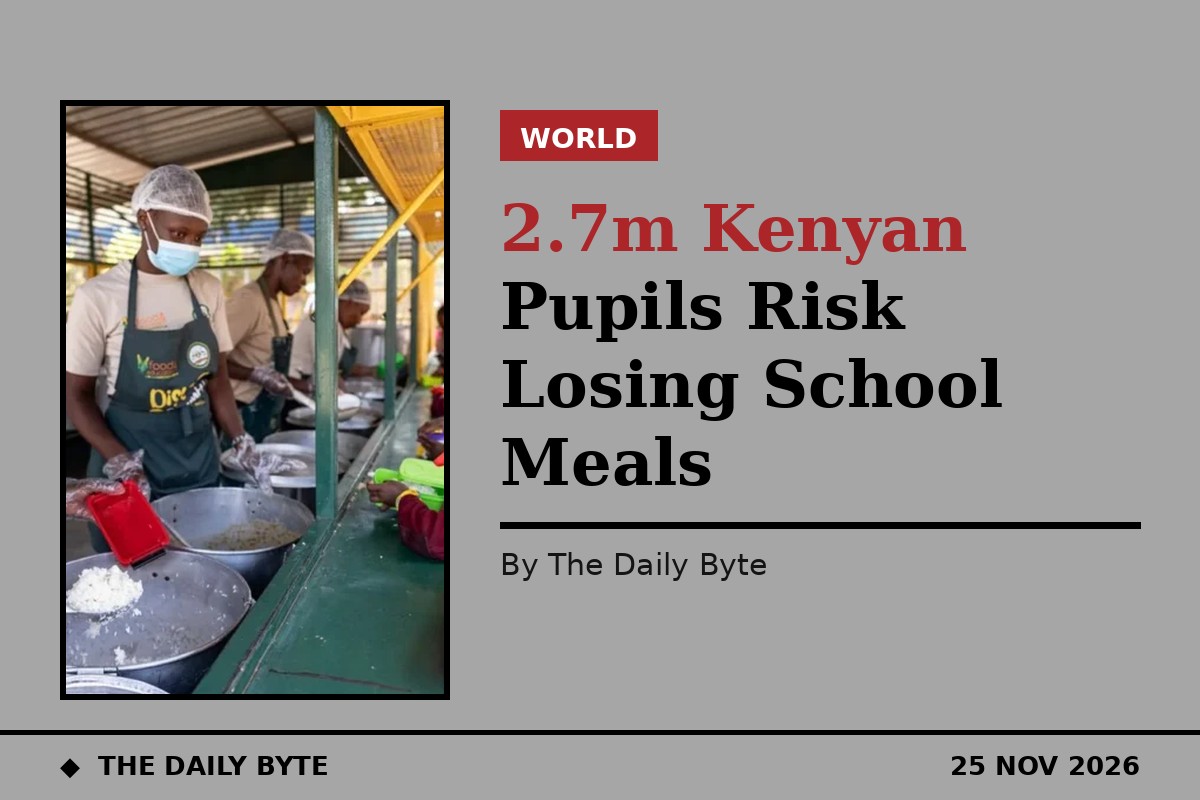
About 2.7 million vulnerable pupils in Kenya could go without school meals for 117 of the 180 days of the school year unless the government finds an extra Sh5.5 billion, education officials have warned.
The State Department for Basic Education told MPs that the Sh3 billion proposed for the school feeding programme in the 2027/28 financial year would cover meals for only about 63 days. It said Sh8.5 billion was needed to provide meals for the full academic year.
Principal Secretary John Ololtuaa gave the figures while appearing before the National Assembly's Departmental Committee on Education on Tuesday, during discussions on the 2027 Budget Policy Statement.
Children in dry and poor areas most exposed
The department said the funding constraints could affect approximately 2.7 million learners who depend on the initiative, particularly those attending schools in arid and semi-arid lands, food-insecure areas and communities affected by poverty.
Kenya's school feeding initiative supplies meals to children in public early childhood and primary schools, with particular emphasis on communities where food insecurity and poverty make regular meals difficult to access. For many of the children it serves, the school meal is a central part of the day, and interruptions to the programme have previously left tens of thousands of vulnerable learners without food at school.
A wider funding squeeze
The meals warning came alongside a broader picture of pressure on the free education programme. The department told the committee that free primary education had Sh7.01 billion allocated against Sh9.97 billion required, while junior school had Sh30.72 billion proposed against Sh54.23 billion needed. Taken together, the free education programme faces a combined funding gap of more than Sh26 billion, according to the department's presentation.
Headteachers have already warned that money reaching schools is insufficient to sustain learning programmes, with some schools receiving less than the approved amount per learner and parents left to shoulder costs for transport, meals and learning materials.
Expansion plans under strain
The shortfall sits uneasily with the government's stated ambitions for the programme. President William Ruto has said the feeding programme currently reaches about three million learners and announced plans to expand it to 10 million by 2030, speaking at a food security summit in Nairobi on 16 November, where he also warned that about 2.7 million Kenyans face severe food shortages.
The figures presented to MPs are proposals in the budget process, and the final allocations for 2027/28 have not yet been agreed. But the department's warning makes clear that, on the current proposals, meals would run out long before the school year ends, leaving the children who rely on them most exposed. The Eastleigh Voice reports the committee hearing and Radio Generation reports the Sh5.5bn shortfall.