Kenya Bans Traditional Settlements in Sex Offence Cases
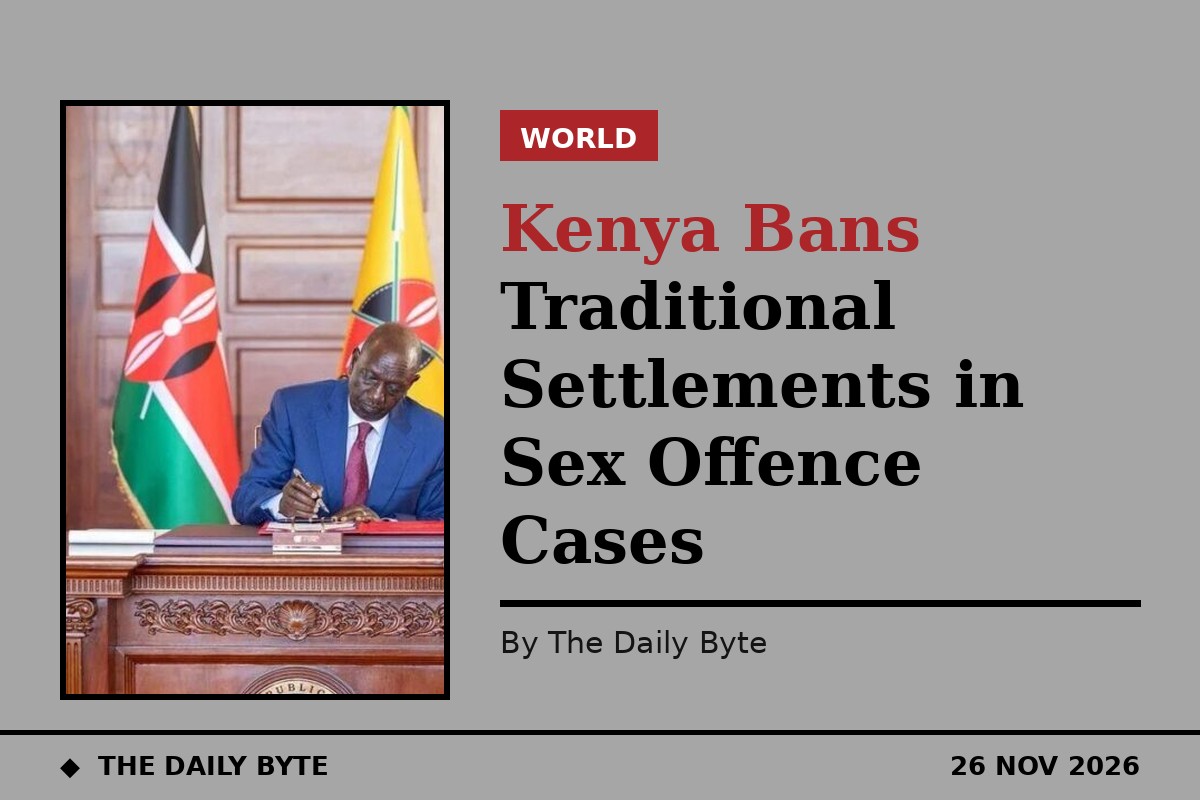
President William Ruto has signed into law legislation that bars sexual offence cases in Kenya from being settled outside the courts, closing a long-standing route through which serious crimes were resolved by traditional or informal agreement.
The Sexual Offences (Amendment) Act, 2025, was signed at State House in Nairobi on Thursday, 26 November 2026. It invalidates agreements reached outside the judicial process, including settlements made through traditional practices such as maslaha, a community mediation custom used in parts of the country.
Under the new law, every sexual offence case must go through the formal court system. Courts can no longer discontinue proceedings solely because the parties have reached an out-of-court settlement, and the Director of Public Prosecutions cannot withdraw a case on the basis that an agreement was reached through traditional dispute resolution.
The legislation also makes it an offence to coerce, intimidate or induce a victim into withdrawing a complaint. Officials presenting the Bill at State House said the measure was intended to stop perpetrators evading accountability through informal settlements, amid concerns that such arrangements allow offenders to escape prosecution while victims are denied justice.
The Act sets a strict timetable for trials. Sexual offence cases must be heard on a day-to-day basis and concluded within six months from the date a plea is recorded, a change intended to address long delays that prolong the suffering of survivors and undermine access to justice.
The Bill was sponsored by Garissa County Woman Representative Udgoon Siyad Kuno and passed by the National Assembly, with amendments, on 4 November 2026. It rests on Article 50 of the Constitution, which guarantees the right to expeditious administration of justice, and Article 159, which governs how justice is administered.
The National Council on the Administration of Justice, chaired by the Chief Justice, backed the legislation, arguing that alternative dispute resolution in sexual offence cases could allow offenders to escape justice while exposing victims to further victimisation.
President Ruto also assented to the Sexual Offences (Amendment) Bill, 2023, which focuses on public awareness and prevention. It requires nationwide education campaigns on sexual offences and available legal remedies, and directs the education sector to establish programmes protecting the right to education of survivors, including girls who become pregnant following sexual violence.
Speaking after the signing, the President said the two laws would promote a better understanding of the provisions and limitations of the law and strengthen the country's response to sexual offences. He assented to six National Assembly Bills in total at the ceremony, including measures on workplace protections for breastfeeding mothers.


