Kenya Cargo Costs 32% Above Europe, World Bank Says
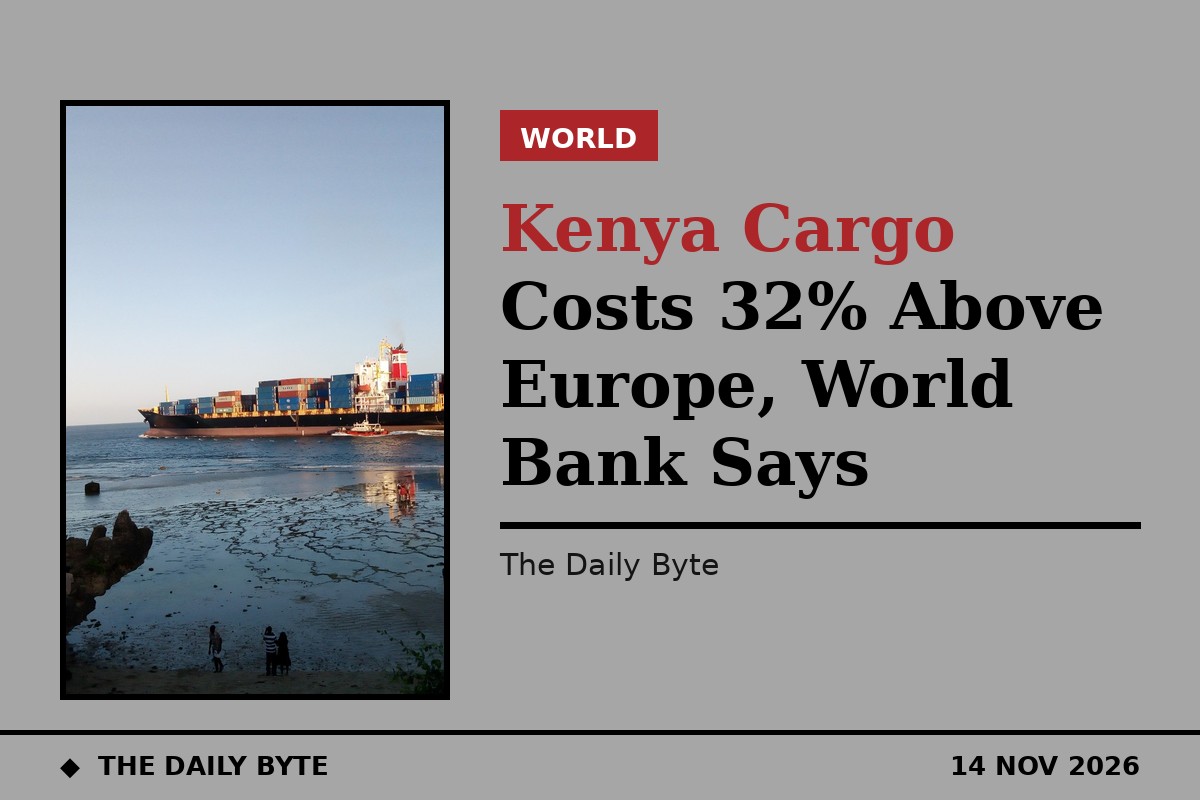
Moving a 20-foot container from the Port of Mombasa to Nairobi costs about 32 per cent more than moving similar cargo over the same distance in Europe, according to a new World Bank report that puts Kenya's high trade costs under fresh scrutiny.
The World Bank's 34th Kenya Economic Update, published in November 2026, found that trucking a container along the roughly 480-kilometre Mombasa to Nairobi corridor costs between 850 and 1,250 US dollars, or about KSh110,449 to KSh162,425. The same journey by road in Europe costs around 720 dollars, even though fuel and labour are more expensive there.
The comparison is striking because the inland leg now costs more than half as much as the entire ocean voyage. Shipping the same container from China to Mombasa costs about 2,000 dollars, the report notes, meaning the short road trip from the coast to the capital adds more than half again to the bill.
Port ranked among the world's worst
The World Bank also ranked Mombasa among the worst-performing container ports in the world. In the 2024 Container Port Performance Index, Mombasa placed 375th out of 403 ports assessed, down from 326th out of 348 in 2022. The lender blamed congestion, repeated cargo inspections, long administrative delays and computer systems that frequently break down.
Leadership instability at the Kenya Ports Authority was singled out as a factor. The authority has had five managing directors in the last ten years, which the report says has weakened planning and made it harder to sustain improvements.
Importers face overlapping inspections from several agencies, including the Kenya Revenue Authority, the Kenya Bureau of Standards and the Anti-Counterfeit Authority. Each has its own fees and procedures, and the report warns that the gaps create opportunities for demands for unofficial payments.
Roadblocks and delays add to the bill
Once cargo leaves the port, the road brings its own costs. Transport operators encounter between 22 and 27 police roadblocks along the Mombasa to Malaba corridor, in addition to weigh stations and other inspection points. The World Bank said the delays and disruptions to cargo tracking systems make delivery schedules unpredictable and push up prices.
Transit times between Mombasa and Malaba can reach 76 to 80 hours for a journey of less than 1,000 kilometres. The Shippers Council of Eastern Africa estimates that logistics costs account for between 35 and 42 per cent of the total landed cost of goods shipped through Mombasa, a burden ultimately passed on to Kenyan shoppers and to businesses across East Africa that depend on the port.
Government promises to cut checkpoints
The Kenyan government has announced measures to tackle the problem. Under its Roadblock Reduction Initiative, announced in April 2026 and being put into effect this month, the number of police checkpoints on the corridor is to fall to fewer than five officially authorised stopping points, with the aim of cutting transit times by half to between 36 and 48 hours.
President William Ruto also announced on 4 November that the government is preparing plans to expand the Port of Mombasa. The World Bank has called for better port management, simpler cargo inspections, reliable digital systems and stronger accountability, arguing that cheaper, faster trade would lower prices for consumers and sharpen Kenya's position as the region's main gateway.
Sources: The Online Kenyan and Ecofin Agency.


