Kenya, DR Congo Restore Diplomatic Ties After Rift
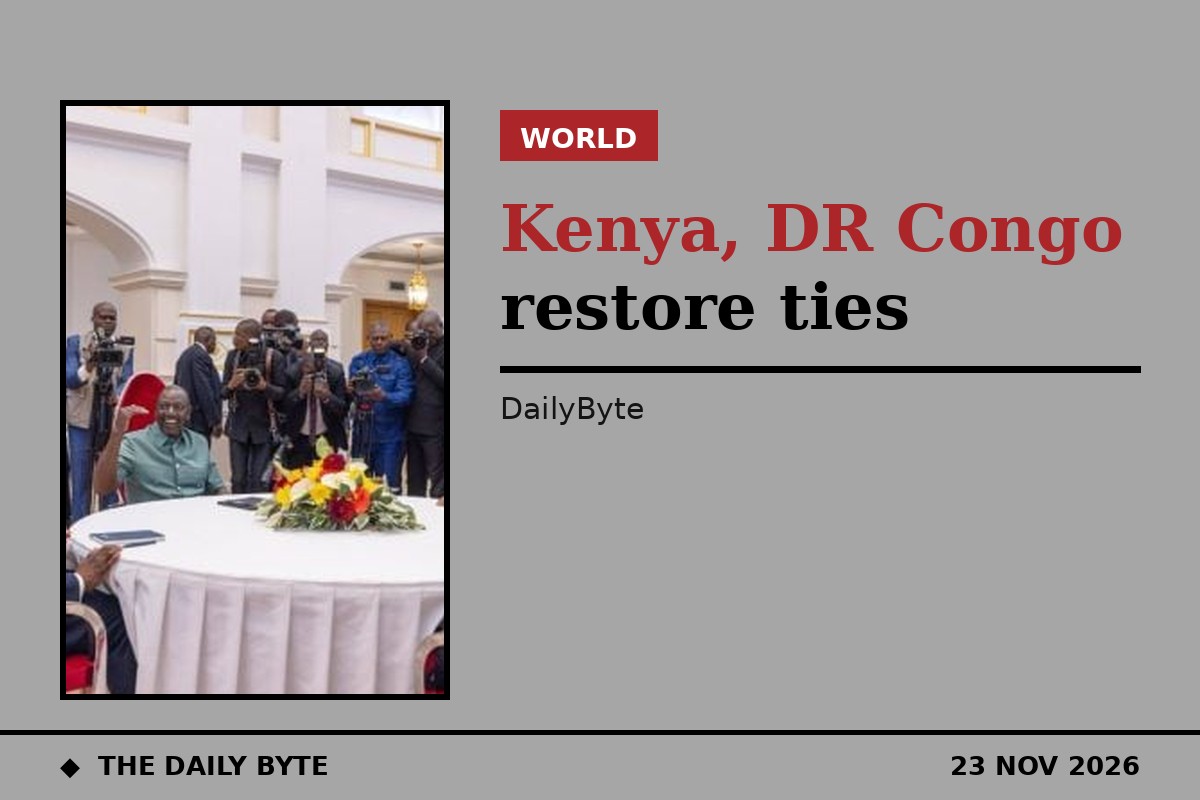
Kenya and the Democratic Republic of the Congo have agreed to restore full diplomatic relations, ending nearly three years of strained ties between the two East African neighbours. Presidents William Ruto and Félix Tshisekedi reached the agreement on Sunday, 22 November 2026, during a high-level Quadripartite Political Summit in the town of Oyo, in the Republic of the Congo.
The meeting was hosted by the Republic of the Congo’s President Denis Sassou Nguesso and mediated by Togo’s Faure Essozimna Gnassingbé, who serves as the African Union’s mediator for the security crisis in eastern DRC. In a joint communiqué, the two leaders committed to opening what Ruto described as “a new chapter in our relations built on mutual trust, respect and cooperation”, according to The Informer.
What the two presidents agreed
The centrepiece of the deal is the restoration of diplomatic representation at ambassadorial level. The DRC recalled its ambassador from Nairobi in December 2023, and Kenya’s subsequent ambassadorial nominees struggled to secure accreditation in Kinshasa, leaving the relationship without the full representation that normally anchors trade, security and consular work. Both sides have now committed to returning ambassadors to Nairobi and Kinshasa, People Daily reports.
The leaders also agreed to resume the Joint Grand Commission for Cooperation, the bilateral framework through which the two governments manage trade, investment, infrastructure and security matters, and to hold regular political consultations. They reaffirmed respect for each other’s sovereignty, territorial integrity and independence, pledged non-interference in one another’s internal affairs, and promised to settle disputes through diplomatic channels and existing regional mechanisms rather than public confrontation.
Why relations broke down
The rift has several roots. The sharpest came in December 2023, when the Congo River Alliance, a political-military coalition led by former electoral chief Corneille Nangaa and closely associated with the M23 rebel movement, was launched in Nairobi. Kinshasa was angered that a coalition linked to an armed rebellion against its government had been unveiled in the Kenyan capital, while Nairobi defended the gathering on freedom of expression grounds.
Disagreements then deepened over the conflict in eastern DRC. Kenya had led the Nairobi Process, a regional peace initiative, but Kinshasa increasingly favoured a forceful approach against M23, which had expanded its territorial control, while Nairobi pressed for dialogue and disarmament. The East African Community Regional Force, which included Kenyan troops, withdrew from eastern DRC in December 2023 after disagreements over its mandate.
Tensions flared again in August 2025, when Ruto nominated a Consul-General for Goma, a city held by M23 since January 2025, without what Kinshasa regarded as proper prior approval. Then in October 2025, Nairobi hosted a gathering of Congolese opposition politicians linked to former president Joseph Kabila, who had been sentenced to death in absentia by a Congolese military court the previous month. Kabila rejected the accusations against him.
Trade, health and regional security
The agreement goes beyond protocol. The two countries pledged to deepen trade and economic cooperation, a significant step given the DRC’s importance as a market for Kenyan businesses and the role of the port of Mombasa as a gateway for goods bound for the Great Lakes region. They also agreed to strengthen cooperation through the East African Community and the International Conference on the Great Lakes Region, both of which count Kenya and the DRC as members.
The leaders additionally called for joint efforts against Ebola, recognising the serious consequences of the epidemic and the need for cross-border coordination on public health. For now, the Oyo agreement is a commitment rather than a completed normalisation: ambassadors must still be appointed and accredited, the Joint Grand Commission must meet, and regular consultations must be sustained. Whether the thaw holds will depend on follow-through in Nairobi and Kinshasa in the weeks ahead.


