Kenya El Niño: 43 Counties Face Above-Average Rains
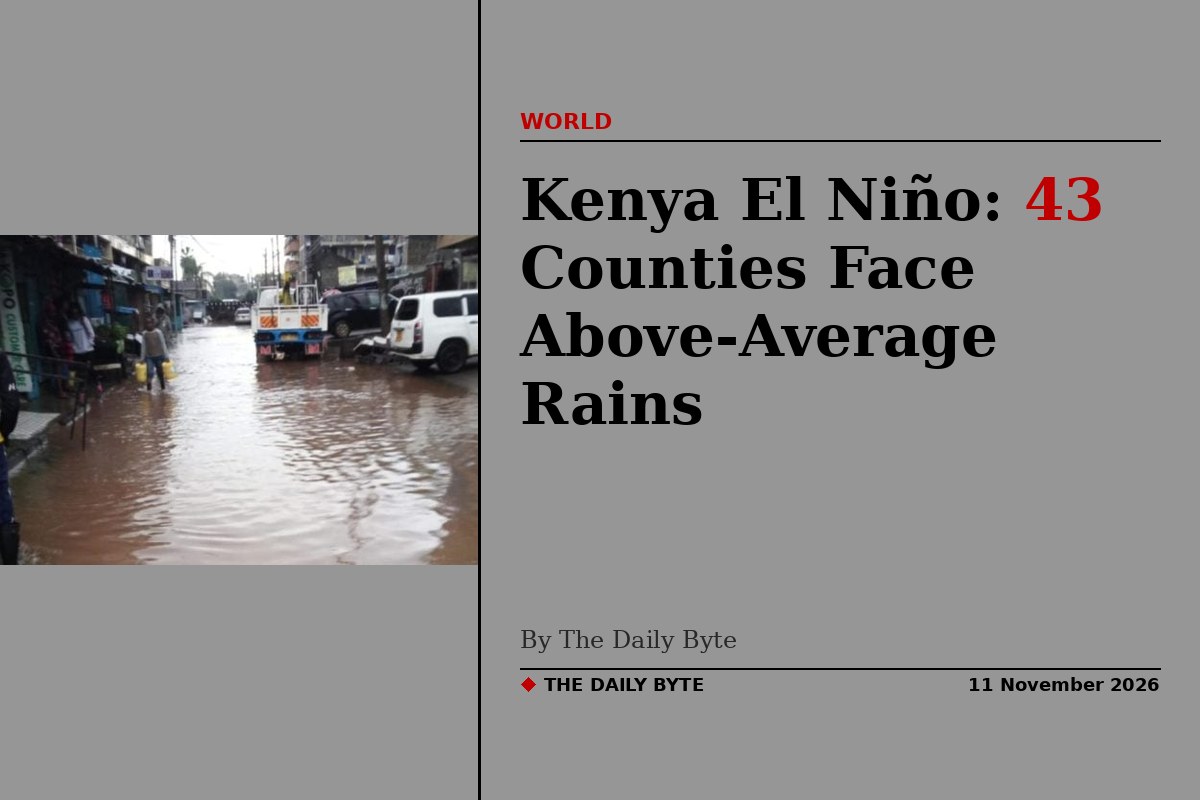
Forty-three Kenyan counties are expected to receive more rainfall than usual during the October–December 2026 season, the Kenya Meteorological Service Authority (KMSA) has said in a seasonal forecast published on 10 November. Meteorologists attribute the wetter outlook partly to El Niño, the climate pattern driven by unusually warm surface waters in the central and eastern Pacific Ocean, and warn that some areas could face heavy downpours, flooding and other weather-related disruption.
The October–December period, known as the short-rains season, matters more than its name suggests: it contributes more than 30 per cent of annual rainfall in several Kenyan counties.
Which counties are on the list?
KMSA has identified 43 counties where above-average rainfall is expected during the October–November–December season. They are Baringo, Bomet, Bungoma, Busia, Elgeyo-Marakwet, Embu, Garissa, Homa Bay, Isiolo, Kajiado, Kakamega, Kericho, Kiambu, Kilifi, Kirinyaga, Kisii, Kisumu, Kitui, Kwale, Laikipia, Lamu, Machakos, Makueni, Mandera, Meru, Migori, Mombasa, Murang'a, Nairobi, Nakuru, Nandi, Narok, Nyamira, Nyandarua, Nyeri, Siaya, Taita Taveta, Tana River, Tharaka-Nithi, Trans Nzoia, Uasin Gishu, Vihiga and Wajir.
The forecast also indicates that much of West Pokot, Samburu and Marsabit could receive above-average rainfall, while Turkana and a few parts of those three counties are expected to see near-average to above-average rain. In this forecast, above-average means rainfall of more than 125 per cent of the long-term average for the season. It does not mean that it will rain every day.
Why the rains are expected to be heavier
El Niño is not rainfall itself. It is a climate phenomenon that develops when surface waters in the central and eastern Pacific become unusually warm, changing the movement of air and clouds around the world and shifting where and how much rain falls. According to KMSA, the October–December season is also shaped by the movement of the Intertropical Convergence Zone, which moves southwards during this period, and by the Indian Ocean Dipole. A positive Indian Ocean Dipole enhances rainfall, and El Niño can increase it further when the two occur together.
The World Meteorological Organization (WMO) has warned that the current El Niño is already firmly established and is expected to strengthen further, reaching very strong intensity before peaking towards the end of 2026, with an exceptionally high likelihood of nearly 100 per cent that it will persist through February 2027. WMO Secretary-General Celeste Saulo has said the strengthening event could increase disruption from droughts and floods.
Flood risks — and some benefits
KMSA warns that heavy rainfall events could occur in several parts of the listed counties, raising the possibility of overflowing rivers, flash floods, landslides and damage to roads, homes and crops. The authority has advised Kenyans to follow regular weather updates and county-specific forecasts as conditions change.
The picture is not only negative. The rains could also benefit farmers through improved soil moisture, longer growing seasons and increased water availability. But the same season raises questions about Kenya's preparedness for the expected El Niño rains, particularly in flood-prone areas, and officials have urged people living along river banks, in riparian reserves and in low-lying areas to follow evacuation advisories and move to safer ground when directed.
How Kenya is preparing
Kenya's government has activated a National Contingency Plan involving national and county government agencies, humanitarian partners, security agencies and other disaster-management stakeholders. The Ministry of Interior and National Administration has outlined seven measures being implemented to strengthen preparedness for the expected October–December rains, which it says could bring above-normal rainfall across most parts of the country.
The ministry has warned of possible flooding, drowning, injuries and fatalities, displacement and isolation of communities, disease outbreaks and disruption of essential services. Its plan includes mapping high-risk areas, clearing drainage systems and preparing evacuations from riparian land and other high-risk areas. Emergency relief supplies, including food, non-food items and emergency medical supplies, are being pre-positioned at strategic locations, while rapid response teams have been strengthened and placed on standby for search and rescue operations, evacuations and post-disaster assessments.
A forecast, not a guarantee
Forecasters stress that El Niño does not mean every part of Kenya will experience similar rainfall or flooding. The WMO has cautioned that the intensity of the climate event alone does not determine how severe its effects will be in an individual country or region, and that impacts vary according to location and season and can be modified by other climate drivers, including conditions in the Indian and Atlantic Oceans.
Households should follow the latest KMSA forecasts and county advisories, and be ready to move if local officials issue an evacuation warning. People Daily reported the KMSA forecast, and Pulse Kenya reported the WMO warning and the government's preparedness measures.


