Lake Naivasha Hippos Die After Eating Fishing Nets
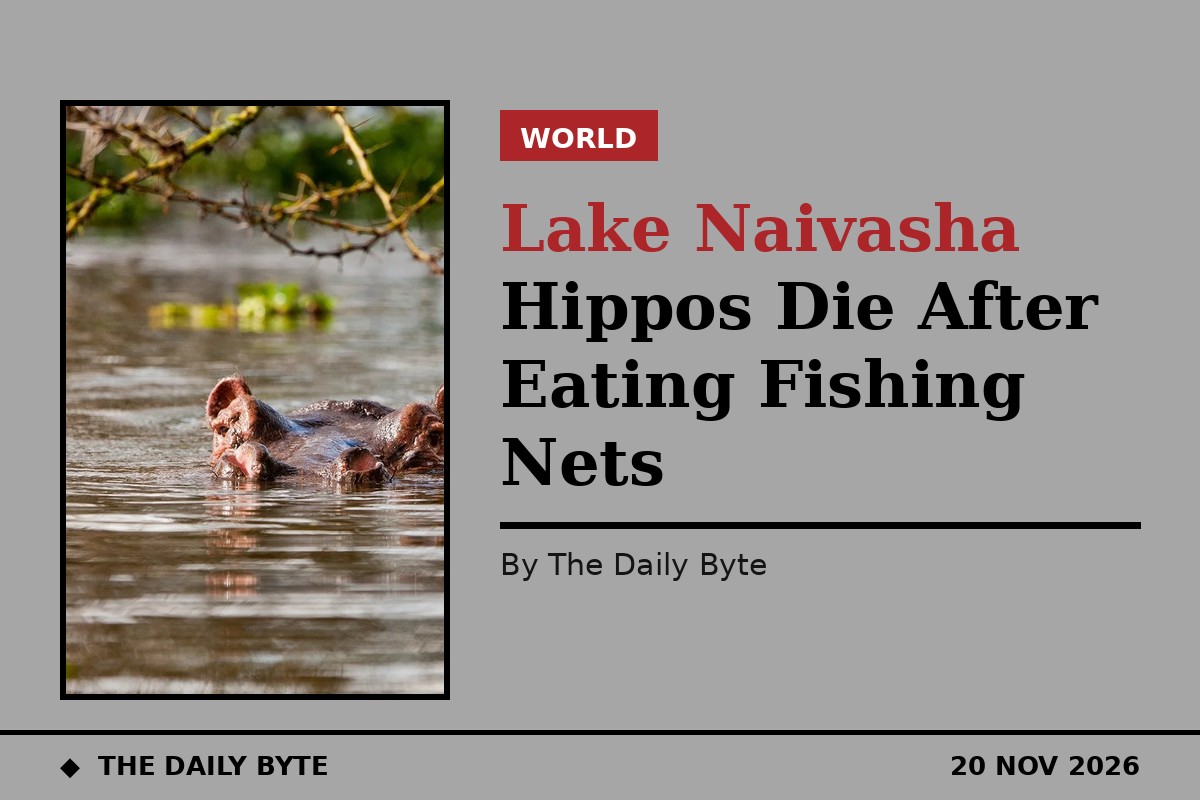
Two hippopotamuses have died at Lake Naivasha in Kenya after swallowing material linked to human activity around the lake, the Kenya Wildlife Service (KWS) has said.
In a statement on Thursday 19 November, KWS said veterinary investigations and post-mortem examinations established different causes of death for the two animals, both females, and warned that discarded fishing gear and unsuitable food are becoming a threat to wildlife around the lake.
The findings follow reports of several hippo carcasses around the lake in October and November. The two post-mortems give the clearest account yet of what killed at least two of the animals.
Fishing nets blocked one hippo's gut
Veterinary officers examining a sub-adult female found a compacted mass of discarded synthetic fishing nets lodged at the junction between the stomach and the small intestine, causing a complete physical obstruction.
KWS said the blockage stopped food passing through the digestive system and led to cardiopulmonary failure, hypovolemic shock and endotoxemia, a poisoning of the blood linked to the obstruction.
Fishermen around Lake Naivasha regularly leave nets set overnight, and KWS said the animals may have swallowed the netting while feeding after dark, unable to separate it from the forage.
Hippos spend the daylight hours in the water and come ashore at night to graze, which puts them in close contact with fishing gear left on the banks and in the shallows. KWS has asked fishermen to take greater care with where nets are left and how they are disposed of.
Maize stalks linked to the second death
An adult female died from acute gastrointestinal bloat, according to the second post-mortem. Gas had built up in the animal's multi-chambered stomach until it was severely distended, pushing the diaphragm into the chest cavity and compressing the lungs so the animal struggled to breathe.
Veterinary officers found maize stalks among the stomach contents. KWS said the stalks may have contributed to dietary overload and excessive fermentation, producing the gas that caused the bloating.
The agency described the bloat as the likely mechanism behind the animal's respiratory distress and eventual death from cardiopulmonary failure.
KWS appeal to fishermen and communities
KWS appealed to fishermen, local communities, beach management units and other groups around the lake to handle and dispose of fishing nets, gear and equipment responsibly, and to avoid exposing wildlife to unsuitable food.
“Protecting our wildlife is a shared responsibility by all Kenyans. Every action that safeguards the environment helps secure a future where people and nature thrive together,” the agency said.
Lake Naivasha, in Nakuru County, is one of Kenya's most important freshwater habitats, supporting hippos, fish eagles and large numbers of water birds, alongside a busy fishing and flower-farming economy on its shores.
The deaths come after a wider run of wildlife losses linked to human activity in Kenya. In August, Kenya said at least 18 elephants had likely died from cyanide poisoning after eating pesticide-contaminated tomatoes from farms bordering the Amboseli ecosystem.
KWS said it wants fishermen, communities and other stakeholders to work together to protect wildlife and the environment around the lake, so that incidents of this kind are not repeated.
Sources
Reuters: Kenya says two hippos died after eating maize, fishing nets
People Daily: KWS reveals what killed 2 hippos at Lake Naivasha


