Kenya Launches 10.8 Million Mosquito Net Drive
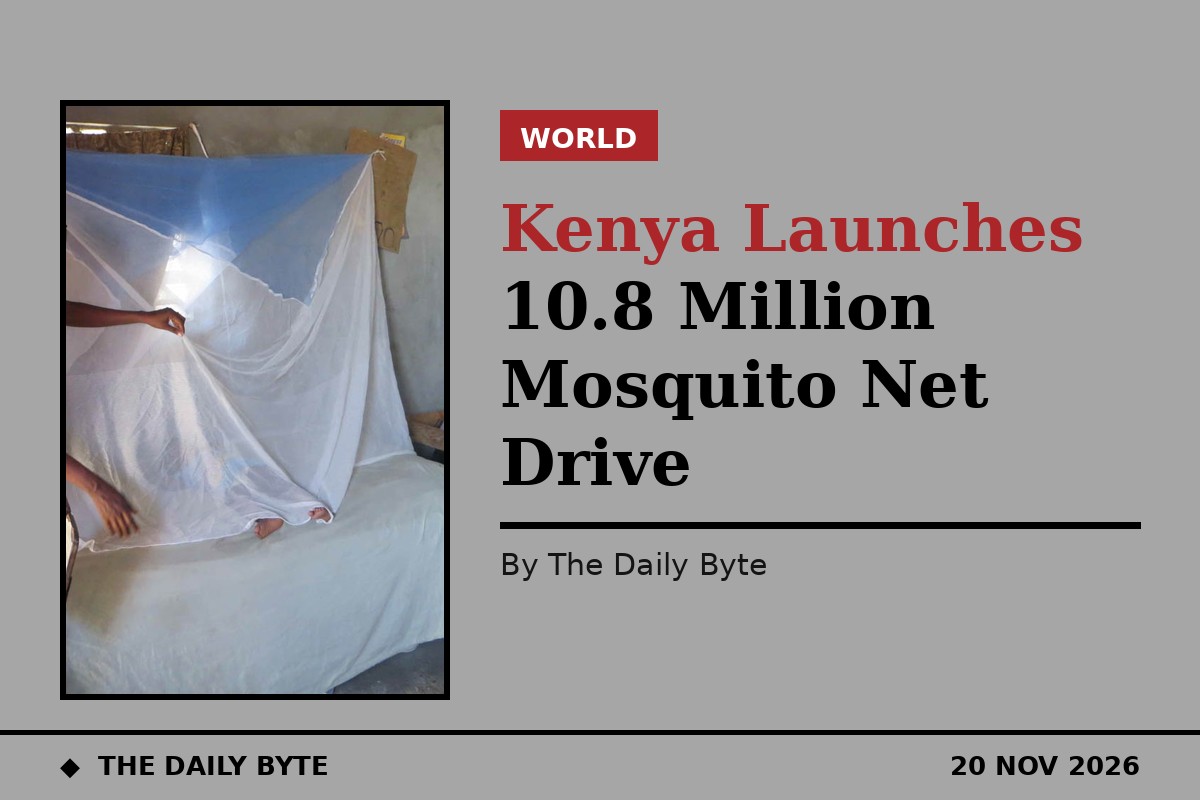
Kenya has launched a nationwide campaign to distribute almost 10.8 million insecticide-treated mosquito nets to families in 18 malaria-endemic counties, in its biggest malaria prevention drive in years. The 2026-2027 campaign was officially launched on Thursday 19 November at Bayula Stadium in Sirisia Sub-County, Bungoma County.
The campaign will reach 99 sub-counties and is being run by the Ministry of Health with county governments and development partners. In total, 10,791,601 nets will be distributed, allocated according to population needs, malaria transmission patterns and insecticide resistance profiles. The nets are free, and households have been warned not to pay anyone to receive them.
A digital platform, DigiMal-KE, will help health teams verify households, track distribution and monitor progress in real time, so that nets reach the families they are intended for.
Why new nets were needed
Malaria remains a major public health challenge in Kenya, and the protection offered by nets has been slipping. The recent 2025-26 Kenya Mini Demographic and Health Survey found that only 41% of households have at least one insecticide-treated net, down from 54% in 2022. Only 42% of children under five and 39% of pregnant women slept under a net the night before the survey.
In areas where mosquitoes no longer die from the usual insecticides, households will receive a newer kind of net. The dual active ingredient nets are treated with two insecticides that work in different ways, so they can still kill mosquitoes that have become resistant to the older nets. The World Health Organization published its recommendations on these nets in March 2023, and Kenya will now use them in areas with resistance.
"Communities are urged to participate in the exercise, collect their allocated nets, and sleep under them every night, throughout the year," said Mary Muthoni Muriuki, Principal Secretary for Public Health and Professional Standards at the Ministry of Health.
Malaria is falling — but the gap remains
The campaign builds on progress Kenya has already made. Under the 2023-2027 Kenya Malaria Strategy, confirmed malaria cases fell by 34%, from 5.54 million in 2023 to 3.64 million in the latest reported year. Malaria incidence among children under five fell from 194 to 119 cases per 1,000 population, and testing now reaches almost 90% of suspected cases.
The strategy aims to reduce malaria incidence by 80% and malaria deaths by 90% of 2023 levels by 2027/2028. Health officials say sustained investment in prevention, early diagnosis, effective treatment, surveillance and community health work is behind the decline, but nets remain one of the simplest and most effective tools — provided they are actually used every night.
"A mosquito net protects a family only when it hangs over the bed every night. These new nets, treated with two insecticides, can still kill mosquitoes that no longer die from the older nets. WHO commends the Ministry of Health and county governments for bringing them to communities across 18 counties, and we encourage every household member to sleep under them every night," said Dr Neema Rusibamayila Kimambo, WHO Representative in Kenya.
The wider African picture
Kenya's effort is part of a wider fight across Africa. The World Health Organization estimates that the world recorded 282 million malaria cases and 610,000 malaria deaths in 2024. The WHO African Region carried 94% of these cases and 95% of the deaths, and about three in every four malaria deaths in the region were children under five.
Residents in the targeted counties are also being encouraged to seek medical attention whenever they develop a fever or other suspected malaria symptoms, rather than relying on self-medication, since early testing and appropriate treatment are critical to stopping the disease from becoming severe.
Frequently asked questions
Who will receive the nets? Households in 18 malaria-endemic counties and 99 sub-counties, with allocations based on population needs, malaria transmission patterns and insecticide resistance in each area.
Do households have to pay for a net? No. The nets are distributed free of charge, and households have been warned against paying anyone to access them.
What are dual active ingredient nets? Nets treated with two insecticides that work in different ways, so they can still kill mosquitoes that have become resistant to the insecticides used in older nets.
Source: WHO Regional Office for Africa
Source: The Eastleigh Voice


