Kenya Oil Drilling Starts as First Oil Nears in Turkana
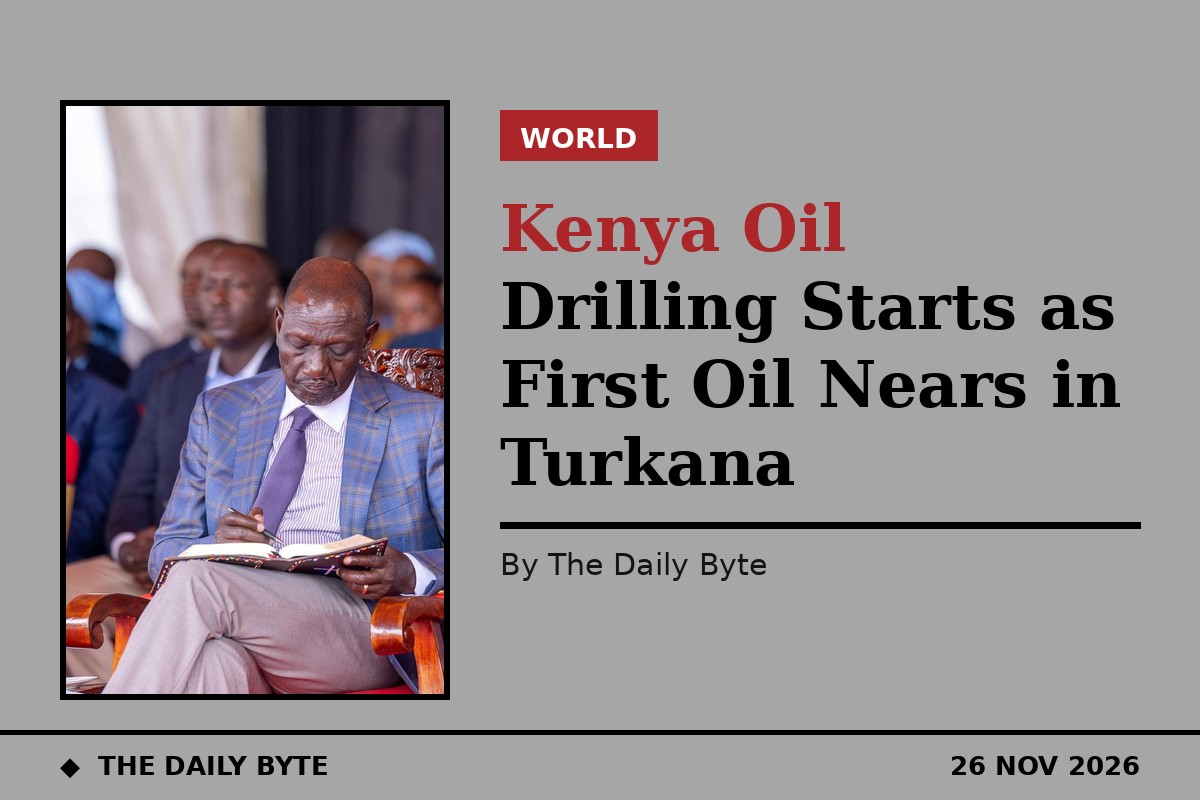
Kenya has begun drilling for commercial crude oil in the South Lokichar Basin, fourteen years after oil was first discovered in Turkana County, with the government targeting first production on 1 December 2026.
Gulf Energy E&P BV SEZ spudded the Amosing 1 well on 20 November 2026, marking the formal start of a development programme the government hopes will finally turn Kenya into an oil-producing country. Energy and Petroleum Cabinet Secretary Opiyo Wandayi presided over the ceremony at the Amosing oilfield, after the installation of a GW70 onshore drilling rig leased from China's Great Wall Drilling Company.
The project is targeting initial output of more than 20,000 barrels per day from 1 December, with crude initially transported by road from Turkana to storage at the Kenya Petroleum Refineries facility in Mombasa. President William Ruto has said the first trucks carrying crude oil from Turkana will be dispatched on 2 December, and around 600 trucks are expected to move the oil to the coast ahead of the country's first export shipment, which the operator expects on 1 March 2027.
Fourteen years after discovery
The wider project carries an estimated 326 million recoverable barrels over a 25-year contract period, and the development programme is estimated at about 6 billion dollars. The first phase will concentrate on four fields, Ngamia, Amosing, Twiga and Ekales, with output potentially expanding to 50,000 barrels per day in a subsequent phase.
Gulf Energy took over the Kenyan oil assets from Britain's Tullow Oil, which discovered commercially viable oil at the Ngamia-1 well in March 2012. Tullow and its former partners TotalEnergies and Africa Oil Corporation withdrew from the project, and Tullow agreed in April 2025 to sell its Kenyan interests to Gulf Energy in a transaction initially valued at at least 120 million dollars. The transfer was completed in September 2025 through Auron Energy E&P, a Gulf Energy affiliate.
The project is being developed under a Field Development Plan covering Blocks T6 and T7, formerly known as Blocks 10BB and 13T, which Kenya's National Assembly ratified in February 2026. The plan covers six oil discoveries: Ngamia, Amosing, Twiga, Ekales, Agete and Etom. The first phase targets 48 production and injection wells, according to the Energy and Petroleum Regulatory Authority's 2026 annual statistics report.
A pilot that never became commercial
Kenya has been here before, in part. Under the Early Oil Pilot Scheme operated by Tullow, crude was trucked from Turkana to Mombasa, and President Uhuru Kenyatta presided over the country's first export shipment of 200,000 barrels in 2019. That pilot ended without full commercial development, and the partners had originally targeted a final investment decision in 2019 and first oil by 2023 before financing and approval problems stalled the project.
The government is keen to show that this attempt is different. Gulf Energy has reported that 599 of the 716 jobs created by the project so far have gone to Kenyans, and local truck owners, drivers and logistics workers are expected to benefit as crude begins moving by road to Mombasa. The company has also shortlisted four possible trade names for marketing the crude internationally: Great Rift Light, Great Rift Intermediate, Great Rift Blend and Great Rift Sweet.
The December timetable still faces a near-term test. The 20 November ceremony marked the spudding of the first production well, not the start of production itself, and accumulating, transporting and preparing export volumes will take additional time. The regulator and the operator have identified 1 December as the target for first oil, while the first export cargo is not expected until March 2027. Whether the drilling programme stays on schedule over the coming weeks will determine whether Kenya finally joins the ranks of African oil producers, or adds another missed deadline to a project that has already waited fourteen years.


